Maharashtra Couple Champions Social Reform Through Progressive Wedding Ceremony
In a remarkable departure from convention, a wedding ceremony in Ishwarpur, Sangli district, has captured widespread attention for its profound commitment to social reform and minimalist principles. Rather than focusing on opulence, newlyweds Suraj and Madhumita have demonstrated how matrimonial celebrations can serve as powerful platforms for positive change.
Substantial Savings Directed Toward Meaningful Causes
The couple successfully eliminated unnecessary wedding expenses, accumulating savings of Rs 2 lakh that they have pledged to donate entirely to social initiatives. This financial redirection represents a conscious rejection of the commercialization often associated with traditional Indian weddings.
"We were determined to prove that weddings don't need to be extravagant to be meaningful," explained Suraj Urmila Sunil. "Every rupee saved from unnecessary rituals and decorations is now going to support causes that actually improve people's lives."

Rooted in Progressive Tradition
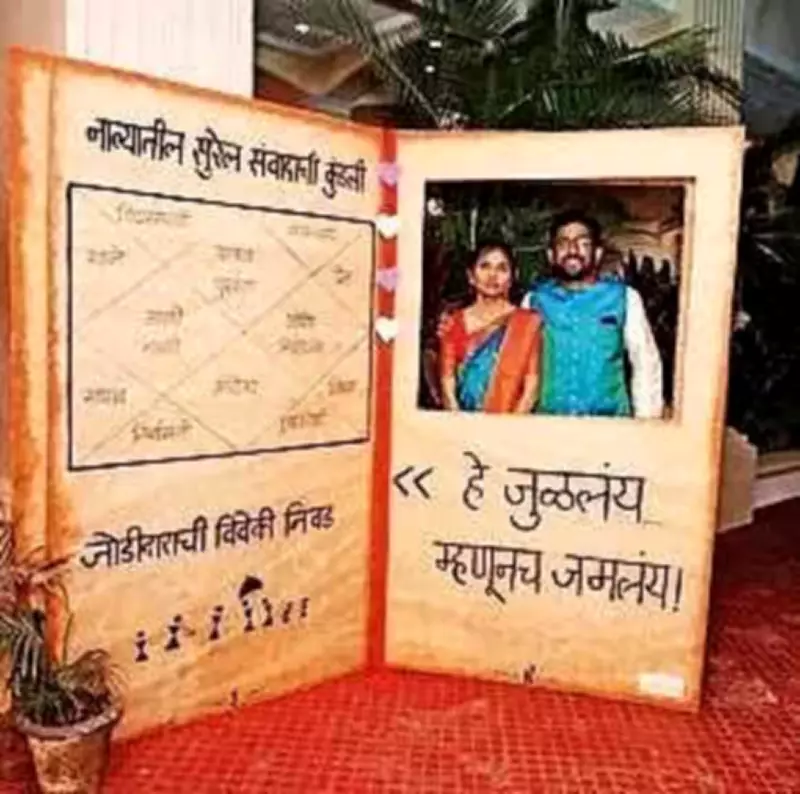
The ceremony was deliberately structured around the 'Satyashodhak' tradition pioneered by legendary social reformers Mahatma Jyotirao Phule and Savitribai Phule. This philosophical approach emphasizes rationality over superstition, rejecting practices like horoscope matching in favor of logical compatibility assessment.
To ensure their partnership was built on solid foundations, the couple utilized a comprehensive questionnaire developed by Narendra Dabholkar's Maharashtra Andhshraddha Nirmoolan Samiti (ANiS). This innovative tool helped them navigate important conversations often avoided in traditional matchmaking.
Compatibility Through Conscious Conversation
"We dedicated ourselves to answering one question from the ANiS questionnaire every single day for two full months," revealed Suraj. "This process forced us to deliberate deeply on everything from gender equality perspectives to attitudes about menstruation—topics frequently considered taboo in conventional discussions."
Only after thorough reflection and mutual agreement did they conclude they were truly compatible partners. The couple then faced the additional challenge of convincing their parents to embrace their unconventional approach to marriage.
Rejecting Caste Identifiers
In a bold statement against the caste system, both Suraj and Madhumita have formally discarded their surnames, which traditionally carry caste-based connotations. They have instead adopted a new naming convention using their parents' names as middle and last names, symbolically breaking from hereditary social stratification.
Financial Independence and Parental Support
"Our parents were prepared to organize a lavish celebration since they are financially comfortable," noted Madhumita Shobha Arjun, who originally hails from Shevgaon in Ahilyanagar district. "However, we insisted on financing the wedding ourselves through our own savings."
The couple successfully persuaded their families to redirect the intended wedding budget toward charitable projects they had personally identified. These initiatives range from extensive tree plantation drives to manufacturing biodegradable cotton pads—practical solutions addressing both environmental and social concerns.
Simplified Ceremonies with Profound Symbolism
The wedding itself consisted of a simple registered marriage followed by an engagement ceremony at Madhumita's family home. In a particularly symbolic gesture, both sets of parents planted saplings using water ceremoniously collected from the Godavari and Krishna rivers, representing life-giving resources and regional unity.
The celebration at Suraj's hometown incorporated several innovative elements designed to engage guests while promoting social messages:

- The entire event maintained a strict plastic-free policy
- Instead of traditional akshata (colored rice throwing), guests left thumbprints on a communal canvas
- Various thematic stations educated attendees about different social issues
International Women's Day Significance
Since the wedding coincided with International Women's Day on March 8, the couple honored female guests with special gifts of saplings and bags crafted from recycled saris. This thoughtful gesture reinforced their commitment to gender equality and environmental sustainability.
"Our wedding wasn't just about us joining our lives together," Madhumita reflected. "It was about demonstrating how traditional ceremonies can evolve to reflect contemporary values of equality, sustainability, and social responsibility."
The couple's innovative approach has sparked conversations throughout the region about how matrimonial traditions might be reimagined to align with progressive social values while maintaining cultural significance.