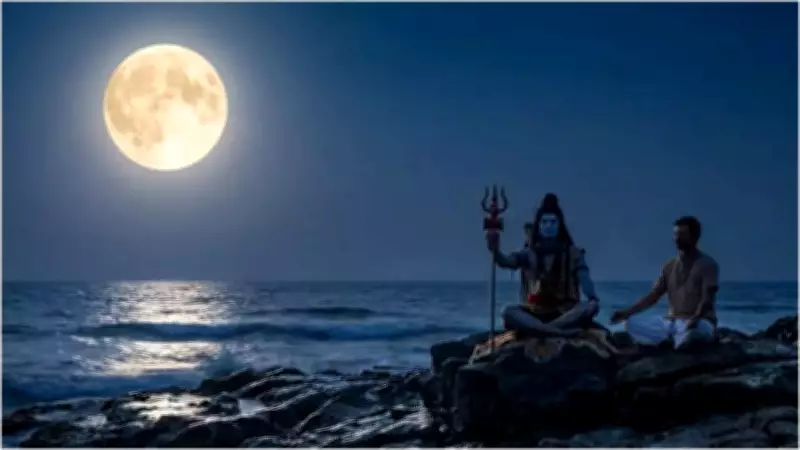
Mahashivratri: A Cosmic Gateway to Inner Peace and Spiritual Elevation
Millions of devotees across India and the globe are preparing to observe Mahashivratri, the sacred night dedicated to Lord Shiva. This auspicious occasion is widely regarded as an ideal time for meditation and personal transformation, offering a unique opportunity to cultivate inner harmony and self-improvement.
The Astrological Significance of Mahashivratri
Mahashivratri, also known as the Great Night of Shiva, occurs on the 14th night of the Krishna Paksha in the Hindu month of Phalguna, during the waning moon phase. Astrologers emphasize that this period is marked by a special cosmic alignment, where planetary and lunar positions create subtle yet powerful energetic conditions. These conditions naturally support spiritual practices, particularly meditation, by encouraging the mind to turn inward. Unlike many festivals that coincide with the waxing moon, Mahashivratri fosters a natural inclination towards introspection, making it easier to detach from external distractions and focus on inner awareness.
Lord Shiva: The Adi Yogi and Symbol of Meditation
Lord Shiva is revered as the Adi Yogi, the first yogi and the supreme master of meditation. He embodies qualities of peace, tranquility, and heightened consciousness. Spiritual narratives often describe Mahashivratri as the night when Shiva engaged in profound cosmic meditation or merged with the universal mind. Raghavendra Sharma, an astrologer and spiritual teacher from Bengaluru, explains, "Shiva is not merely a deity to be worshipped; he represents a state of mind to be attained." This belief underscores that Mahashivratri offers ordinary individuals a heightened chance to reach this meditative state through practices like chanting, mindfulness, and disciplined spiritual work, known as sadhana.

The Tradition of All-Night Vigils and Their Benefits
Many observers stay awake throughout Mahashivratri, engaging in prayer or meditation. For astrologers and yogis, this practice holds deep significance beyond symbolism. It is believed that the night amplifies the flow of spiritual energy within the body. Sharma notes, "Meditation, chanting, or simply sitting in quiet awareness with a straight spine can harness this energy positively. This night is considered optimal for addressing spiritual clarity, emotional burdens, and mental patterns." In yogic science, the spine is crucial for facilitating spiritual energy flow, and Mahashivratri is thought to enhance balance and alignment within this system.
Mental Health and Mindfulness During Mahashivratri
Experts highlight that combining astrology, spirituality, and mindfulness during Mahashivratri can yield significant mental health benefits. The simultaneous practices of fasting, silence, and meditation provide a holistic approach to mental cleansing. In today's fast-paced, information-saturated world, such a break can promote calmness, improved focus, and emotional processing. Ananya Rao, a yoga teacher and wellness coach, suggests, "Mahashivratri can serve as a night for self-reflection even for non-religious individuals. Setting intentions, meditating, or practicing quiet sitting on this night can be profoundly beneficial."
Beyond Rituals: The Essence of Personal Growth
Spiritual leaders stress that Mahashivratri transcends the large crowds and elaborate temple ceremonies seen nationwide. At its core, it is about personal inner work. Astrology indicates this night is a potent time for spiritual growth and self-discovery. Mahashivratri encourages self-reflection and reconnection with one's true self through silence, meditation, or mantras like "Om Namah Shivaya." As cities prepare for all-night vigils and celebrations, many are opting for quiet observance at home, on yoga mats, or in meditation halls. They are leveraging this ancient cosmic moment to find serenity amidst an increasingly noisy world.
Mahashivratri remains both a festive occasion and a poignant reminder that the most profound journeys occur within oneself.