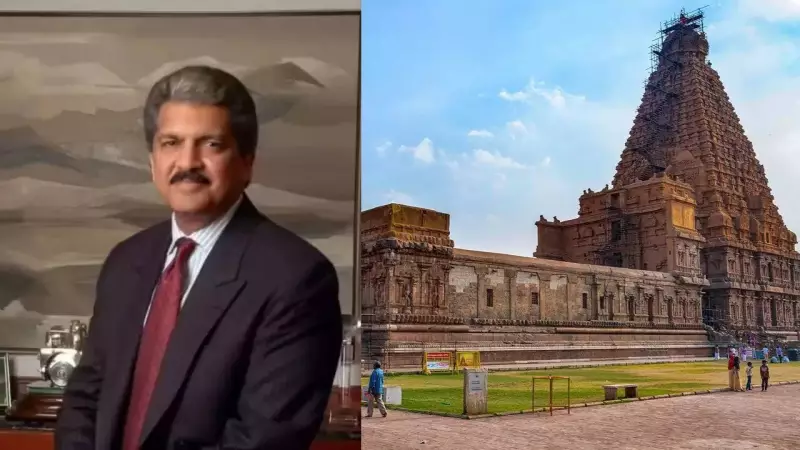
A simple social media post by industrialist Anand Mahindra has set the internet abuzz, turning the spotlight back onto one of India's most staggering ancient architectural achievements. Sharing a video of the majestic Brihadisvara Temple in Thanjavur, Tamil Nadu, Mahindra sparked a widespread conversation about the sophistication of India's historical engineering.
The Tweet That Reignited History
"Watch this video of Brihadisvara Temple in Thanjavur, Tamil Nadu, built in the 11th century AD," wrote Anand Mahindra, Chairman of the Mahindra Group, on X (formerly Twitter). He added his own awe, stating, "It sure looks like 'the world's most sophisticated ancient engineering feat' to me." This observation did not go unnoticed. It quickly fueled passionate discussions across social networking platforms, engaging not just historians and architecture enthusiasts but also countless newcomers eager to learn about India's glorious past through digital means.
Brihadisvara Temple: A Chola-Era Colossus
More than just a place of worship, the Brihadisvara Temple, also known as Rajarajeshvaram or the Big Temple (Peruvudaiyar Kovil), is a monumental symbol of Dravidian architecture. Built by the great Chola emperor Rajaraja I between 1003 and 1010 CE, it stands proudly on the southern banks of the River Cauvery. The entire structure, crafted from granite, is a powerful testament to the dynasty's immense power, unparalleled craftsmanship, and deep religious devotion.

The temple's construction reveals a society with advanced knowledge. Its builders employed a remarkable technique: massive granite slabs were interlocked without traditional cement. This ingenious method has allowed the temple to withstand earthquakes and the ravages of nature for over a millennium. Towering above the sanctum is one of South India's tallest vimanas (towers), crowned by an 80-tonne granite monolith—a feat that continues to baffle modern engineers.
A Living Legacy of Art and Worship
The temple is far more than an inert stone structure; it is a vibrant repository of sacred art. It houses one of India's largest Shiva lingas in its sanctum and a colossal Nandi statue carved from a single stone in its courtyard. The complex also includes shrines dedicated to Parvati, Ganesha, and Murugan, reflecting its inclusive spiritual nature. Its deep connection to the iconic Nataraja bronze statues further cements its cultural significance.
Recognized as a UNESCO World Heritage Site as part of the "Great Living Chola Temples" (alongside Gangaikonda Cholapuram and Darasuram), the Brihadisvara Temple remains a living center of ritual and devotion, where ancient traditions breathe life into its stone walls every day.
Mahindra's Perspective: Temples as Intellectual Arenas
Anand Mahindra's comments carry particular weight because of his reputation as a forward-thinking innovator. In his posts, he framed India's temples not merely as spiritual sites but as "intellectual and visual arenas." By highlighting the Brihadisvara Temple, he underscored the astounding level of scientific and technological expertise possessed by ancient Indian civilization—knowledge that commands respect and wonder even in the 21st century.
How to Visit the Brihadisvara Temple
Located in the heart of Thanjavur, the temple is well-connected by air, rail, and road. The nearest international airport is in Tiruchirappalli, roughly an hour's drive away. Thanjavur Junction railway station links the city to major destinations across Tamil Nadu. The ideal time for a visit is during the cooler months, from November to February, when the weather is pleasant for exploring the vast temple complex.