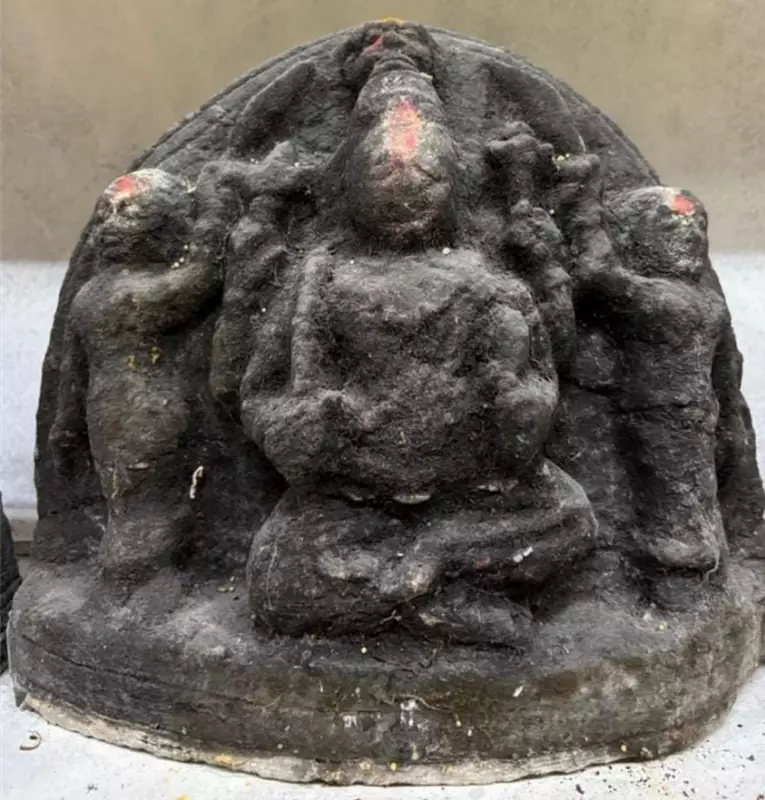
In a significant departure from age-old tradition, a family in Goa has chosen to preserve ancient religious heritage by donating centuries-old temple idols to a state museum instead of ritually immersing them in a water body. This thoughtful act has saved nine valuable stone sculptures, estimated to be around 300 years old, for future generations to study and appreciate.
A Break from Tradition to Save Heritage
The Karbotkar families, residing in Gaonkarwada, Mayem, recently undertook the renovation of their old temple. As part of this process, they installed new stone idols and removed the earlier set of deities. Traditionally, temple committees across Goa immerse such old idols in rivers or tanks after new installations. However, the Karbotkar families decided to chart a different, more preservation-minded course.
Seventy-year-old Yeshwant Karbotkar explained the family's reasoning. He confirmed that the earlier stone sculptures were approximately three centuries old. "We have installed new stone ones," he said. "However, instead of immersing these earlier sculptures into Mayem lake, we handed them over to the directorate of museum." This decision marks a conscious shift from ritual practice to historical conservation.

The Catalyst: Awareness from Heritage Enthusiasts
The family's landmark choice was influenced by the intervention of knowledgeable individuals who recognized the artifacts' worth. Archaeology student Vismay Vishnu Karbotkar, along with heritage enthusiasts Vithoba Gawade and Sanish Aukhale from Sanquelim, approached the family. They took the time to explain the profound archaeological and historical significance of the old idols.
"Accordingly, elder members of our Karbotkar families handed over these sculptures to the state museum," stated Yeshwant Karbotkar, acknowledging the role of this informed persuasion. The donated collection comprises nine distinct sculptures: Balvansh, Goud Bengal, Bhutnath, Betal, Mulpurush, Mahamaya, Gram Purush, Sateri, and Kelbai.
A New Model for Temple Committees
This act is being hailed as a model for other temple committees to follow. Vithoba Gawade, who is also a student of archaeology at Mumbai University, emphasized the loss caused by the traditional practice. "Immersing old stone sculptures in water after installing new ones has led to loss of invaluable heritage assets," he told sources. He strongly advocated that temple committees should consider donating old sculptures to museums. This approach, he argued, would enable students and researchers to study their history and heritage in meticulous detail.
The museum authorities have welcomed this generous donation. Museum curator Manisha Govekar expressed her appreciation, stating, "The steps taken by the Karbotkar families to hand over archaeological heritage assets will help us display these sculptures in the museum gallery." This ensures that the artifacts will be professionally conserved and made accessible to the public, transforming them from objects of private worship into assets of public cultural heritage.
This event in Mayem sets a powerful precedent, highlighting how community awareness and cooperation with cultural institutions can prevent the irreversible loss of Goa's rich and ancient material heritage.