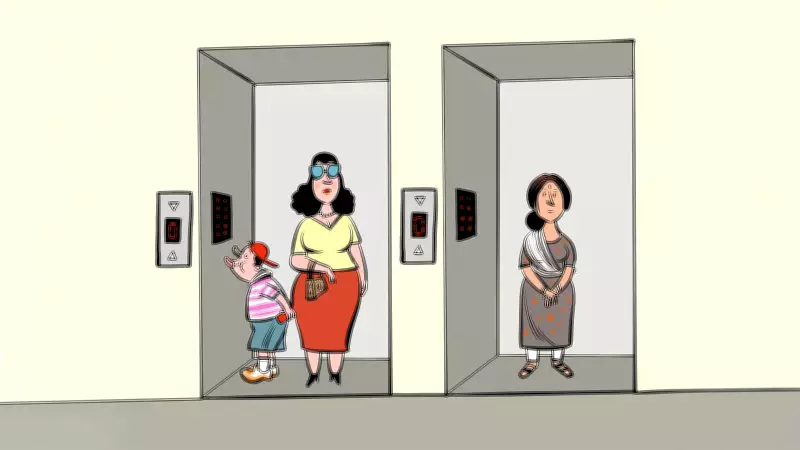
A Memsahib's Adventures with Elevators in Colonial India
In the bustling cities of colonial India during the British Raj, the introduction of modern conveniences like elevators often led to amusing and bewildering encounters for the memsahibs—the wives of British officials. These women, accustomed to a certain lifestyle back in England, found themselves navigating not just a new culture but also the quirks of emerging technologies. One such memsahib's adventures with elevators, or "lifts" as they were commonly called, offer a lighthearted glimpse into the daily life and cultural adjustments of the era.
The Arrival of Elevators in India
Elevators began appearing in India in the late 19th and early 20th centuries, primarily in major urban centers like Calcutta, Bombay, and Delhi. They were symbols of progress and modernity, installed in government buildings, hotels, and upscale residences. For the British memsahibs, these devices represented a touch of home, yet their operation in India often came with unexpected challenges. The technology was still relatively new, and local operators sometimes lacked formal training, leading to comical mishaps.
One memsahib recounted her first experience with an elevator in a Calcutta hotel. She pressed the button, expecting a smooth ascent, but the lift jerked violently, stopping abruptly between floors. The operator, a young Indian attendant, smiled reassuringly and manually cranked the elevator to the correct level, all while the memsahib clutched her parasol in alarm. Such incidents were common, as elevators in India were often manually operated or prone to mechanical failures, adding an element of adventure to routine activities.

Cultural Misunderstandings and Humorous Encounters
The memsahib's adventures extended beyond technical glitches to cultural misunderstandings. In one instance, she attempted to use an elevator in a government office, only to find it occupied by a group of local clerks who insisted on squeezing in despite the "full" sign. The memsahib, adhering to British notions of personal space and queue etiquette, was flustered by the informal crowding. She later learned that in India, elevators were often seen as communal spaces, where sharing was customary, reflecting a different approach to social norms.
Another humorous episode involved a memsahib who, while visiting a friend's bungalow, encountered an elevator that required a specific ritual to operate. The attendant would bow, say a prayer, and then pull a lever, all while the memsahib watched in bemusement. This blend of traditional practices with modern machinery highlighted the cultural fusion of colonial India, where old habits died hard even in the face of new technology. The memsahib noted in her diary that these experiences made her appreciate the resilience and adaptability of both the Indian people and herself.
The Social Significance of Elevators
Elevators in colonial India were not just functional devices; they carried social significance. For memsahibs, riding an elevator could be a status symbol, separating them from the local populace who often used stairs. However, this also led to moments of irony, such as when a memsahib got stuck in an elevator during a formal event, forcing her to be rescued by Indian servants—a scene that blurred the lines of hierarchy and evoked laughter among onlookers. These incidents underscored the complexities of colonial life, where technology could both reinforce and challenge social divisions.
The memsahib's adventures with elevators also reflected broader themes of adaptation and humor in the face of change. As she navigated these mechanical marvels, she developed a fondness for their idiosyncrasies, seeing them as metaphors for her own journey in India. From fearing a broken elevator to laughing off a misadventure, her stories reveal a human side to the colonial experience, filled with curiosity and camaraderie.

Legacy and Reflections
Today, the memsahib's tales of elevator adventures serve as charming anecdotes from a bygone era. They remind us of how technology, when introduced in a new context, can become a source of cultural exchange and personal growth. The elevators of colonial India, with their quirks and charms, were more than just machines; they were stages for small dramas that brought people together, however briefly, in shared moments of confusion and mirth.
In retelling these stories, we preserve a slice of history that highlights the lighter side of colonial interactions. The memsahib's experiences with elevators offer a unique perspective on daily life in British India, blending humor with historical insight. As we look back, we see that even the simplest technologies can tell profound stories about human adaptation and the enduring spirit of adventure.