Mumbai's Reading Revolution: How Metro, Parks & Bookstores Create Literary Sanctuaries
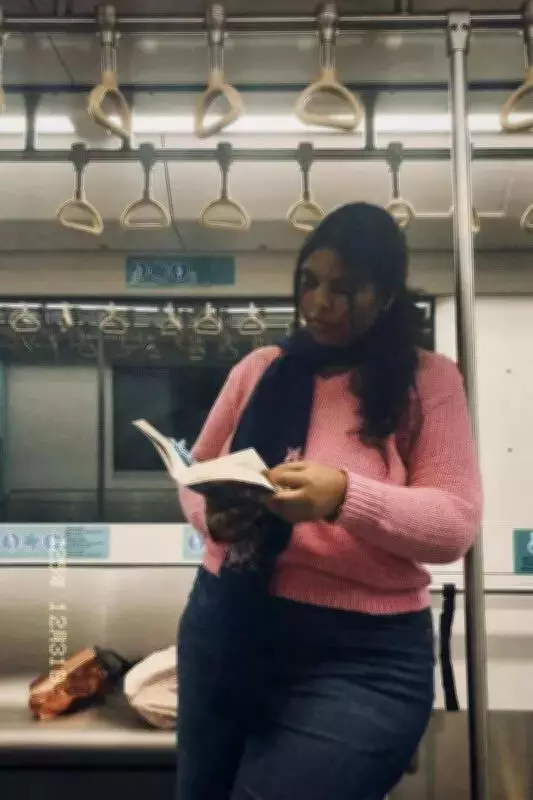
In the heart of Mumbai's bustling Aqua Line Metro, a quiet revolution unfolds daily. Within the designated "Ladies Only" compartment, Sumaiyya Momin finds sanctuary during her 15-minute journey from Hutatma Chowk to Shri Jagannath Shankarseth station. Clutching a pink-covered copy of 'A Woman Is No Man'—a fictional story about a teenage Arab woman resisting arranged marriage—she travels not just physically but emotionally to Palestine through the words of a Palestinian author.
"The book was gifted by my sister long ago," Momin explains, smiling through her veil. "I have been able to read it now as this is the only time I get to read. Unlike local trains, there's no network and no crowd here." Her experience mirrors that of fellow commuter Mahek Chaudhury, a TYBMM student currently immersed in the desi romance 'Red Flags and Rishtas', following her journey through 'The Forty Rules of Love' and 'The Palace of Illusions'.
From Isolation to Community: The Park Bench Transformation
The Metro represents just one node in Mumbai's expanding reading ecosystem. Two years ago, a knee injury left Charvi Garg bedridden and isolated. Seeking relief from "doom scrolling" and loneliness, she began visiting a park in Versova with a book. What began as solitary reading evolved into something remarkable.

Starting with just two participants—herself and her father—Garg's reading group now attracts 20 to 40 people per session. They gather on park benches, each absorbed in their own book, sharing what Garg describes as "companionable silence."
"Not always you're in the mood to read," Garg admits. "But seeing others read pushes you for another page or two." Over time, the group has expanded beyond reading to include book discussions, board games, theatre outings, and potlucks. At its core, Garg emphasizes a simple philosophy: "There's no entry fee. Human connection shouldn't be commercialized."
The Bookstore Renaissance: From Screen Discovery to Physical Connection
Complementing these informal reading spaces, Mumbai's bookstores are experiencing a quiet renaissance. India's book retail ecosystem has maintained steady demand post-pandemic, with independent stores and discount chains reporting consistent footfall.
Rinkush Nagda, area operations manager at Bargain Book Hut, observes distinct patterns among visitors. Younger readers increasingly arrive with requests for specific titles discovered online, while children under nine gravitate toward books featuring popular television characters.
Discovery begins on a screen—but the act of reading finds its way offline. Physical bookstores have quietly repositioned themselves as essential third spaces: environments for browsing, lingering, and belonging that exist between home and workplace.
The Gender Dimension: Reading as Quiet Emancipation
What connects Metro compartments, park benches, and bookstore aisles is their provision of increasingly rare commodities: uninterrupted time and legitimate space for reading. For many women readers, this accessibility matters profoundly.
Reading coach Reeta Gupta recalls a four-day workshop that attracted approximately 1,300 women daily. Over 80% reported that reading fiction at home was frequently dismissed as unproductive. "They are constantly interrupted or asked to do something 'useful'," Gupta explains. "Many became commute readers because of this."
In this context, third spaces represent more than convenience—they offer quiet emancipation. Gupta cautions against overstating infrastructure's role, noting that even without Wi-Fi, many remain glued to smartphones. "The internet has profoundly reshaped how we acquire information," she observes. "A quick search makes us seem informed—but the motivation to learn more is missing."
Despite digital distractions, Gupta maintains that literary engagement remains crucial. "A world without books won't be a great world. Reading is not an advantage we should give up."

Micro-Moments and Collective Sanctuaries
Nirav Mehta, founder of the Broke Bibliophiles book club, offers perspective on Mumbai's unique reading landscape. "Mumbai may not be giving people more time," he notes, "but it is offering micro-moments. Readers are learning to use these small pockets effectively."
From Metro compartments and neighborhood parks to bookstores and even the Gen Z post office at IIT-Bombay, these spaces are transforming into temporary sanctuaries where reading can occur collectively—especially valuable for those lacking quiet space at home.
Together, these diverse environments form an interconnected ecosystem supporting Mumbai's reading culture. They demonstrate how urban infrastructure, community initiative, and commercial spaces can collectively foster literary engagement in one of the world's most dynamic cities.