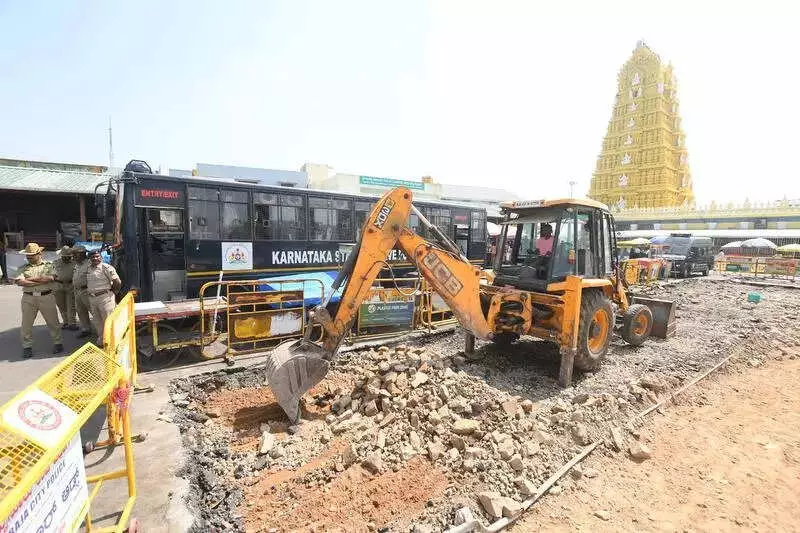
Heritage Experts Sound Alarm Over PRASHAD Scheme Violations at Mysuru's Sacred Chamundi Hills
In the historic city of Mysuru, a growing controversy surrounds the state government's decision to proceed with PRASHAD scheme projects at the revered Chamundi Hills, despite mounting protests from conservationists and local residents. Heritage experts have issued stern warnings, asserting that the ongoing construction activities blatantly violate established regulations designed to protect this culturally significant site.
Violations of Heritage Regulations Cited
NS Rangaraju, a former member of the Mysuru Heritage Committee, has pointed to the Mysuru and Nanjangud zonal area master plan 2031 as a critical regulatory framework. This plan explicitly designates iconic structures such as the Chamundeshwari temple and the Rajendra Vilas palace as protected heritage buildings. According to the regulations, no construction work is permitted within a 100-meter radius of these heritage structures to preserve their historical and architectural integrity.
"Currently, works are being undertaken within 100 metres of the temple, which is a clear violation of these rules," Rangaraju emphasized. He further alleged that the tourism department failed to obtain necessary permissions from the heritage committee before initiating the construction, raising serious questions about procedural compliance and transparency.

Commercialization Concerns and Historical Context
Echoing these concerns, historian PV Nanjaraj Urs lamented the gradual transformation of Chamundi Hills into a commercial hub, overshadowing its spiritual and ecological significance. "No serious efforts have been made to conserve the temple or the delicate ecology of the hills," Urs stated, highlighting a shift from traditional practices. He nostalgically recalled that even the Maharajas of Mysore would approach the temple by climbing the steps, a practice that underscored the site's sanctity and connection to nature.
Urs criticized the current development initiatives, alleging that "in the name of infrastructure development for devotees and tourists, the hill shrine is being destroyed." This sentiment reflects a broader anxiety about balancing modernization with preservation in heritage-sensitive areas.
Emotional and Cultural Significance for Mysuru Residents
For the people of Mysuru, Chamundi Hills transcends its physical presence to embody deep emotional and cultural values. Activist Harshith Diwakar articulated this connection powerfully, describing the hills as "not just a place, but an emotion" and "the soul of the city." He emphasized that the site holds collective faith, history, memories, and emotions, serving as a generational symbol of identity for every Mysorean.
"Development should never come at the cost of destroying nature, heritage, and sentiment," Diwakar asserted. "Once altered, the original essence of these sacred hills can never be restored." His plea underscores the irreversible impact of unregulated construction on both tangible heritage and intangible cultural heritage.
Calls for Preservation Over Redevelopment
The consensus among experts and activists is clear: Chamundi Hills requires respect and preservation, not redevelopment. Diwakar's call to "let it remain as it is, in its natural and cultural form, for future generations to experience the same peace and pride we do today" resonates with a growing public demand for sustainable conservation practices.
As the state government moves forward with the PRASHAD scheme—aimed at enhancing pilgrimage and spiritual tourism infrastructure—the warnings from heritage authorities highlight a critical need for:

- Immediate halting of ongoing construction works that violate heritage regulations.
- Strict adherence to the Mysuru and Nanjangud zonal area master plan 2031.
- Transparent consultations with heritage committees and local stakeholders.
- Balanced approaches that prioritize ecological and cultural preservation alongside development goals.
The unfolding situation at Chamundi Hills serves as a poignant reminder of the challenges in managing heritage sites in rapidly developing urban landscapes. It calls for a reevaluation of how infrastructure projects are implemented in culturally sensitive areas, ensuring that progress does not erode the very heritage that defines a community's identity and history.