NGMA Mumbai Launches Special Exhibition on Nandalal Bose's Artistic Journey
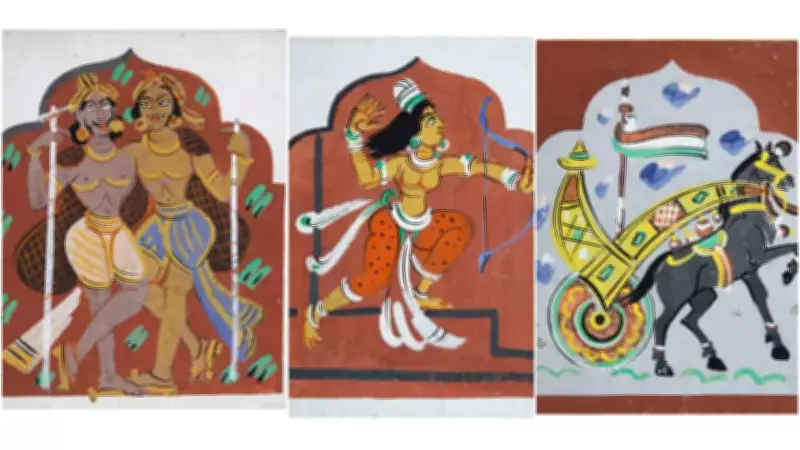
The National Gallery of Modern Art (NGMA) in Mumbai has inaugurated a significant exhibition titled 'Colours of Swades: From Haripura to the Constitution', dedicated to celebrating the artistic legacy of Nandalal Bose, a pioneering figure in modern Indian art. This curated showcase, which runs from March 9 to April 9, 2026, marks the first time NGMA Mumbai has organized a dedicated exhibition focused on this influential artist.
Showcasing Defining Works of Nandalal Bose
The exhibition brings together two pivotal bodies of Bose's work: the renowned Haripura Panels of 1938 and his artistic contributions to the original manuscript of the Constitution of India. A disciple of Abanindranath Tagore and later the principal of Kala Bhavana at Visva-Bharati University in Santiniketan, Bose played a crucial role in developing a distinctly Indian visual language during the twentieth century. His immense contributions to Indian art were recognized with the prestigious Padma Vibhushan award.
Highlights of the Exhibition
A key feature of the exhibition is the display of the iconic Haripura Panels, created for the Indian National Congress session in Haripura under the guidance of Mahatma Gandhi. Executed with bold lines and luminous colors inspired by folk traditions, these panels depict scenes of everyday rural life, including farmers, artisans, musicians, women at work, and village festivities, celebrating the vitality and dignity of India's villages.

Nidhi Choudhari, Director of NGMA Mumbai, emphasized the significance of this showcase, stating, "This exhibition traces the artistic and intellectual journey of Nandalal Bose, one of the foremost pioneers of Indian modern art. It is particularly special for us at NGMA Mumbai because the Haripura Panels of 1938 are being displayed here for the first time."
Artistic and Cultural Significance
The exhibition explores how Bose's work intersected with nation-building, highlighting his role in shaping India's cultural identity. Choudhari added, "Nandalal Bose occupies a foundational place in the story of Indian modern art. Instead of borrowing from Western academic traditions, he turned inward, drawing inspiration from Ajanta murals, folk traditions, temple sculpture, and the rhythms of everyday rural life. In doing so, he created a visual language that was deeply rooted in Indian civilization yet profoundly modern in its expression."
Additionally, the exhibition delves into Bose's contribution to the visual aesthetics of the Constitution of India. Working with students from Kala Bhavana, he designed intricate borders and illustrations that accompany the constitutional text, tracing India's civilizational journey through references to the Indus Valley civilization, the Ramayana, the Mughal era, and the freedom movement.
Curatorial Insights and Digital Enhancements
Curated by Shruti Das, Deputy Curator at NGMA Mumbai, the exhibition aims to bridge two important moments in India's cultural and political history. Das noted, "The Haripura Panels represent a landmark moment in modern Indian art. Created at the request of Mahatma Gandhi for the 1938 Congress session, Bose produced seventy-seven panels depicting everyday village life. These works celebrated the dignity and rhythm of rural India and brought art directly into a public space."
To add a contemporary dimension, the exhibition features immersive digital reconstructions that recreate Haripura village as it might have appeared in 1938. Using AI-assisted animation developed with Mumbai-based filmmaker Ebyug Akhil, scenes from the panels are brought to life, offering visitors an engaging and experiential way to explore the artworks.
Exhibition Details
'Colours of Swades: From Haripura to the Constitution' is on display at NGMA Mumbai, located at Sir Cowasji Jahangir Public Hall in Fort, Mumbai. The exhibition is open daily from 11 am to 7 pm, with closures on Mondays. Entry to the exhibition is free for all visitors.