Padmanabh Singh: Polo, Jaipur, and the Legacy of a Modern Maharaja
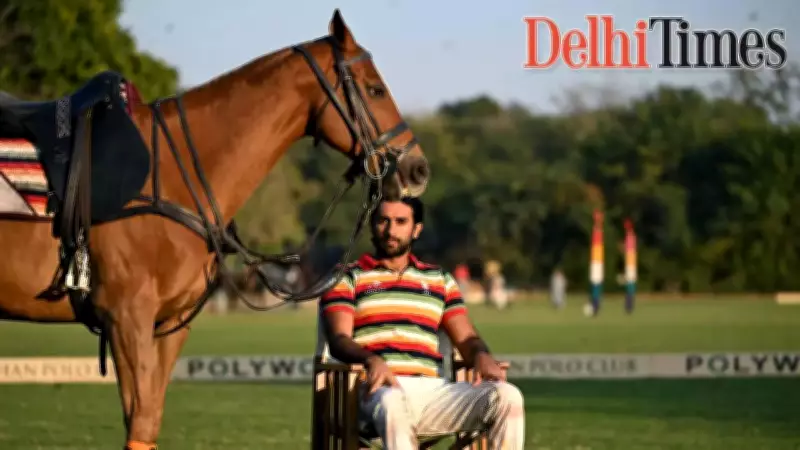
As the sun sets in hues of pink over the Rajasthan Polo Club, Padmanabh Singh, still clad in his team's vibrant colors and unexpectedly paired with traditional Rajasthani juttis, takes a moment after an intense match. The great-grandson of Maharaja Man Singh II and heir to Jaipur's storied City Palace, he poses for selfies with admirers gathered outside his tent, a familiar scene on the ground where he grew up. Horses are being bathed nearby, while others rest in stables, setting a serene backdrop for a conversation about the two pillars of his life: polo and Jaipur.
A Personal Connection to Polo and Place
For Padmanabh Singh, polo is far more than an inherited legacy; it is a tapestry of memory, identity, and victories and defeats that are entirely his own. "It's a special place for me. I've grown up here. I've spent hours riding, playing with my horses, watching polo. I've spent some memorable moments of my life here," he shares, his voice filled with nostalgia. He recalls cherished memories, particularly his polo wins, such as the Sirmour Cup, which holds deep family significance. "My grandmother's family presented it to the polo club in Jaipur to mark her marriage to my grandfather. When I won it, a crowd of a few thousand people lifted me on their shoulders for the prize ceremony," he recounts, highlighting the passion and history Jaipur has with the sport.
Polo as a Personal Achievement
Padmanabh emphasizes that his achievements in polo are deeply personal, earned through hard work. "On the polo field, you're just yourself with the horse and seven other players; nobody cares who you are, where you come from, or what weight you carry," he explains. This sense of equality and focus on skill makes his accomplishments, however small, a source of pride. He associates Jaipur with his family, but on horseback, his 15-year career reflects his own efforts. "All my achievements are mine. They're things I've had to work hard for," he asserts, noting that the fulfillment from polo is unmatched in his life.

Dispelling Misconceptions About Polo
Known affectionately as Pacho to friends and his Instagram followers, Padmanabh acknowledges that polo is often viewed as an elite event where people dress up. "We don't mind that at all – it's lovely to be the excuse that allows people to have a good time," he says with a smile. However, he is quick to address a common misconception: "There's a misconception that polo isn't accessible, and that's absolutely untrue." He points out that in cities like Jaipur, Delhi, and Bombay, riding and polo schools offer lessons at subsidized rates, allowing enthusiasts to learn and even play alongside professionals. "I hope through your platform I'm able to communicate that it's actually incorrect," he adds, advocating for greater understanding and participation.
Legacy and Vision for Jaipur
Looking to the future, Padmanabh envisions a Jaipur that honors its past while embracing innovation. "I want Jaipur to be a city that respects its past and then carefully, steadily, but swiftly moves into the future," he states. He believes in repurposing and adapting rather than destroying, drawing an analogy: "You don't need to destroy a building to make a new AI center – repurpose it, adapt it, reuse it. Similarly, you don't have to abandon your traditions to start new ones. The two can coexist." At 27, he aims to inspire young people, emphasizing their importance in shaping the future. "You matter the most. If companies, politicians, industries and institutions don't care what you have to say, they're going to be in a lot of trouble in five years' time," he stresses, highlighting the responsibility of the younger generation.

Family Heritage and Polo's Resurgence
Growing up surrounded by polo memorabilia, Padmanabh feels the sport is inescapable in his family and Jaipur. "Polo is inescapable in my family and, in a certain sense, in Jaipur too," he notes, mentioning that the Rajasthan Polo Club sits in the city's heart, attracting thousands. He is the fifth or sixth generation of polo players in his family, with his father, grandfather, and great-grandfather all having played. Interestingly, he only started playing seriously at Mayo College, away from Jaipur. Reflecting on the sport's history, he observes a resurgence: "Polo has seen a bit of a dip after the 1960s, but over the last four or five years in particular, the sport has seen significant growth." He proudly represents Jaipur, noting polo's role beyond sport, from diplomacy in the past to promoting tourism today.
A Bond with Horses
Padmanabh speaks with deep appreciation for the horses that are central to polo. "I treat them with respect, but try not to get personally attached," he says, acknowledging their short careers. Yet, he loves them as animals, admiring their beauty and sacrifices on the field. "The sacrifices they make on the field, the beats they take to get us to the ball, make space for us, or ride another player off – it's like asking them to go into a wall, and they do it blindly for you," he expresses with gratitude. This reliance on another animal teaches care, patience, and teamwork, values he holds dear.
In conclusion, Padmanabh Singh's life is a blend of royal heritage and personal passion, where polo and Jaipur intertwine to define his identity and aspirations. Through his words, he invites others to see polo not as an exclusive pastime but as an accessible sport rich in history and community spirit, while championing a future where tradition and progress walk hand in hand.