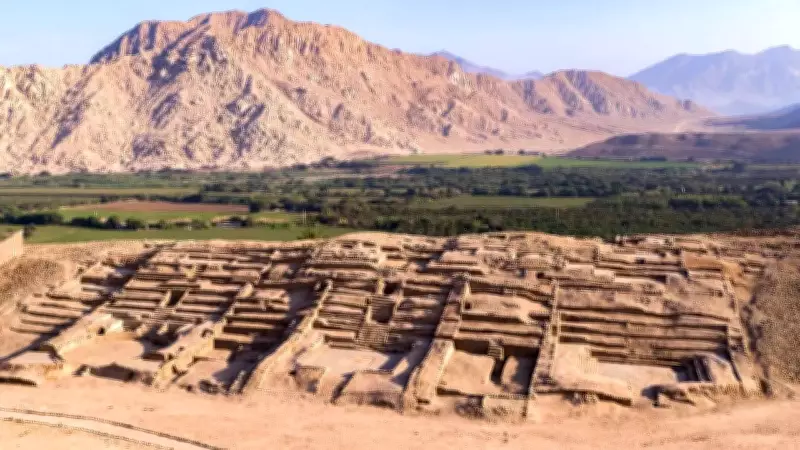
Ancient Peruvian Settlement Peñico Reveals Remarkable Story of Peaceful Adaptation
The harsh desert landscape of Peru rarely yields its secrets willingly. Wind relentlessly erodes the surface, intense heat distorts the horizon, and whatever ancient treasures lie buried typically remain hidden for eternity. Yet in the arid hills of Peru's Supe Valley, archaeologists have made an extraordinary discovery that is fundamentally reshaping our understanding of early civilizations in the Americas.
Peñico Archaeological Site Emerges from Peruvian Desert
Discovered in 2025, the Peñico archaeological site represents a significant breakthrough in South American archaeology. Dating back approximately 3,800 years, this settlement offers compelling evidence of organized community life in one of the world's most challenging environments. The site's remarkable preservation and unique characteristics are prompting experts to reconsider how complex societies developed in this region of the ancient world.
Peñico lies in the Supe Valley, several hours north of Lima, within a landscape that appears almost hostile to human habitation. Endless dry slopes stretch toward the horizon while dust particles perpetually hang in the air. This unforgiving terrain makes the discovery of a structured settlement particularly surprising and significant for archaeological research.

Organized Community Structures Without Defensive Features
According to reports from BBC, archaeologists led by renowned researcher Ruth Shady have uncovered approximately eighteen distinct structures at the Peñico site. These include religious temples, residential compounds, and open plazas that likely hosted community gatherings and ceremonial rituals. The intentional layout demonstrates careful planning and organization rather than haphazard development.
The arrangement suggests this was a community built around shared purpose and cooperation rather than hierarchical control or military dominance. What makes Peñico especially remarkable is what researchers have not found: defensive walls, fortifications, or weapons that typically characterize ancient settlements from this period.
Connection to the Ancient Caral Civilization
To fully appreciate Peñico's significance, one must understand its relationship to the broader Caral civilization, one of the oldest known societies in the Americas. The Caral-Supe civilization dates back nearly 5,000 years, placing it contemporaneous with early urban developments in Mesopotamia and ancient Egypt.
Unlike many ancient civilizations, Caral appears to have developed without traditional markers of warfare and conflict. Researchers have found no defensive walls or clear evidence of weapons at Caral sites. Instead, archaeological evidence reveals extensive trade networks stretching from the Pacific coast into the Andes mountains and potentially toward the Amazon region.
- Cotton textiles and agricultural products were exchanged across regions
- Marine resources from coastal areas reached inland communities
- Cultural artifacts demonstrate sophisticated craftsmanship and artistic expression
Climate Adaptation Without Warfare
Around 4,000 years ago, the region experienced a dramatic climate shift characterized by prolonged drought conditions. Rivers dried up, agricultural fields failed, and food resources became increasingly scarce. For many ancient societies, such environmental stress typically led to conflict, warfare, and societal collapse.
The Caral civilization appears to have taken a different path. Rather than turning to violence during this crisis period, communities adapted through strategic relocation and innovative survival strategies. Peñico seems to represent part of this adaptive response, built at higher elevations closer to glacial-fed water sources that remained reliable during drought conditions.
Artifacts Reveal Cultural Continuity and Expression
The artifacts recovered from Peñico provide compelling evidence of cultural continuity and sophisticated artistic expression during this challenging period. Researchers have discovered:

- Intricately crafted clay figurines demonstrating advanced ceramic techniques
- Beaded jewelry made from various materials showing trade connections
- Carved bones with detailed patterns and symbolic designs
- A particularly striking sculpture depicting a woman's head with elaborate hairstyle, painted red using mineral pigments
These artifacts suggest that cultural traditions and artistic expression continued to flourish despite environmental challenges, indicating a resilient society focused on cohesion rather than conflict.
Ongoing Excavations and Future Research
Archaeological work at Peñico remains ongoing, with significant portions of the site still buried beneath desert sands. What researchers have uncovered so far represents only a preliminary glimpse into this ancient community's way of life. Future excavations may reveal additional structures, artifacts, and evidence that could further illuminate how this society organized itself and adapted to changing environmental conditions.
The Peñico discovery challenges conventional assumptions about how early civilizations developed under stress. By demonstrating that complex societies could maintain organization, cultural continuity, and peaceful adaptation during climate crises, this Peruvian site offers valuable insights into alternative pathways of human societal development that emphasize cooperation over conflict.