Uttarakhand's Phool Dei Festival Fades as Migration and Farming Decline
The traditional folk festival of Phool Dei, which heralds the arrival of spring in the hills of Uttarakhand, was celebrated across the Kumaon and Garhwal regions on Sunday, coinciding with the Sankranti of the Chaitra month. However, villagers report that migration and the decline of farming have significantly dimmed the vibrant atmosphere once associated with this cherished cultural event.
A Children's Festival with Deep Roots
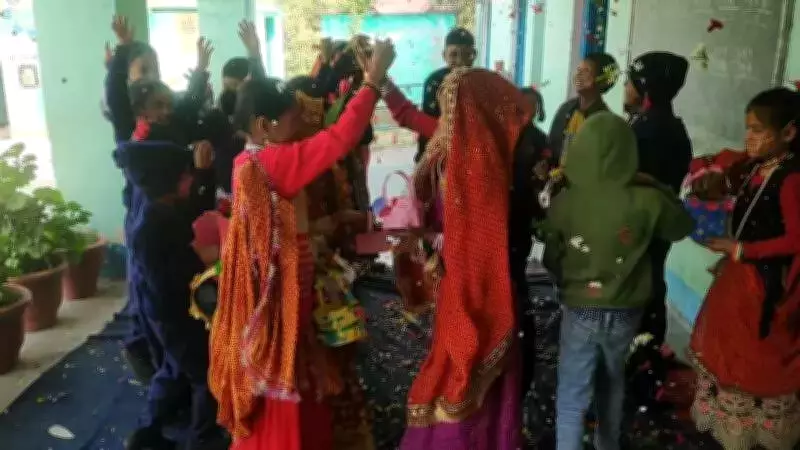
Traditionally considered a children's festival, Phool Dei involves youngsters carrying baskets filled with Pyoli (Reinwardtia indica), Buransh (Rhododendron arboreum), and other wildflowers. They place these floral offerings on doorsteps, extending wishes for prosperity and happiness to families. In return, children historically received gifts such as rice, jaggery, sweets, or money, fostering community bonds and joy.
Residents fondly recall a time when the festival was celebrated with immense enthusiasm in villages. Indra Dasila, a resident of Almora, shared, "Children in groups would visit every house early in the morning, and in the evening, halwa was prepared from the rice and jaggery collected by them. The whole village joined in the festivities." She added, "But over time, the charm of this folk festival has faded, leaving a void in our cultural landscape."

Efforts to Preserve Tradition Amid Challenges
In response to this decline, some individuals are taking proactive steps to keep the tradition alive. Bhaskar Joshi, a teacher from Matiladhura in the Tarikhet block of Almora, explained his efforts: "We celebrate Phool Dei with children in school so they can connect with their cultural roots. If children remain linked with the tradition, the festival can continue to survive in the future, preserving our heritage for generations to come."
Despite such initiatives, villagers highlight several factors contributing to the festival's waning spirit. Shrinking populations, locked houses, and reduced farming have collectively dulled the festive atmosphere. Sagar, a Class 5 student, expressed his disappointment: "Very few people and houses remain in our village, and the number of children has also decreased. The atmosphere isn't like before, and the festival doesn't feel as enjoyable or communal as it once did."
The Impact of Socio-Economic Changes
The transformation extends beyond mere participation. Villagers note that spring still arrives in the mountains, with yellow Pyoli flowers blooming and red Buransh coloring the forests. However, the doorsteps that once welcomed these flowers are often deserted now. Many houses remain locked, and several have turned into ruins, symbolizing the broader socio-economic shifts.
Households that once stored red rice and grains harvested from their own fields are increasingly dependent on government ration shops. The decline of farming is not just about the drying up of land but also represents the fading of a self-reliant lifestyle that sustained mountain culture for centuries. Villagers cite growing threats from wild animals, waning interest in farming, and a lack of resources as key factors forcing families to rely on markets or government support, even for festival meals.
An Uncertain Future for Cultural Heritage
For now, the fragrance of wildflowers still floats in the spring breeze, offering a reminder of the festival's past glory. However, villagers express deep-seated fears that future generations may not witness Phool Dei in its once-vibrant form. The combination of migration, economic challenges, and changing lifestyles poses a significant threat to this cultural tradition, underscoring the need for concerted efforts to revive and sustain it.
As Uttarakhand grapples with these changes, the story of Phool Dei serves as a poignant example of how cultural practices can erode in the face of modernization and demographic shifts, highlighting the importance of preserving intangible heritage in a rapidly evolving world.