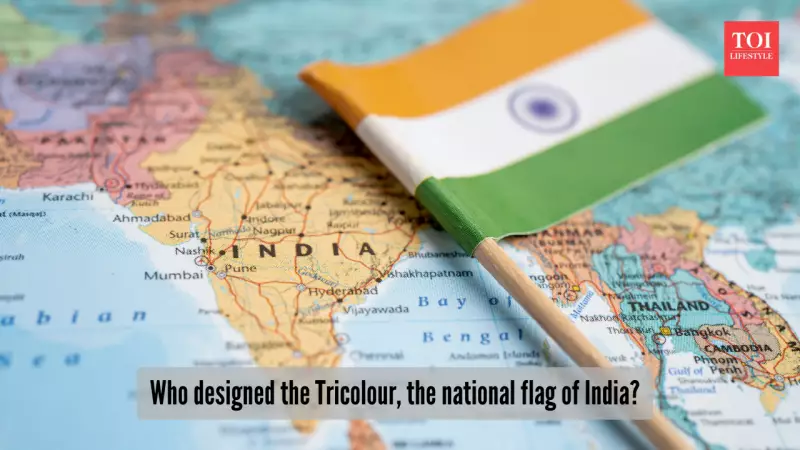
The Indian national flag, known affectionately as the Tiranga, is far more than a piece of cloth. It is a powerful symbol that stirs deep emotions of patriotism, sacrifice, and unity for over a billion citizens. Its bold horizontal stripes are a vivid reminder of the nation's hard-fought freedom struggle and its enduring spirit. From the highest flagpoles at border outposts to the quiet corners of homes, it stands as a living emblem of India's resilience and hope. But the story of its creation is one of quiet dedication, often overshadowed by history. This is the tale of the visionary who gave India its most recognizable symbol.
The Visionary Behind the Tiranga: Pingali Venkayya
The man credited with designing the base of the Indian national flag is Pingali Venkayya. Born on August 2, 1876, in a village near Machilipatnam in present-day Andhra Pradesh, Venkayya was a fervent freedom fighter and a dedicated scholar. He presented an early version of the flag to the Indian National Congress, featuring red and green bands with a spinning wheel at its centre.
His 1931 prototype underwent several modifications, eventually evolving into the flag we know today. Despite this monumental contribution to the nation's identity, Venkayya's life ended in poverty and relative obscurity. He passed away in 1963. It was only decades later that India formally honoured his legacy, issuing a postage stamp in his memory in 2009, finally recognising the quiet genius behind the nation's proud banner.

Symbolism and Evolution of the Flag
The name 'Tiranga' derives from the words 'Tri' (three) and 'Ranga' (colours). Each hue in this horizontal tricolour carries profound meaning. The saffron band at the top signifies courage and the spirit of sacrifice. The white middle band stands for peace, truth, and purity, reflecting the principle of non-violence that guided the freedom movement. The green band at the bottom represents faith, fertility, and the prosperity of the land.
At the heart of the flag lies the navy blue Ashoka Chakra, a 24-spoke wheel. This symbol was adopted from the Lion Capital of Emperor Ashoka. The spokes denote the eternal wheel of law (Dharma) and the 24 hours of the day, urging the nation to keep moving forward righteously. It replaced earlier concepts of a spinning wheel, marking India's commitment to governance and justice.
Official Adoption and Hoisting Rules
The journey of Venkayya's design culminated when the Constituent Assembly officially adopted the Tiranga on July 22, 1947, just weeks before India's independence. It became the national flag when the country gained freedom on August 15, 1947.
The flag is governed by a strict code of respect and manufacture. By law, it must be made only of khadi or hand-spun silk, with specifications set by the Bureau of Indian Standards. It must be hoisted with dignity, never allowed to touch the ground, and folded properly. One of the tallest Indian flags, a 360-foot mast, stands at the Attari border with Pakistan, serving as a towering symbol of national pride visible from kilometres away.
The Tiranga is not merely a national emblem; it is a narrative woven from the dreams and struggles of a nation. From Pingali Venkayya's initial sketch to its proud fluttering today, every fold and colour tells the story of India's past and its aspirations for the future.