The Periyar river, celebrated in Malayalam poetry and song as 'Aluva Puzha', flows with a dark legacy at Aluva Manappuram. For decades, this serene bathing ghat concealed a deadly secret beneath its sandy banks. Rampant illegal sand mining had drastically altered the riverbed, creating powerful whirlpools and treacherous undercurrents, especially near the bend behind the Shiva Temple. The spot became a recurring site of tragedy, claiming numerous lives, often children who came to play or bathe.
A Poet's Grief Transforms into a Public Warning
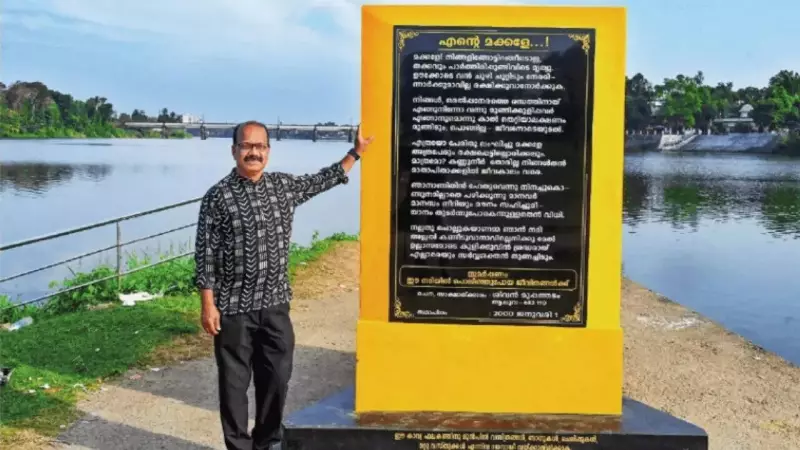
The turning point arrived in 1999 after two schoolboys drowned during their lunch break. This tragedy deeply moved noted poet Sivan Muppathadom, a native of the nearby area. Overwhelmed, he sat on the sands and penned a heartfelt 20-line poem titled "Ente Makkale" (My Children). It began with a chilling direct address: "Children! Do not venture here; death is lying in wait for its chance." Realizing printed words could be forgotten, Sivan took action. In 2000, a simple warning pillar bearing the poem's lines was installed at Manappuram.
From Pillar to Sculpture: Art as a Lifeguard
The poet later collaborated with renowned sculptor Balachandran Muppathadom (who passed away in November 2024) to transform the warning into a lasting artistic statement. Balachandran treated it as a service, devoting himself to creating a sculptural interpretation of the poem's emotion. On March 3, 2002, a concrete sculpture titled "Amma" (Mother) was unveiled. Designed to harmonize with the temple architecture, it depicted maternal vigilance, with the poem's plaque embedded within.

Monsoon floods and drifting logs repeatedly damaged the structure, but the local community, recognizing its value, consistently restored it. The elaborate sculpture eventually evolved into the current, more durable form: a bright yellow warning pillar with the poem displayed in stark black lettering.
25 Years of Silent Vigilance and a Dramatic Result
On January 1, 2025, the warning plaque completed 25 years of service. Its impact is undeniable and measurable. Drowning deaths at the Aluva Manappuram bathing ghat have reduced dramatically, with almost no fatalities reported at that specific spot for several years. The emotional resonance of Sivan's words and the visual presence of the monument have proven more powerful than conventional signs.
The story of Aluva Manappuram demonstrates how community-driven art and literature can directly shape human behavior and save lives. Today, the "Amma" pillar stands not just as art, but as a silent, ever-watchful lifeguard on the banks of the Periyar.