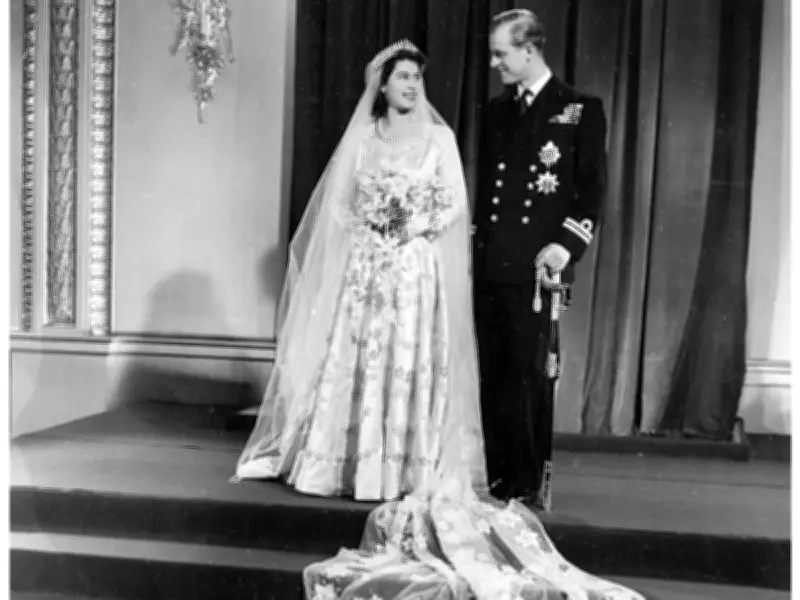
Princess Elizabeth and Prince Philip Mountbatten were married on November 20, 1947, at Westminster Abbey, a time when Britain was still recovering from the Second World War. Food rations remained in effect, and clothing restrictions were in place to reflect the austerity that gripped the nation. Despite these constraints, Princess Elizabeth's wedding dress became one of the most famous royal wedding gowns in history. Created by British designer Sir Norman Hartnell, the garment symbolized both the post-war spirit of a nation and its hopeful aspirations for the future of fashion.
A Royal Wedding During Rationing
Princess Elizabeth's wedding ceremony took place during a period when Britain still enforced wartime laws. According to the Royal Collection Trust, rationing had not ceased when the marriage between the Princess and Philip Mountbatten was announced in July 1947. As a result, Princess Elizabeth was granted an additional allocation of clothing coupons to help purchase the fabric required for the dress. The government provided her with 200 extra clothing coupons. It is reported that citizens offered their own coupons to Princess Elizabeth following the engagement announcement, but many were returned because they could not be legally used. The constraints were such that even a royal wedding had to take into account the circumstances Britain faced in the aftermath of World War II.
Norman Hartnell's Celebrated Design
The dress was designed by Sir Norman Hartnell, who had already gained popularity as one of Britain's leading fashion designers. According to reports, Hartnell presented several gowns for consideration in the summer of 1947, and one was chosen just under three months before the wedding. The final gown was made from ivory duchesse satin, decorated with elaborate embroidery of seed pearls, crystal beads, and silver thread. Themes of rebirth and optimism influenced the floral embroidery that appeared across the dress and train.

Details Woven into the Gown
The dress featured a fitted bodice, long sleeves, and a flowing skirt that reflected late 1940s fashion. Thousands of pearls and crystal beads were stitched onto the dress by expert embroiderers. Floral motifs included white roses, jasmine flowers, orange blossom, and ears of wheat, each carrying symbolic meanings related to wealth, fertility, and rebirth. A silk tulle court train measuring about 13 feet in length was attached to the shoulder area, continuing the floral motifs and becoming one of the gown's most recognizable features. A silk tulle veil was worn along with Queen Mary's Fringe Tiara, which belonged to Princess Elizabeth.
Crafted by Skilled British Workers
While Princess Elizabeth is often the most prominent figure linked with the dress, its creation relied on the efforts of many designers, embroidery experts, and dressmakers. Hundreds of specialists were involved in the process over several months. Hartnell worked closely with the embroidery team to achieve the intricate detailing. The skill demonstrated in making the dress highlighted the excellence of British couture after the devastation of war. Historians have emphasized that the wedding provided Britain with an opportunity to showcase its design skills globally.
Why the Dress Still Matters Today
The bridal gown holds great significance among royal dresses, transcending mere aesthetics. Its arrival coincided with Britain's desire for stability and positivity. Hartnell drew inspiration from notions of spring and renewal, which was particularly relevant for a nation recovering from years of conflict and recession. The gown also signaled the start of a trend for designing special gowns for royal brides, and it is often considered one of the most important fashion creations of the last century. Today, the gown is part of the Royal Collection and is featured in various exhibitions. Nearly 80 years since Princess Elizabeth wore it in Westminster Abbey, the gown remains a symbol of an era in British history.