Railways Discontinues 'Colonial' Bandhgala Uniform
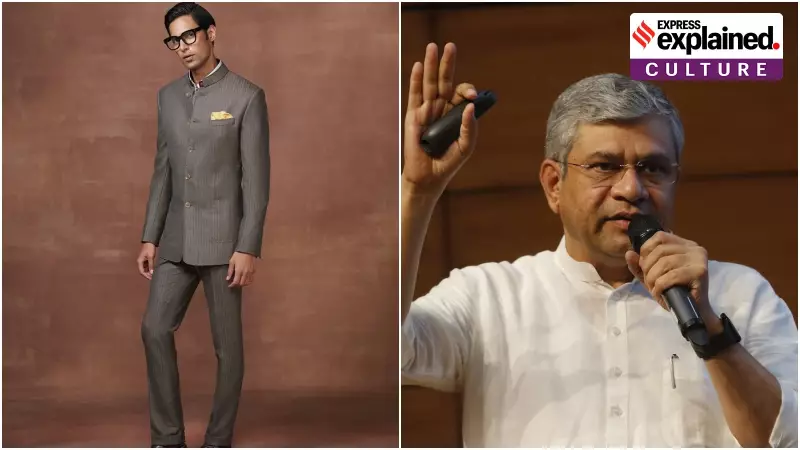
Union Railways Minister Ashwini Vaishnaw recently announced a significant change. Railway staff will no longer wear the bandhgala as their uniform. Vaishnaw termed this garment a colonial relic. This move marks a shift away from what some see as a vestige of British rule.
The Bandhgala: A 'Made in India' Fashion Statement
Despite its colonial associations, the bandhgala holds a proud Indian heritage. Often called the "prince suit" or "prince cut," it originated in the princely state of Jodhpur in Rajasthan. This jacket was one of the first "Made in India" fashion items to capture global attention. Its journey from royal courts to international runways is fascinating.
Fashion designer Raghavendra Singh Rathore explains the jacket's origins. He is a descendant of Rao Jodha, the 15th-century founder of Jodhpur. Rathore states, "The bandhgala jacket has always been a court garment of Indian provenance. It evolved from centuries of formal attire in royal India." He notes that while colonial elements like epaulettes and insignia were added, the jacket itself is wholly Indian.

Mughal and Rajput Influences
The bandhgala, also known internationally as the Jodhpuri jacket, is not a derivative piece. It represents over four centuries of evolution. This evolution was shaped by Mughal ceremonial codes, Rajput warrior aesthetics, and Marwar tailoring traditions.
Rathore traces its earliest ancestor to the Mughal era. "The jama was the formal court coat of Mughal emperors. It had a fitted bodice and closed neckline," he says. Under Akbar, these garments became more structured. The angrakha emerged as a sophisticated variation with a banded neckline.
When Rathore rulers served under the Mughals, their styles merged. Raja Udai Singh and later rulers adopted refined court tunics like the bago. Over time, jackets such as the dagali and gudadi were introduced. These shortened the long Mughal coat into a true jacket form.
Polo and Modern Adaptations
By the late Mughal period, waist-length jackets were common in court settings. The achkan, a close-fitting coat, served as a direct precursor to the modern bandhgala. However, it was not suitable for polo. Jodhpur royals modified it for riding, taking the design to London for refinement.
The combined outfit of jacket and breeches became known as jodhpurs. It gained popularity in the West as Jodhpur polo teams traveled for matches in the 1930s. Rathore adds, "In the 19th century, royal portraits from Indian studios inspired Western tailors." Anecdotes suggest Maharaja Pratap Singh had his outfit tailored on Savile Row after losing his baggage in London.
British tailors retained the high collar but added structure with shoulder pads and precise measurements. The Marwar school of tailoring absorbed these techniques, refining the jacket into the sharp bandhgala we know today.
Functional and Political Aspects
The high-neck design served practical purposes. Rathore explains, "It helped beat the cold of north India without scarves. Royals could also showcase jewellery effectively." Such collars were not found in southern kingdoms from the same period.
The English popularized jodhpurs for strategic reasons. Rathore notes, "High collars were used in China and Japan. Britain aimed to build a pan-Asian cultural sameness." In India, they made cultural concessions while promoting English education and Western sciences.
Global Revival and Contemporary Relevance
Rathore revived the bandhgala while studying in New York, attracting interest from designers like Donna Karan and Oscar De La Renta. He says, "I introduced elevated cuts in 1994. Dressing actor Saif Ali Khan in 'Eklavya' boosted its popularity."
Maharaja Umaid Singh, an aviator, further popularized the style through the Jodhpur Flying Club in the 1930s. American squadrons stationed there helped spread the bandhgala, boots, and breeches.
The Railways' decision to discontinue the bandhgala uniform highlights its colonial associations. Yet, the jacket remains a symbol of Indian craftsmanship and heritage. Its journey from Jodhpur's courts to global fashion underscores a rich cultural legacy.