Rajoo Barot: A Life in Theatre, a Conscience on Stage
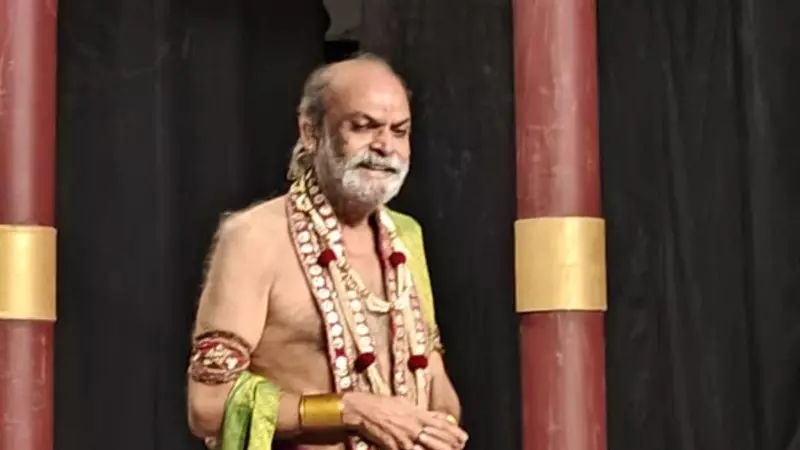
Gujarati theatre has lost one of its most steadfast practitioners, thinkers, and quiet revolutionaries with the passing of Rajoo Barot. For over four decades, his work shaped not only performances on stage but also the ethics, discipline, and seriousness with which theatre could engage society. His passing leaves behind an absence that is deeply felt—by audiences, collaborators, students, and by the very grammar of contemporary Gujarati theatre.
Early Life and Formative Training
Born in Vadodara and introduced to theatre at a young age, Barot's journey was marked by rigorous training and deep curiosity. After completing his early education and a drama diploma at M S University, Baroda, he went on to study at the National School of Drama (1977 batch), New Delhi, where he was a student of the legendary Ebrahim Alkazi.
That formative period exposed him to diverse theatrical traditions—from Nautanki in north India to classical and folk performance forms—and grounded him in a discipline that he carried throughout his life. This foundation in varied artistic expressions would later inform his innovative approach to Gujarati theatre.

Return to Ahmedabad and Theatre Revolution
When he returned to Ahmedabad in the late 1970s, Gujarati theatre was going through a moment of transition. Along with fellow practitioners, Barot became part of a generation that wanted to move beyond comfortable, formulaic theatre. His collaboration with Bharat Dave and later his pivotal role in shaping the Ahmedabad Theatre Group (ATG) reflected this aspiration: to build a theatre that was serious, technically strong, socially engaged, and yet accessible to audiences.
ATG was not merely a theatre group; it became a training ground, a collective conscience, and a sustained experiment in professional theatre practice. Under Barot's guidance, it developed into an institution that prioritized artistic integrity over commercial success.
Directorial Vision and Social Engagement
Rajoo Barot's directorial work stands out for its range and clarity of intent. From intense psychological and political dramas like Sanak and Marmabhed to socially grounded works such as Sava Amari Jaat Alag Chhe and Ha, Hu Tane Chahu Chhu Jindagi, his plays consistently addressed questions of violence, communal harmony, gender, justice, and individual responsibility.
These were not didactic productions; they were carefully structured, emotionally precise, and rooted in strong ensemble performances. Audiences in Gujarat, Mumbai, Delhi, and international stages responded not just to the themes, but to the discipline and integrity of the craft.
Commitment to Collective Theatre
A distinctive feature of Barot's theatre was his belief in the collective. He resisted star-centric theatre and instead built ensembles where every actor mattered. This approach earned ATG a reputation for unusually consistent performances, where even minor roles were finely etched.
His commitment to nurturing new writers—such as Abhijat Joshi, Saumya Joshi, Paresh Vyas, and Iqbal Unnashi—helped shape a generation of Gujarati playwrights who dared to engage with contemporary realities. Through this mentorship, he ensured that Gujarati theatre would continue to evolve and reflect the changing social landscape.
Engagement with Music and Folk Traditions
Equally significant was his engagement with music and folk traditions. Recognizing the scarcity of trained singer-actors, Barot carved an alternative path by curating and presenting Gujarati rangbhoomi songs, (Zaverchand) Meghani's compositions, and water and folk songs through musical theatre and performance programmes.
Initiatives like Taz-e-Theatre were not nostalgic exercises but living archives—ways of keeping performance traditions alive, relevant, and performable for newer audiences. His work in this area demonstrated his deep respect for cultural heritage while making it accessible to contemporary viewers.

Interpretation of Classical and Epic Material
His engagement with classical and epic material further revealed his interpretative depth. Productions such as Paritraan, Socrates, and Kaikeyi demonstrated his ability to read canonical texts with contemporary ethical urgency.
In Kaikeyi, for instance, he resisted the simplistic villainisation of the character and instead presented her as a politically astute and morally complex figure—an approach that resonated strongly with modern audiences. This nuanced treatment of traditional stories showcased his innovative storytelling techniques.
Teaching and Legacy Building
Beyond directing, Rajoo Barot was a teacher in the truest sense. Through workshops, theatre camps across Gujarat, and international training initiatives, he believed in continuous learning—for himself and for others. His work with rural and urban actors, and later with National School of Drama (NSD) students in reviving and reinterpreting Bhavai, reflected a lifelong commitment to process rather than spectacle.
Theatre, for him, was not an event but a sustained practice. His contributions were recognized with several honours, including the Gujarat State Gaurav Puraskar and the prestigious B.V. Karanth Smriti Puraskar from the National School of Drama in 2016. Yet, those who worked with him know that awards were never his measure of success.
Ethical Foundation and Lasting Impact
What mattered more was whether the work remained honest—whether it asked difficult questions, whether it respected the audience, and whether it upheld the dignity of the performer. In recent years, even as the pandemic brought theatre to a halt, Rajoo Barot continued to read, adapt, and experiment with readings and minimal forms. His engagement never ceased; it merely changed shape.
That quiet perseverance perhaps best defines his legacy. Rajoo Barot leaves behind not just a body of work, but a way of thinking about theatre—as a moral, social, and collective act. His absence will be deeply felt, but his influence will continue to live on in the actors he trained, the writers he encouraged, the institutions he strengthened, and the audiences he trusted with difficult truths.
Personal Connections and Final Journey
Rajoo Barot's association with the theatre community has been deeply meaningful and personal. His long and thoughtful engagement with fellow practitioners was grounded in mutual respect, shared values, and a rigorous commitment to theatre as an intellectual and ethical practice. Through his collaboration with various theatre institutions, he became part of a larger journey of documentation, dialogue, and reflection on Gujarati theatre.
His contributions to critical discourse enriched the field, and his presence at theatre festivals remains a cherished memory—marked by clarity of thought, humility, and quiet authority on stage. Rajoo Barot passed away during a tour to Uttarakhand, leaving behind a legacy that will continue to inspire generations of theatre artists. Gujarati theatre bows in gratitude to one of its finest practitioners.