The Ramnamis: A Legacy of Tattooed Devotion and Radical Equality
In an era when temples often restricted access based on community, Sant Parsuram witnessed the anguish of those denied entry. Moved by this injustice, he founded a community dedicated to worshipping Ram within their own bodies, giving rise to the Ramnamis. This group became known for their profound spiritual practices centered on inclusivity and personal devotion.
The Distinctive Practices of the Ramnamis
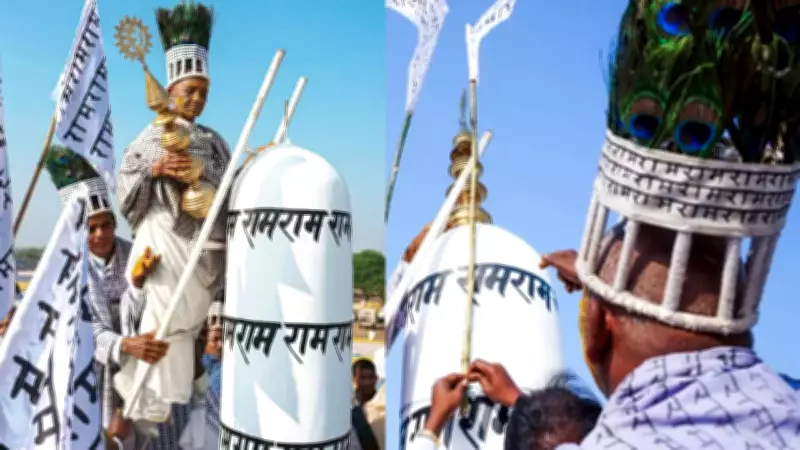
Sant Parsuram pioneered the tradition by tattooing the name of Ram on his forehead, a practice that evolved into full-body tattoos for his followers. Ramnamis adorn their faces, heads, hands, and feet with the name "Ram" using traditional ink, symbolizing their unwavering faith. They complement this with shawls and headgear made from peacock feathers, also inscribed with Lord Ram's name.
Their daily mantra is "Ram-Ram," a double repetition that distinguishes their concept of the divine from the historical figure in the Ramayana. For them, Ram is Nirgun, or formless—an omnipresent embodiment of faith accessible to all, regardless of caste. This belief underscores their commitment to social equality, rejecting hierarchical norms.

Primarily agriculturalists, the Ramnamis are concentrated in Chattisgarh, living along both banks of the Mahanadi River. Their lifestyle is simple and spiritually focused, with evenings dedicated to welcoming visitors and engaging in bhajanas and kirtans. They strictly abstain from alcohol and tobacco, adhering to principles of purity and devotion.
Challenges and Evolution in Modern Times
Over the years, the Ramnami community has spread globally, but its population has sharply declined from a peak of nearly 600,000 to estimates between 20,000 and 100,000 today. Younger generations are increasingly opting out of full-body tattooing due to social pressures, pursuit of higher education, and fears of professional discrimination.
Kunj Bihar, a Ramnami Samudaya Sanchalak, notes, "Now only two people in the community have their whole body tattooed, with 20-30 others having tattoos on their faces and other parts. Urbanization and education have led to a decline in full-body tattoos, but the core principles—equality for all, abstaining from vices, and daily 'Ram' chants—are still followed by youth." Despite these changes, many young members continue to uphold the community's foundational values of equality and daily devotion.
Annual Festival and Unique Temple
According to Kunj Bihari, the Ramnami concept of Ram is composed of five elements: agni (fire), vayu (air), shakti (energy), jal (water), and akash (sky), viewed as an abstract form. One of their most significant events is the Bhajan Mela, a three-day festival held in the month of Paush, coinciding with the end of the harvest season in December–January.
During this festival, they construct a unique temple called Jayostambh, which features no images or idols. Instead, it is a white pillar inscribed with the name of Ram, reflecting their belief in a formless divinity. A highlight of the festival includes chants from the Ramcharitmanas, blending tradition with their distinct spiritual interpretation.
Enduring Significance of the Ramnami Faith
Though the Ramnami community may have dwindled in numbers, their existence serves as a powerful testament to faith that transcends rigid norms and prescribed practices. Rooted in deeply held beliefs, their tradition demonstrates how spirituality can evolve yet endure, taking on diverse forms across time. Their legacy continues to inspire reflections on equality, devotion, and the personal nature of religious expression.