In a remarkable journey spanning continents and decades, a rare "cap badge" belonging to the officers of the Indian National Army (INA), also known as the Azad Hind Fauj, has made its way from Australia to enrich the collection of Kolkata-based Netaji memorabilia enthusiast Prithwish Dasgupta. This significant acquisition comes eight full decades after the badge was originally commissioned, marking a poignant addition to historical artefacts from India's freedom struggle era.
A Symbolic Artefact of Historical Significance
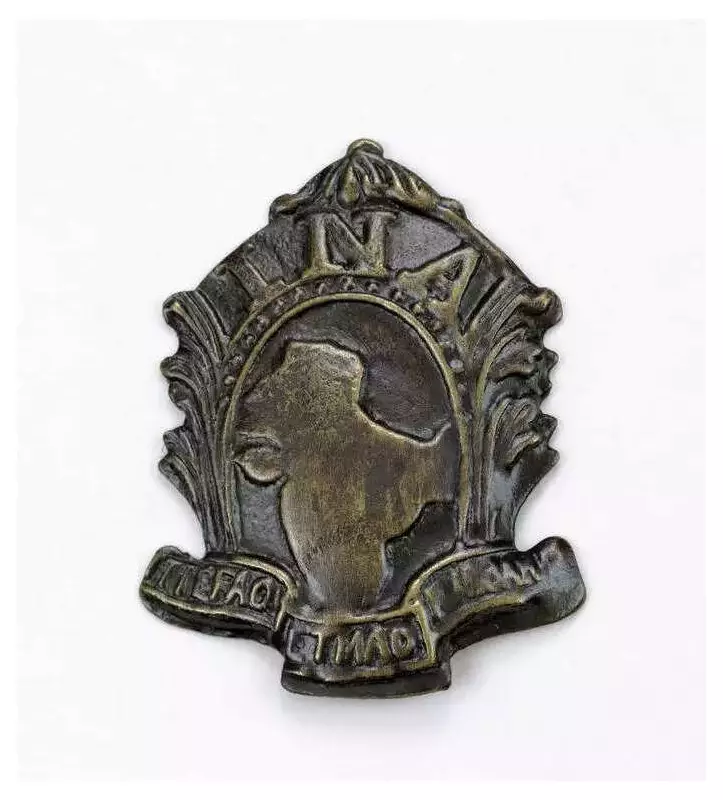
Categorised as an exceptionally rare collectible, this metal cap badge transcends its function as a mere military accessory. It features an intricately engraved map of undivided India, serving as a powerful visual representation of the INA's vision. Prithwish Dasgupta, the passionate collector who now possesses this treasure, emphasized its scarcity and value. "Due to limited resources, secret operations, and extremely harsh wartime conditions, its production was strictly limited. As a direct result, acquiring one such badge is a rare occurrence, and it stands as invaluable as a historical artefact," Dasgupta explained, highlighting the challenging circumstances under which these badges were produced.
Design and Ideology Etched in Metal
The badge's design is rich with symbolism. At its top, the letters "INA" are clearly etched, identifying the force. Just below, the core ideology of the Azad Hind Fauj is engraved in the words: "Ittefaq, Etemad, Kurbani" — translating to unity, faith, and sacrifice. During the turbulent years of World War II, officers of the Azad Hind Fauj proudly wore this badge on their military caps. It was not merely an insignia denoting rank or identity; it was a profound symbol of honour, commitment, and the revolutionary spirit driving the fight for India's independence.

A Seven-Year Quest Culminates in Success
Dasgupta's acquisition is the culmination of a dedicated seven-to-eight-year search. "I looked for this specific badge persistently for years. Within India, only three prestigious museums are known to possess it: the Red Fort Museum in New Delhi, the INA Memorial Complex in Manipur, and the Netaji Bhavan Museum right here in Kolkata," he noted. Beyond India's borders, examples are held by the Imperial War Museum in the UK, the National Museum in Singapore, and the National War Museum in London, making private ownership exceptionally rare.
"No individual collector in India has this badge in their possession until now. This badge is profoundly significant as it symbolised India's distinct presence alongside the Axis powers during World War II," Dasgupta stated, underlining the badge's unique historical position.
The Unexpected Australian Connection
The journey of this particular badge to Dasgupta's collection is shrouded in intriguing mystery. A couple of months ago, Dasgupta connected with a collector based in Australia who shared photographs of his collection via email. According to Dasgupta, the badge was handed down to the Australian collector by his grandfather, who served with the armed forces aligned with the Axis powers. This provenance raises fascinating historical questions. "The INA's operational movement was largely restricted to Southeast Asia. There is no established historical record of the INA operating directly with Australian forces. It is genuinely surprising and puzzling how he came to possess an INA cap badge," Dasgupta remarked, adding an element of mystery to the artefact's provenance.
Enriching a Priceless Personal Archive
This rare cap badge now joins an already impressive personal archive curated by Prithwish Dasgupta. His collection is renowned for including all the military awards ever issued by the INA, martyr medals of the Army, and an exclusive set of ten handwritten letters by Netaji Subhas Chandra Bose himself. The addition of this cap badge not only fills a critical gap in his collection but also serves as a tangible link to the courage and ideology of the soldiers who fought under the INA's banner, preserving their legacy for future generations.