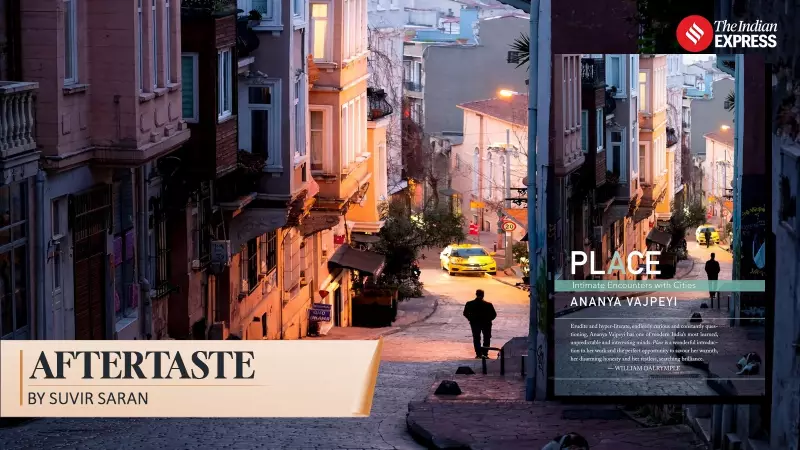
In a reflective piece titled Aftertaste, published on January 1, 2026, writer Suvir Saran delves into the profound depths of Ananya Vajpeyi's latest work, Place: Intimate Encounters with Cities. This is not merely another book about urban landscapes; it is a transformative journey that compels cities to gaze back at their observers.
Beyond Geography: The City as an Ethical Condition
Saran clarifies that Vajpeyi's book defies simple categorization. It is not a travelogue, memoir, or academic text, yet it seamlessly incorporates elements of all three. At its core, Place conceptualizes location not as mere geography but as an ethical condition, a state of attention, and a lifelong apprenticeship in listening.
The reviewer draws from a personal history with the author, recalling her presence at his family farm in Hebron, New York, long before her academic acclaim. It was there he witnessed the qualities that now define her book: a layered humanity, a soft-spoken yet unsparing intellect, and emotional exactitude.

Cities as Active Interlocutors
Place is a compilation of essays penned over twenty-five years, traversing thirteen cities worldwide, including New York, Banaras, and Dresden. However, Vajpeyi resists nostalgia or spectacle. Her approach is unique: she engages with cities as one would with a complex text, attentive to subtext, shadow, and silence.
Saran emphasizes the book's powerful refusal to separate the personal from the political. Vajpeyi writes with a dual consciousness—the rigor of a historian paired with the vulnerability of someone open to change. In these pages, cities transform from passive backdrops into active interlocutors that argue, wound, console, and demand accountability.
The Unfashionable Ethics of Belonging
In today's fast-paced world of curated identities, Place champions difficulty and ethical seriousness. It poses challenging questions: What does it mean to love a city without possessing it? How does one belong without causing erasure? Vajpeyi acknowledges the fractures of class, caste, faith, and language that underpin urban spaces, never reducing them to mere theory.
Yet, Saran notes, the book is far from grim. It is animated by curiosity, affection, and a faith in thought as a form of care. The prose is elegant yet unornamental, intimate but not indulgent. It carries a warmth and disarming honesty that feels increasingly rare.
The Lasting Aftertaste: Presence as a Moral Act
The ultimate lesson Saran derives from Place is that attention is a moral act. Whether describing Banaras or Berlin, Vajpeyi demonstrates that truly encountering a place requires patience, humility, and a willingness to be unsettled. Cities exist not to affirm us, but to test us.
The book offers no easy itineraries or shortcuts to belonging. Instead, it provides companionship for those who see cities as ongoing conversations and understand identity as provisional. Ultimately, Place is about how a thinking, feeling person moves through the world with care, learning to stand somewhere—ethically, intellectually, emotionally—without claiming ownership.
The deepest aftertaste it leaves is a quiet insistence: where we are matters only if we are truly present.