In the vibrant world of Indian classical arts, a quiet revolution is unfolding. Beyond the flashy fusion and modern remixes, artists are turning back to Sanskrit. They see it not as a dusty relic but as the very lifeblood of performance. This shift is breathing new energy into traditions like Bharatnatyam and Shastreeya Sangeet.
Sanskrit: The Language Born to Be Sung
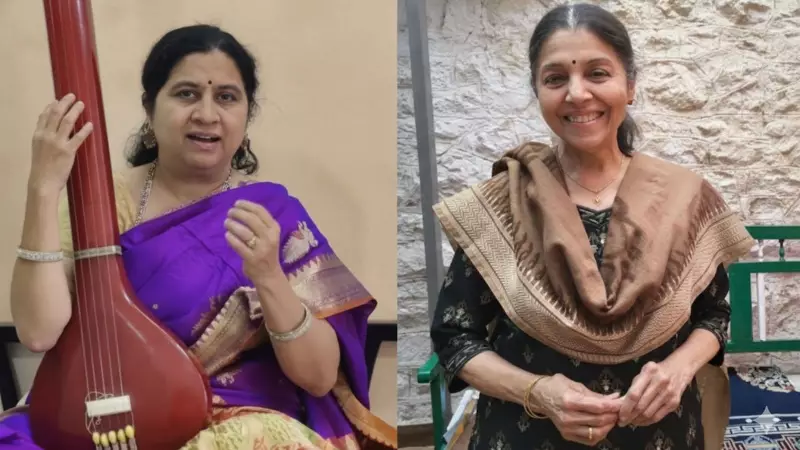
Anjali Malkar, a respected Hindustani classical singer and professor, speaks with conviction. She describes Sanskrit as a "gaya" language. This means it is designed for singing, not just speaking. "You don't just speak Sanskrit; you flow with it," Anjali explains. Her words come from a lifetime of study. She believes learning the language naturally builds musicality into one's voice. For her, Sanskrit and music are inseparable. They are essentially the same.
The Foundation of Rigorous Dance
Sucheta Chapekar, a celebrated dancer and choreographer, echoes this sentiment. She points out that all Indian languages have roots in Sanskrit. For the demanding art of Bharatnatyam, she says Sanskrit is not just helpful. It is fundamental. "Bharatnatyam is not ideally possible without Sanskrit," Chapekar states firmly.

She views Sanskrit as a precious inheritance, not a conquest. Dance, she emphasizes, is more than physical movement. It combines many art forms into one. To truly grasp its depth—to understand every mudra, every taal, every subtle expression—one needs the language that holds the ancient codes. At Kalavardhini, her trust for young dancers, she has made Sanskrit instruction a core part of training. Students learn alongside their music classes.
Chapekar creates teaching materials directly from ancient texts like the Abhinaya Darpan and the Natyashastra. "They know and understand what they dance," she says of her students. This approach forms the bedrock of her Bharatnatyam teaching method.
From Instinct to Intellectual Mastery
Shreya Prabhune's journey illustrates this transformation. As a Gayan Visharad and Sanskrit scholar, she once sang with pure instinct. Then she started reading Sanskrit treatises alongside her performances. Her perspective changed completely.
"When I only thought about singing, I only thought about my performance," she reflects. "But when I integrated Sanskrit, I realized that art needs logic to support its wings. You have to know where to place the emotion to make it hit home."
A 17th-century text, the Sangeet Parijat, became her guide. It illuminated the concept of Shruti—the microtones between standard notes. Many performers hit these notes by feel. The Sanskrit scriptures, however, offer a logical, scientific map. "I understood Shruti deeply only as a researcher," Shreya explains. "It taught me that every vibration, every frequency, carries a specific bhaav, or emotion. Now, I don't just sing; I sing consciously."
The Science Behind the Sound
Anjali Malkar touches on the spiritual aspect with a modern twist. "We say the gods become happy when we pronounce words correctly," she says with a smile. "But what does that mean today? It means the sound influences our mental state. It colors the mind with a specific emotion, creating an aura of immense positivity."
Dr. Sharayu Bhalerao, a Bharatnatyam singer and Sanskrit scholar, focuses on the science. Her doctoral research compares the taal system from the Natyashastra with modern rhythms. "When you stay aloof from ancient Sanskrit texts, you lose the science," she warns. "Even the taals practiced today are often learned by rote. Nobody understands why they work."
She insists that a great artist blends theory with practice. The learning process must go beyond physical drill. It requires intellectual work. In our fast-paced digital age, this depth is often sacrificed for speed. "It is an era where social media valorizes the flashy over the foundational," Sharayu observes.
Innovation Rooted in Tradition
Contemporary artists want to innovate. But Sharayu poses a critical question: What exactly are they departing from? To break rules authentically, one must first understand them. Sanskrit texts provide that essential understanding.

She explains that Bharatmuni, who codified Bharatnatyam in the 2nd century, built in flexibility. He distinguished between lokdharmi, art for common people, and natyadharmi, art for trained performers. Modern fusions, therefore, are not betrayals of tradition. They are applications of Bharatmuni's own adaptive principles. The problem, Sharayu notes, is that many contemporary artists do not know Bharatmuni well enough to understand what they are actually breaking.
A Nuanced View on Modern Trends
Is the "funky" evolution of modern music a threat to these classical traditions? The answer is nuanced. Anjali Malkar acknowledges that purpose dictates performance. If a musician aims to experiment with sound and chase novelty, fusion becomes a natural, perhaps necessary, outcome.
The call to action from these artists is both simple and radical. They urge a localization of Sanskrit. "Let us not keep Sanskrit on too high a pedestal," Anjali insists. "We need to bring it down to the common people. It is the language of all knowledge. To have an academic aura as a musician today, studying Sanskrit is no longer optional. It is mandatory."
This requires a shift in priorities for the next generation. Her advice to budding performers challenges today's hustle culture. "Don't chase performances. Chase excellence," she says.
Sucheta Chapekar adds her own perspective. "More than Sanskrit, what matters to me is the arthgarbhataa," she says. This means substantiality combined with the musicality of language. "In any language, if these are found, I am compelled to study and perform through that language. We find Sanskrit has both the traits."
In Pune and beyond, this revival is gaining momentum. Artists are not rejecting modernity. Instead, they are grounding their innovation in the profound wisdom of Sanskrit. They are ensuring that the soul of India's classical arts continues to beat with clarity and depth for generations to come.