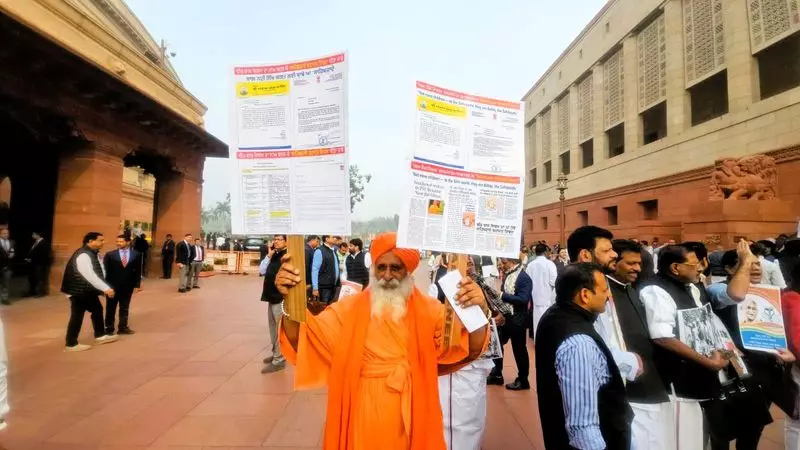
In a poignant address to the Rajya Sabha, nominated member Balbir Singh Seechewal elevated the discourse surrounding the younger sons of Guru Gobind Singh, emphasizing their profound and everlasting spiritual stature. The environmentalist and social activist, widely respected for his work in Punjab, argued that the four Sahibzade should be revered not merely as historical child martyrs but as eternal spiritual guides and icons for all of humanity.
A Call for Deeper Recognition in Parliament
Speaking during a discussion, Seechewal brought a theological perspective to the parliamentary floor. He stressed that the significance of Sahibzada Baba Fateh Singh and Sahibzada Baba Zorawar Singh, who were martyred at a tender age, transcends their physical sacrifice. Their legacy, he asserted, is one of unwavering faith and spiritual sovereignty, principles that continue to inspire millions across the globe.
The MP noted that while the nation observes Veer Bal Diwas on December 26 to commemorate their bravery, their contribution is far greater. He described them as "eternal spiritual icons" whose lives provide a timeless lesson in courage and conviction. Seechewal's intervention aimed to shift the narrative from one of pure historical remembrance to active spiritual engagement with their teachings.
Beyond Martyrdom: The Eternal Message of the Sahibzade
Elaborating on his point, Seechewal connected the sacrifice of the Sahibzade to the core values of Sikhism. He reminded the house that their stand was for righteousness and against forced religious conversion, a stance that protects the fundamental right to faith. This, he implied, makes their story universally relevant in today's world where religious freedom is often challenged.
The Rajya Sabha member highlighted that their father, Guru Gobind Singh Ji, himself proclaimed the eternal status of his sons. They are forever remembered in the daily Ardas (Sikh prayer) as "Chaar Sahibzade", a title of the highest reverence. Seechewal's speech served as an educational moment, informing the broader national polity about the depth of Sikh history and philosophy.
Bridging Faith and Governance
By raising this subject in the Parliament, Seechewal performed a unique role, bridging spiritual discourse with national governance. His address underscored how India's rich spiritual heritage can inform contemporary societal values. He positioned the Sahibzade not as figures confined to one community but as national treasures embodying the ultimate sacrifice for conscience.
The MP's comments have resonated widely, particularly in Punjab and among the Sikh diaspora. They reinforce the idea that the legacy of the Sahibzade is alive and offers guidance. It is a call to look beyond the historical date of their martyrdom and to integrate the principles they died for—freedom, faith, and fearlessness—into the moral fabric of society.
In conclusion, Balbir Singh Seechewal's parliamentary intervention was a powerful tribute that successfully reframed a key historical narrative. He moved the discussion from solemn remembrance to celebrating living ideals, ensuring that the Sahibzade are recognized for what they are: perpetual beacons of spiritual light and courage for all ages.