Delhi Exhibitions Highlight Seema Kohli's Four-Decade Artistic Evolution
Two solo exhibitions in Delhi are currently tracing the artistic journey of contemporary artist Seema Kohli. These shows bring together an impressive forty years of her art practice. They feature works across varied mediums and themes, offering a comprehensive look at her career.
Exploring Bodies and Goddesses
Presented by Gallerie Nvya at Triveni Kala Sangam, the exhibitions span different concepts. "Bodies of Sky, Bodies of Earth" delves into the idea of the body as an archive. It connects earth, species, and stories in a profound way. Meanwhile, "With Her Hair Running Wild" draws on tales of undomesticated goddesses and impassioned gods. Both shows highlight Kohli's diverse engagements with art.
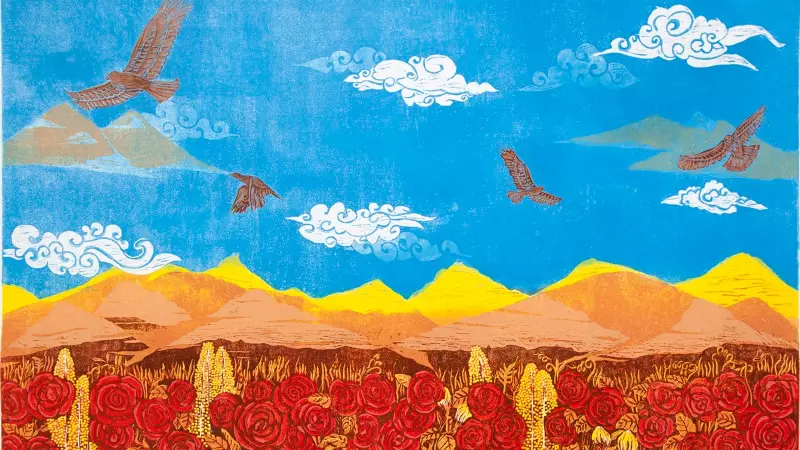
One notable piece is "Between Heaven and Earth- Rose Gardens", a wood cut print on paper from 2025. This work measures 4 by 5 feet and exemplifies her skill in printmaking. Another key artwork is "Khula Aasman", created with acrylic and water colors on arches paper in 2024. These pieces showcase her mastery over different techniques.

Themes of Femininity and Gender
In an interview, Kohli discussed important themes in her work. She emphasized the transcendence of time and feminine sexuality. Her art naturally leans towards the transformational energies of the feminine. Kohli explained that she explores the vast and deviating variant of feminine energy forms through her practice.
She gained insights from ancient metaphysical texts like the Garbha Upanishad. Kohli noticed inconsistencies in gendered ascriptions within these accounts. For instance, the term hiranyagarbha refers to Surya or Brahma, both traditionally seen as male. This observation, along with concepts such as Ardhanarishwar, influenced her understanding.
Kohli views gender as a spectrum. Her work includes ambiguous beings from Hindu mythology, like yakshas and yakshinis. She also references narratives involving transgenders, transvestites, and gods with fluctuating genders. Through her art, Kohli systematically deconstructs sexuality. She sees it as a voracious fecundity and creative potential that cuts across sexes.
This approach frees the body from binary gender structures. It allows for more organic and constructive expressions. Kohli's work radicalizes sexuality by combining it with creation and self-actualization. She confirms this presence in both male and female subjects, showing how they tap into feminine creative potential.
Personal Influences and Memories
Kohli's initiation into art began early. As a three-year-old, she was an introvert. Her parents introduced her to paper and color, sparking a lifelong passion. Today, her art serves as a conversation with herself and her surroundings. It engages with philosophical enquiries of life, using visual language to grasp metaphysical truths.
Personal experiences heavily influence her work. Kohli developed a concept inspired by her father's autobiography, Mitr Pyare Nu. She presented performative readings at eight universities in the US before launching her first show in 2019. This exhibition explored themes of home, nostalgia, and memory, featuring original photographs and ancestral materials.
Kohli focuses on memories of her father's childhood village, including elements like the Hindu Kush mountains and Katas Raj temples. She believes this story transcends her family, representing any cultural community. It highlights interconnectedness with spaces, animals, and nature. The loss of her father drove her to experiment with mediums like water colors and lithographs.
In "Khula Aasman", Kohli recreated the memory of her ancestral home in her new studio. She grew up hearing stories about Pind Dadan Khan in Pakistan. Though she never visited, these stories resonated deeply. The work uses multimedia components, such as family photographs and phulkari textiles, to reconstruct stories of displacement and loss.

Spiritual and Philosophical Inspirations
Kohli's art is deeply influenced by Bhakti and Sufi poetry. She draws inspiration from mystic saints like Kabir, Bulleh Shah, Baba Farid, and Lal Ded. These voices celebrate the body as an altar and the soul as a journey. Kohli also engages with philosophies of Tantra, Samkhya, and Yoga, particularly Shakti-centred systems like Kashmir Shaivism.
Raised in a traditional Adwaita household, Kohli was exposed to various faiths, including Sikhism, Buddhism, and Sufism. She studied Western philosophical thought in college, learning from thinkers like Descartes and Jung. All these threads intertwine in her visual language, shaping her use of color, form, and ritualistic process.
The exhibitions in Delhi provide a rare glimpse into Kohli's extensive career. They celebrate her contributions to contemporary art, blending personal history with universal themes. Visitors can experience the evolution of an artist dedicated to exploring complex human behaviors and spiritual depths.