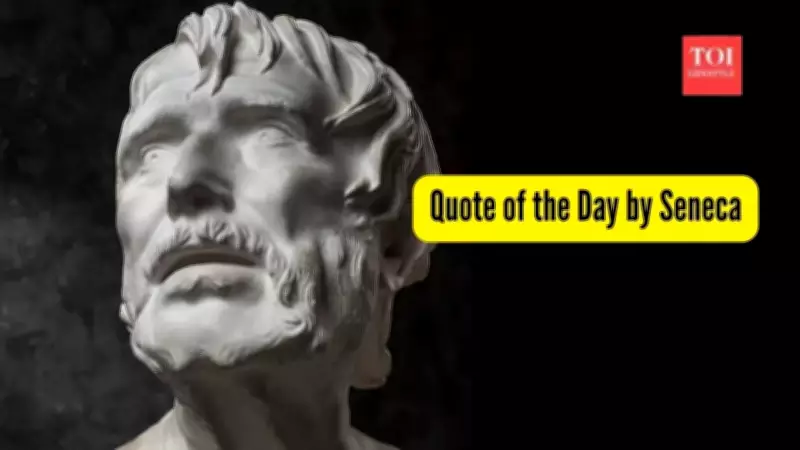
Seneca: The Stoic Philosopher Whose Life Embodied His Teachings
Lucius Annaeus Seneca, commonly known as Seneca the Younger, stands as one of the most significant philosophers in history, renowned for his profound contributions to Stoic theory. As a prominent thinker in ancient Rome, his extensive philosophical writings, impactful political career, and the dramatic events of his life—marked by periods of immense influence, exile, and ultimate personal tragedy—are meticulously documented and continue to captivate scholars and enthusiasts alike.
Early Life and Education
Seneca was born in Corduba, present-day Córdoba, Spain, around 4 BCE. He was raised within a wealthy and intellectually stimulating Roman family that actively encouraged his philosophical pursuits. His father, Seneca the Elder, was a distinguished rhetorician, which provided the young Seneca access to elite educational institutions. He spent his formative years in Rome, where he mastered public speaking and immersed himself in a broad spectrum of philosophical ideas, with a particular emphasis on Stoicism.
Stoicism, founded by the Greek philosopher Zeno of Citium, emphasizes reason, self-control, and living in harmony with nature. Seneca deeply embraced these principles, which would later form the cornerstone of his philosophical work and personal conduct.

Political Ascent and Exile
Seneca ventured into Roman politics, quickly gaining recognition as an adept orator and influential statesman. However, his career faced a severe setback during the reign of Emperor Claudius. In 41 CE, Seneca was accused of adultery with Julia Livilla, the emperor's niece, leading to his exile on the island of Corsica. During this period of isolation, he authored numerous essays and letters designed to console and uplift, teaching emotional resilience and the acceptance of fate—core tenets of Stoic philosophy that he practiced firsthand.
Return to Power and Advisory Role
Seneca's fortunes shifted dramatically in 49 CE when Agrippina, the mother of the future emperor Nero, orchestrated his return to Rome. He was appointed as a tutor to the young Nero and, upon Nero's ascension to the throne, became one of his principal advisors. Alongside the prefect Burrus, Seneca helped guide Nero's rule, contributing to a period of initial stability and effective governance. His counsel often reflected Stoic ideals of moderation, justice, and self-restraint.
Nevertheless, as Nero's reign descended into tyranny and excess, Seneca's position grew increasingly precarious. Despite accumulating considerable wealth and power, his lifestyle attracted criticism from those who questioned his adherence to the Stoic advocacy for simplicity and detachment from material possessions.
Retirement and Tragic Death
Alarmed by Nero's growing violence and unpredictability, Seneca sought to retire from public life and distance himself from the emperor, though this proved challenging. In 65 CE, he was implicated in the Pisonian conspiracy, an alleged plot to assassinate Nero. Although his guilt remains uncertain, Nero ordered Seneca to commit suicide—a common fate for condemned Roman elites.
Seneca faced his execution with the remarkable calmness and dignity he had long espoused in his writings. According to the historian Tacitus, Seneca opened his veins and spent his final moments discussing philosophy with friends, embodying the Stoic virtues of courage and composure in the face of death.
Philosophical Contributions and Legacy
Seneca's philosophy is rooted in Stoicism but is distinguished by its practical application to everyday life. While earlier Stoics often engaged in abstract theorizing, Seneca focused on actionable advice for moral improvement and personal well-being. He posited that virtue is the highest good, far surpassing the value of wealth, power, or pleasure. A virtuous individual, he argued, maintains inner tranquility regardless of external circumstances.

A central theme in Seneca's work is the distinction between what we can control—our thoughts and actions—and what we cannot—external events. He believed that suffering arises from attempting to control the uncontrollable, an idea closely aligned with the Stoic concept of amor fati, or "loving one's fate." Seneca encouraged embracing life's challenges as necessary and even beneficial for growth.
In his essay "On the Shortness of Life," Seneca emphasized the critical importance of time, arguing that life is not inherently brief but is often wasted on trivial pursuits. He advocated for living meaningfully by dedicating time to significant endeavors. Contrary to misconceptions, Seneca did not promote the complete suppression of emotions but rather their rational management.
His extensive literary output includes philosophical essays, letters, and tragedies. Among his most celebrated works is "Letters to Lucilius," a collection of personal correspondence that explores philosophical concepts within the context of daily life.
Iconic Wisdom on Humility
One of Seneca's most iconic statements encapsulates his view on wisdom: "True wisdom comes to each of us when we realize how little we understand about life, ourselves, and the world around us." This quote underscores the importance of humility and intellectual maturity. Seneca suggests that genuine wisdom begins with acknowledging the limits of our knowledge, fostering openness, curiosity, and a reduction in ego-driven certainty.
His writings are grounded not in idealized abstraction but in the real-world struggles of power, illness, fear, and ethical conflict. Ultimately, Seneca's legacy extends beyond his texts to the manner of his death—a calm, rational, and dignified end that perfectly exemplified the Stoic ideals he championed throughout his life.