The Unraveling of a Divine Boon: Shikhandi's Fateful Role in Bhishma's Fall
In the epic saga of the Mahabharata, the Kurukshetra war stands as a monumental clash of dharma, destiny, and divine intervention. At its heart lies the tragic yet inevitable fall of Bhishma Pitamah, a warrior blessed with the extraordinary boon of Ichha Mrityu—the power to choose the time of his own death. This celestial gift rendered him nearly invincible on the battlefield, yet it was ultimately circumvented by a twist of fate embodied in the figure of Shikhandi.
The Vow That Bound a Warrior
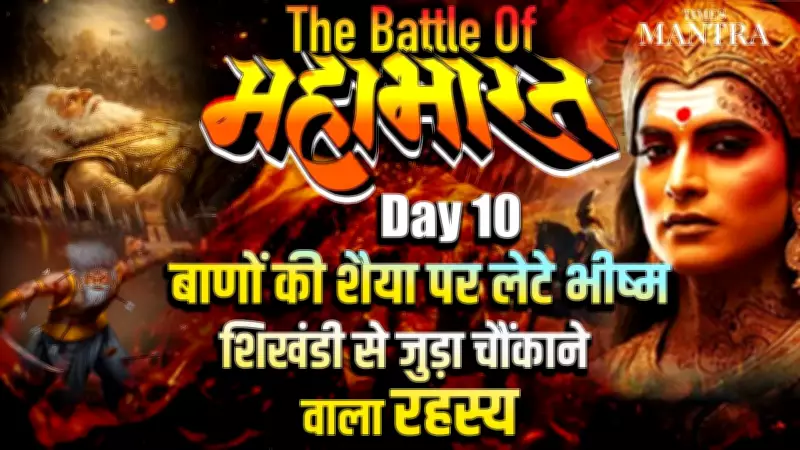
Bhishma's unwavering adherence to his personal vows defined his character and, ironically, led to his downfall. Among these was a solemn promise never to raise arms against a woman or anyone born as a woman. Shikhandi, whose complex identity and past life as Amba—a woman wronged by Bhishma—played a crucial role here. When Shikhandi, now in a male form, stood before Bhishma on the battlefield, the great patriarch refused to fight, bound by his oath.
This moment of hesitation created a strategic opening for Arjuna, who, positioned behind Shikhandi, unleashed a volley of arrows that pierced Bhishma's body. The legendary warrior fell, not in defeat by a superior combatant, but through a confluence of karma, destiny, and his own unyielding principles.

The Cosmic Law Overrides Divine Boons
The episode raises profound questions about the interplay between free will, divine boons, and cosmic law. Bhishma's Ichha Mrityu boon, granted for his unparalleled devotion and sacrifice, symbolized control over mortality. However, the Mahabharata illustrates that even such powerful blessings cannot override the larger tapestry of destiny—daiva—woven by actions across lifetimes.
Shikhandi's presence was not merely a tactical advantage but a karmic instrument, representing the unresolved debts from Bhishma's past. Amba's curse and her rebirth as Shikhandi set in motion events that would bring Bhishma's invincibility to an end, showcasing the inescapable nature of karma.
The Symbolism of the Bed of Arrows
Bhishma's fall onto a bed of arrows—shara shaiya—is one of the most iconic and symbolic moments in Indian mythology. It was not a death but a state of suspended animation, where he chose to delay his passing until the auspicious period of Uttarayana. This highlights his mastery over the boon, even in defeat, and underscores themes of sacrifice, duty, and transcendence.
The bed of arrows also serves as a metaphor for the burdens of karma and the painful yet necessary consequences of one's actions, both in this life and beyond.
Lessons from the Mahabharata's Dramatic Turn
This pivotal event in the Kurukshetra war offers timeless insights:
- The Limits of Power: Even the greatest boons are subject to the higher laws of destiny and karma.
- The Role of Vows: Bhishma's strict adherence to his vows, while noble, also became his Achilles' heel, reminding us of the complexities of dharma.
- Karmic Justice: Shikhandi's role exemplifies how unresolved past actions inevitably resurface, demanding resolution.
- Divine Strategy: Krishna's guidance in using Shikhandi reveals the cunning and depth of cosmic play in human affairs.
In the grand narrative of the Mahabharata, Bhishma's fall through Shikhandi is not just a military tactic but a profound philosophical lesson on the interplay of free will, destiny, and the inescapable web of karma that binds all beings.