Sikh Wedding Ritual Using Religious Symbols Sparks Widespread Controversy
A wedding ceremony in the family of Shiromani Akali Dal (Amritsar) president Simranjit Singh Mann has ignited a heated debate within the Sikh community after a video from the event went viral on social media. The controversy centers on the use of religious symbols traditionally reserved for Sri Guru Granth Sahib, drawing strong objections from many Sikhs.
Viral Video Shows Traditional Princely Rituals
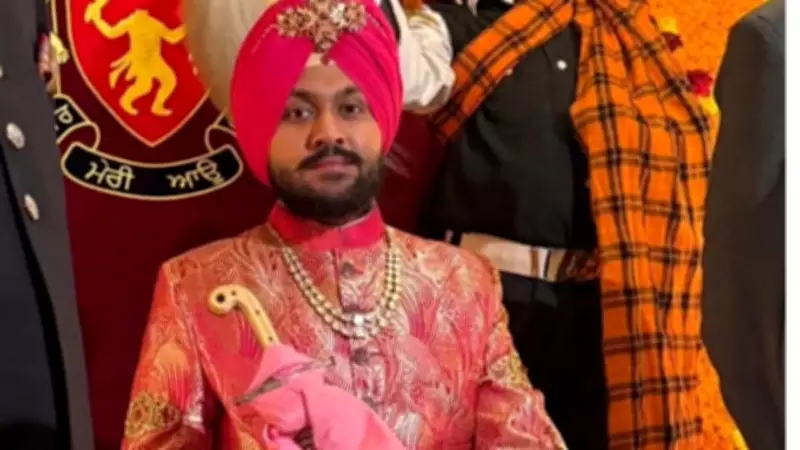
The video captures Govind Singh Sandhu, son of Simranjit Singh Mann's daughter and a descendant of the Shahzadpur Riyasat family of Sandhu Jatts in present-day Ambala district of Haryana, during his wedding rituals. In the viral footage, a Chaur (fly whisk) is seen being waved over Govind Singh Sandhu's head, while another person holds a Chhatar (umbrella) as a mark of royalty, with traditional drums and pipes playing in the background.
Two turbaned Sikh men are also visible escorting him with spears, maintaining what was described as a traditional princely custom of the erstwhile Shahzadpur Riyasat. This display of regal tradition, however, quickly drew criticism from a significant section of the Sikh community.

Religious Symbols and Their Sacred Significance
In contemporary Sikh tradition, the Chaur and Chhatar hold profound religious significance as symbols of sovereignty and reverence exclusively associated with the movement and presence of Sri Guru Granth Sahib, the living Sikh Guru. Critics argued that performing such "royal" rituals for an individual, even as part of family tradition, constituted disrespect toward the Sikh faith and its highest spiritual authority.
Sikh users on social media platforms not only questioned Govind Singh Sandhu's conduct but also demanded clarification from his relative, Simranjit Singh Mann, who is known for raising Sikh religious and political concerns. The issue gained substantial momentum as the video continued to circulate widely, intensifying discussions about the delicate balance between cultural heritage and religious sanctity.
Public Apology and Explanation
Amid growing criticism, Govind Singh Sandhu issued a public apology on Sunday through a detailed social media post. He acknowledged the objections raised regarding the use of the Chaur and Chhatar during his wedding ceremony and emphasized that the concerns were directly linked to the authority of Sri Guru Granth Sahib Ji and Sikh sentiments.
Explaining his position, Sandhu stated that the holding of Chhatar and waving of Chaur had historically been part of ancient princely wedding ceremonies, followed by his family for generations as descendants of the Shahzadpur princely state. He clarified that the ritual was performed during the Janjh (marriage procession led by the bridegroom) departure ceremony as a cultural tradition and mark of respect, without any intention to undermine Sikh beliefs.
Acknowledgment of Contemporary Religious Norms
Simultaneously, Sandhu categorically acknowledged that in the present era, such reverence is reserved solely for Sri Guru Granth Sahib. "The owner of the Chaur, Chhatar and Takht of the Sikhs is only the revered Sri Guru Granth Sahib," he wrote, adding that it is only due to the Guru's blessings that Sikhs enjoy happiness and spiritual fulfillment.
Govind Singh Sandhu further clarified that the brief ritual should not be interpreted as equating any individual with the eternal greatness of the Gurus. Taking full responsibility, he admitted that waving the Chaur in this context was a mistake and apologized to the entire Sikh community with folded hands. He also expressed his intention to seek forgiveness at the feet of the Guru, hoping that the community would pardon what he described as an unintentional error.
Broader Implications and Community Dialogue
This incident has once again highlighted the sensitivity surrounding Sikh religious symbols and the ongoing conversation about preserving cultural traditions without crossing boundaries that may hurt religious sentiments. The controversy raises important questions about:

- The intersection of cultural heritage and religious practice
- The evolving interpretation of traditional rituals in modern contexts
- The responsibility of public figures and their families in maintaining religious decorum
- The role of social media in amplifying religious debates
The swift apology from Govind Singh Sandhu demonstrates recognition of the community's concerns while attempting to bridge the gap between historical family traditions and contemporary religious norms. As discussions continue, this episode serves as a reminder of the delicate balance required when cultural practices intersect with deeply held religious beliefs in India's diverse social fabric.