

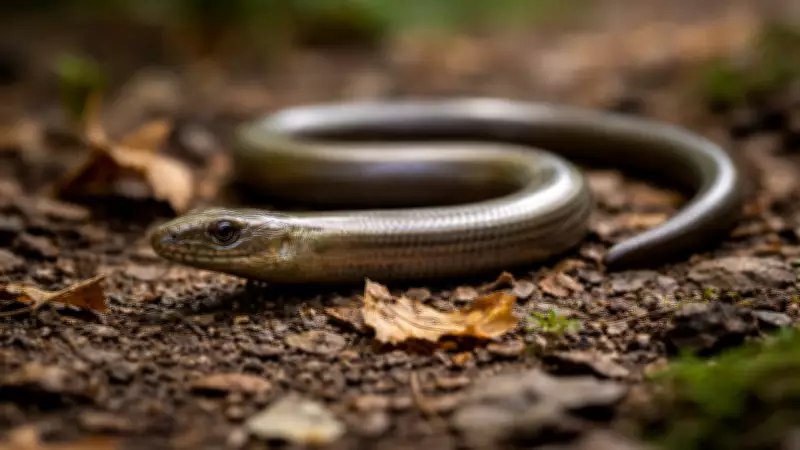
Slow Worms vs Snakes: Understanding the Crucial Differences
Have you ever encountered a long, slithering creature in your garden or backyard and wondered whether it's a snake? In many parts of the world, including India where various wild creatures inhabit both rural and urban areas, such sightings often spark curiosity mixed with unnecessary fear. While snakes are absent from Europe's native fauna, another fascinating creature called the slow worm thrives there, particularly in the British Isles. These legless lizards are frequently mistaken for snakes worldwide, much like how Indians sometimes confuse snakes with glass snakes and other legless lizards found in the Western Ghats.
Key Differences Between Snakes and Slow Worms
The distinctions between these reptiles are more significant than their superficial similarities suggest. Here are the primary characteristics that set them apart:
- Scientific Classification: Slow worms belong to the legless lizard group (Anguis fragilis), while true snakes fall under the suborder Serpentes.
- Eyes: Slow worms possess eyelids and can blink, whereas snakes have spectacle-like scales covering their eyes and cannot blink.
- Ear Openings: Visible external ear openings are present in slow worms but completely absent in snakes.
- Tongue Structure: Slow worms have short, thick, slightly notched tongues, while snakes feature long, slender, deeply forked tongues.
- Body Shape: Slow worms maintain a uniform body width with little neck definition, unlike snakes which display distinct heads and necks.
- Skin Shedding: Slow worms shed their skin in patches, while snakes shed theirs in one continuous layer.
- Jaw Flexibility: Slow worms have rigid lizard-like jaws, whereas snakes possess highly flexible jaws capable of swallowing large prey.
- Tail Behavior: Slow worms can detach their tails to escape predators (a process called autotomy), while snakes cannot perform this defensive maneuver.
- Diet: Slow worms primarily consume slugs, worms, and insects, while snakes often prey on rodents, birds, frogs, and other vertebrates.
- Typical Length: Slow worms usually measure up to about 50 centimeters, while many snake species exceed one meter in length.
What Makes Slow Worms Distinct From Snakes
According to wildlife experts, slow worms (scientifically known as Anguis fragilis) are legless lizards belonging to the Anguidae family. While both creatures fall under the Squamata class, snakes are part of the Serpentes suborder, whereas slow worms belong to the Anguimorpha class, making them only distant relatives at best. As wildlife observers note, "Slow worms have evolved without legs, yet retain lizard characteristics."

One of the most noticeable differences is the blinking capability. Slow worms have flexible eyelids that allow them to blink and protect their eyes from dust and debris. In contrast, snakes have transparent scales called spectacles covering their eyes, preventing them from blinking or closing their eyes completely. Additionally, slow worms feature smooth, evenly built bodies that enable them to burrow into the ground effectively.
Physical Traits That Make Identification Easier
Tongue characteristics provide another clear distinction. Snakes flick their long, forked tongues to sense chemical cues in the air, while slow worms have short, thick, notched tongues that barely protrude. As Discover Wildlife explains, "Snakes have much longer, slimmer forks and the tongue reaches out much further."
The presence of external ear openings in slow worms versus their complete absence in snakes offers another identification clue. Jaw structure also varies significantly: snakes' hyper-flexible jaws allow them to swallow prey much larger than their heads, while slow worms' rigid lizard jaws limit them to softer invertebrates. Wildlife expert Wild Ideas states, "Slow worms' tongues are rounded, in contrast to snakes, who have unmistakable forked tongues."

The tail autonomy capability represents classic lizard behavior. Slow worms can voluntarily detach their tails when threatened by predators, though the regrown tail is never perfect. Snakes lack this defensive mechanism entirely. In Britain, gardeners often welcome slow worms for their natural pest control abilities, similar to how Indians appreciate garden lizards.
Behavioral and Habitat Similarities
Despite their differences, slow worms and snakes share some behavioral patterns. Slow worms move deliberately, living up to their name, and often bask openly in gardens or woodlands. Snakes typically slither more swiftly and hunt actively. Both species undergo brumation (reptile hibernation) during winter, though slow worms tend to burrow underground while snakes seek out crevices and sheltered spots.
In Europe, slow worms thrive in compost heaps and prefer moist environments, whereas snakes generally favor drier hiding places. Although slow worms aren't native to India, parallels exist with legless lizards like India's Ophisaurus species found in the northeast, which share characteristics such as blinkable eyes and tail-dropping capabilities.
Researchers at Thames Basin Heaths Organization, comprising reptile biologists, highlight that slow worms typically reach smaller sizes (up to 50cm) compared to many snake species that exceed one meter. Their diets also differ: slow worms consume soft invertebrates, while snakes tackle vertebrates as well. Interestingly, female slow worms give live birth to their young (ovoviviparous reproduction), similar to some snake species, though this lizard trait further underscores their non-snake classification.
Conservation Importance: Why Proper Identification Matters
Misidentifying slow worms as snakes often leads to unnecessary killing, harming local biodiversity. In Britain, slow worms are protected species, yet their populations face decline due to habitat loss and human misunderstanding. Recognizing these creatures correctly helps preserve valuable ecosystem contributors that control pest populations naturally.





