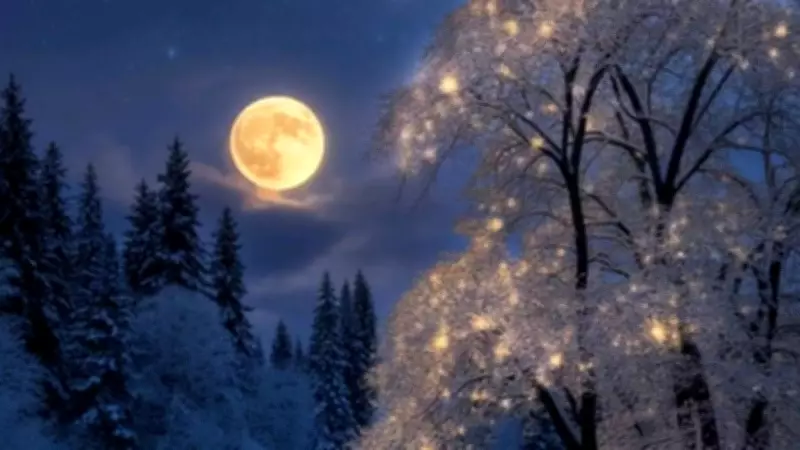
As the Snow Moon, also known as February's full moon, prepares to grace the night sky on Sunday, February 1, 2026, astronomers and cultural historians are drawing attention to its profound origins that extend far beyond mere astronomical spectacle. This celestial event, often admired for its luminous beauty, carries a legacy rooted in indigenous survival, seasonal scarcity, and the relentless challenges of northern winters—a narrative frequently overlooked in contemporary stargazing.
Snow Moon: A Name Forged from Hardship and Survival
The designation "Snow Moon" originates from the traditional lunar naming systems of Native American tribes and early winter societies, where full moons served as practical markers for annual cycles rather than poetic labels. According to lunar historians, this name emerged because February typically brought the heaviest snowfalls in the Northern Hemisphere, creating treacherous conditions that hindered travel and exacerbated food shortages, particularly for hunter-gatherer communities.
In many indigenous cultures, the February full moon was also referred to as the "Hunger Moon," reflecting the dire circumstances when deep snow cover made hunting nearly impossible, forcing reliance on dwindling food reserves. Additional names like "Bear Moon" highlighted the cautious emergence of hibernating bears, symbolizing the delicate balance between survival and renewal during winter's peak. These terms were not whimsical but essential survival data, guiding communities on when to conserve resources and endure until spring's arrival.

Cultural Calendars: The Practical Roots of Lunar Names
The collection of full moon names, including Snow Moon, Wolf Moon, and Worm Moon, stems from indigenous cultural calendars that were later popularized by settler traditions and almanacs. Before the advent of modern calendars, societies worldwide tracked time through lunar phases, with each full moon signaling critical seasonal shifts in food availability, animal behavior, and weather patterns.
- In severe winters, communities closely monitored lunar events to adapt their survival strategies, such as gathering stores and staying near shelter during a "Hunger Moon."
- European traditions paralleled this with names like "Storm Moon" or "Ice Moon," underscoring shared experiences of winter's harshness across cultures.
- These lunar guideposts facilitated planning and preparation, embedding the Snow Moon within a framework of weather, survival, and ancient cultural memory.
Why the Snow Moon Matters: Rediscovering Lunar Lore's Deeper Significance
While today's observers often view the Snow Moon as a picturesque cosmic event or social media opportunity, its historical context reveals a poignant tale of human resilience. For Native American tribes, February represented one of the most challenging months, with deep snow limiting mobility and intensifying food scarcity—factors that profoundly influenced cultural practices, cooperation, and mythology.
Celtic and Old English traditions further enriched this narrative with seasonal names, framing the full moon as part of a broader story about enduring harsh environments. This historical perspective explains why the Snow Moon resonates on a deeper level: it is not merely a celestial occurrence but a living testament to collective endurance and adaptation over millennia.
The 2026 Snow Moon: Bridging Past and Present
This year's Snow Moon is anticipated to reach peak illumination at 5:09 p.m. Eastern Time on February 1, 2026, continuing a tradition that blends scientific inquiry with cultural heritage. Modern life may shield us from winter's daily struggles, yet names like Snow Moon, Hunger Moon, and Bear Moon echo an era when people interpreted the sky as a vital guide for direction, survival, and meaning.

Today, even as the Snow Moon becomes a highlight for stargazers and online sharing, its story exemplifies a fascinating convergence of astronomy and anthropology. What once marked the hardest phase of winter now connects millions to ancient rhythms of life, reminding us that folklore and science often walk hand in hand under the same full moon. Whether observed over snowy landscapes or through digital screens, the Snow Moon carries a legacy of resilience, adaptation, and the enduring human spirit that once sought guidance, not just wonder, in the night sky.