Social Media Ignites Unprecedented Revival of Jaipur's Gulal Gota Holi Craft
In the historic lanes of Jaipur, a centuries-old Holi tradition is experiencing a remarkable renaissance. The delicate art of making gulal gota—fragile lac shells filled with dry colour—is witnessing soaring demand, driven largely by social media exposure and the growing popularity of organized group celebrations in housing societies and farmhouses.
Artisans Work Tirelessly During Ramzan to Meet Soaring Demand
At Maniharon Ka Rasta in Jaipur's Walled City, families from the Manihar community are working around the clock to fulfill bulk orders. Despite observing fasts during the ongoing month of Ramzan, these predominantly Muslim artisans are dedicating long hours to their craft. The narrow lane, also famous for lacquer bangles, has transformed into a bustling production hub for the traditional Holi item.
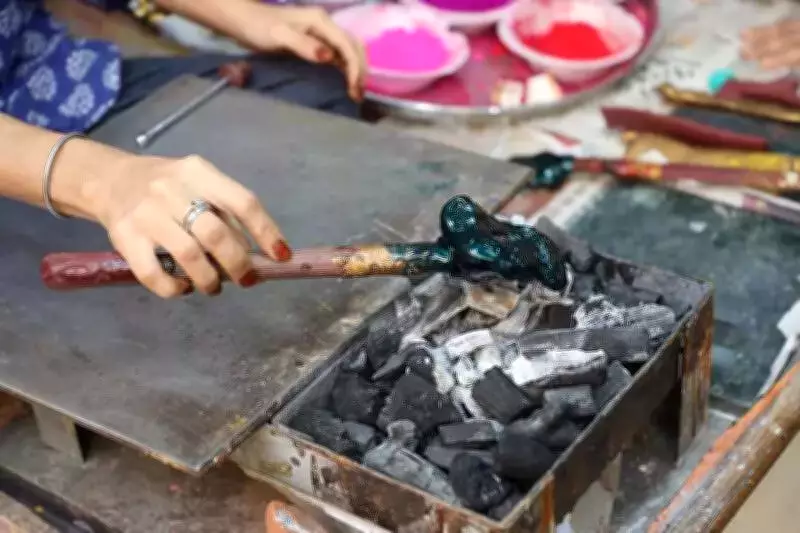
The manufacturing process remains entirely handmade and natural. Artisans heat natural lac until pliable, then shape it into thin, hollow balls—often by blowing air into the warm material. Once cooled, these delicate shells are carefully filled with powdered natural gulal and sealed. Due to the material's short shelf life of barely a month, production typically begins only weeks before Holi festivities.

From Obscurity to National Popularity
"This year, we were unable to complete all our orders as demand came from all over Rajasthan and other states," revealed manufacturer Amjad Khan. "We sent consignments to Delhi, Uttar Pradesh, Madhya Pradesh, and Gujarat. Even former royal families placed orders."
Artisans attribute this dramatic turnaround directly to social media content. Mohammed Kashif, known for both lacquer bangles and gulal gota preparations, explained: "Let me be very frank. Till 2019, there were hardly any takers for gulal gota. But after vloggers made videos, the art gained popularity."
Kashif now manages two social media channels where he regularly posts videos of the preparation process. "At least today's generation has come to know about gulal gota," he added with satisfaction.
Family Efforts and Production Challenges
The increased demand has transformed work schedules for entire families. "These days we work from 11am to 5pm and then again from 11pm to 5am as demand is high," shared Sadiya, wife of Kashif. Inside their homes-cum-workshops, families are putting in extensive hours despite observing roza.
Lasani, Khan's wife, works alongside other women in the family to complete packing orders. "Such is the demand and rush that we sit for more than 14 hours daily," she explained.
However, artisans acknowledge significant challenges in meeting the expanding market. "Only a few families are left in this work. We cannot even supply to the entire Jaipur city," admitted artisan Abdul Majjid. He also noted that gulal gota has become costlier than regular Holi colours, with boxes of six pieces now selling for up to Rs 300, compared to previous prices between Rs 50 and Rs 100.
"It is also a matter of personal fondness," Majjid remarked, suggesting that tradition carries its own unique value beyond commercial considerations.
The revival of Jaipur's gulal gota tradition represents a fascinating intersection of ancient craft, religious observance, and modern digital promotion—creating a vibrant cultural resurgence just in time for Holi celebrations across India.