Spice, Power, and Memory: A Novel's Exploration of Colonial Violence
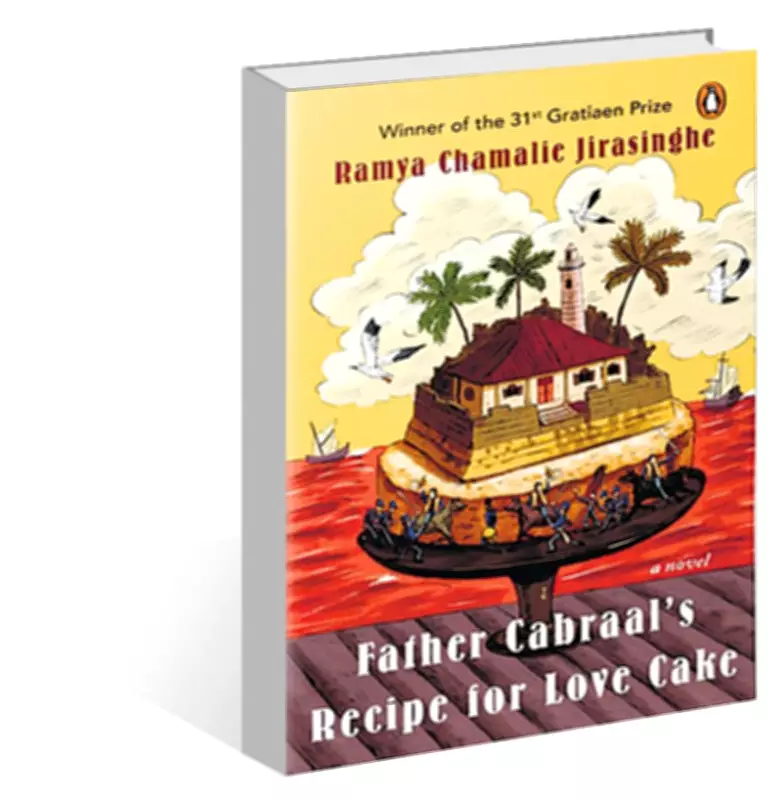
In the annals of history, the spice trade is often romanticized for its exotic allure, but beneath the surface lies a tale of brutality and domination. Ramya Chamalie Jirasinghe's debut novel, 'Father Cabraal's Recipe for Love Cake', published by Penguin Random House, delves into this dark legacy through a compelling fictional lens. Spanning 311 pages and priced at approximately 499 rupees, the book weaves together two timelines to expose how spices like nutmeg and pepper became catalysts for violence, empire-building, and enduring scars.
The Forgotten Genocide of the Banda Islands
Over four centuries ago, the Banda Islands in Indonesia's Maluku province witnessed a horrific genocide that remains largely overlooked. In a single week, the Dutch East India Company massacred more than 15,000 Bandanese to monopolize the trade in nutmeg and mace. These spices, endemic to the islands, were among the world's most coveted commodities, and the islanders' resistance to colonial control led to their tragic demise. This event, recounted by Amitav Ghosh in his 2021 book 'The Nutmeg's Curse', serves as a stark reminder of colonial extractivism and its long shadow on climate and human history.
Fictional Excavation of Violent Histories
Jirasinghe's novel picks up this thread, using fiction to excavate the violent histories of the spice trade. The story alternates between the late 17th century and the present, illustrating how colonial forces transformed lush, forested landscapes into extractive plantations. In her imagined world, The Company rules with calculated brutality, enslaving local populations and plundering both land and life. Even animals are not spared, with elephants, monkeys, and exotic creatures shipped to European masters as tokens to affirm The Company's 'worthwhile work' on a remote island.

Power and Perception in Colonial Domination
Power in the novel is embodied by the coldly manipulative deputy governor Simon Cloete, who understands that domination lies not merely in possession but in perception. He believes the illusion of power is often enough to subdue resistance. At the heart of the narrative is Santiago, a house with the island's longest verandah, built by the ambitious settler Santiago De Melo. De Melo marries a local woman, Maria, charmed by her beauty and her large pepper estate. The battle for control over this spice threatens to tear asunder a forested haven and its people.
The Paradox of the Love Cake
The titular love cake, bolo-de-amore, perfected by the compassionate Father Alessandro Cabraal, carries within it the paradox of the nutmeg itself. 'With enough of this in a bolo, you can keep the plague from a home... With a lot more, you can kill someone,' the priest tells Maria as he shares the secret of the recipe. This cake becomes a symbol of both healing and harm, reflecting the dual nature of spices as sources of sustenance and destruction.
Linking Past and Present Through Baking
In the present timeline, Katharina Silvaria returns from London to live in Santiago. A former war correspondent, she turns to baking the fabled love cake, exporting it worldwide. Infused with the island's spices and stories, the cake becomes for her both a livelihood and a balm, acting as a physical and metaphorical link between the island's colonial past and its present. For Katharina, baking it is a means of survival and healing from the trauma of her reporting days.
History's Resurgence in Modern Struggles
However, history does not remain buried. It resurfaces in new forms of power and resistance, embodied in Rajeev Almeida, a privileged yet empathetic figure who leads a political insurgency against a corrupt government. On the run, he seeks refuge in Katharina's home, creating a vortex of domination and resistance, love and bloodshed. The novel points toward a familiar, unsettling truth: history repeats itself, and its lessons remain largely unlearned.

Narrative Strengths and Limitations
Navigating between two periods and storylines is not always easy, but Jirasinghe sustains the flow evenly with her lyrical prose, rooted in her background in poetry. However, some narrative arcs, such as those of De Melo and Maria, and to some extent, Katharina and Rajeev, feel abruptly curtailed, leaving readers wishing for a broader canvas. Despite this, the quiet force of Jirasinghe's writing lingers, reminding us that the history of spice is never just about flavor—it is about power and its enduring scars.
The reviewer, Bindu Menon, is a Bengaluru-based contributor, offering insights into this poignant exploration of memory and violence.