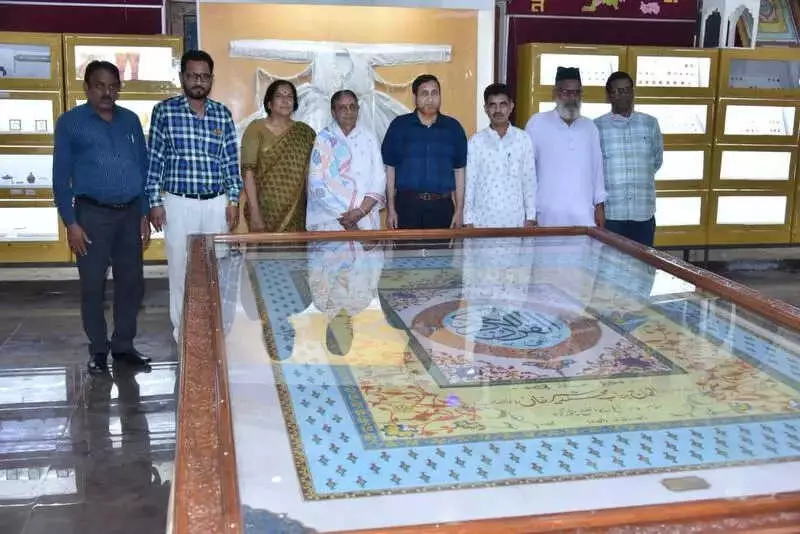
The Maulana Abul Kalam Azad Arabic–Persian Research Institute (APRI) in Tonk, Rajasthan, a repository of immense cultural wealth, is grappling with a severe administrative and staffing crisis that threatens to halt critical research and preservation work. Scholars warn that the institute's unparalleled collection of nearly 25,000 rare Urdu, Arabic, and Persian manuscripts, some centuries old, is now at risk due to acute human resource shortages and funding constraints.
A Legacy of Learning on the Brink
Established in 1978, APRI safeguards a priceless collection that grew from the royal library of the Nawabs of Tonk. From around 1806 CE, the Nawabs gathered manuscripts from across North India, Central Asia, and the Middle East. Under their patronage, scribes meticulously copied rare works, repaired damaged texts, and acquired important writings, establishing Tonk as a renowned centre for Arabic and Persian scholarship.
Today, however, this legacy is in peril. Only 8 of the institute's 45 sanctioned posts are currently filled, and with four more employees nearing retirement, the situation is set to worsen. This critical shortage has severely hampered essential functions, slowing down vital cataloguing and digitisation projects. Visiting scholars, including many from abroad, now struggle to access the material they need for their research.

Consequences Beyond Administrative Delays
The crisis extends far beyond mere administrative delays. Former director Solat Ali Khan highlighted that researchers from Iran, Turkey, Germany, France, Russia, the US, and the UK regularly visit APRI, and nearly 50 major research projects are completed there annually. "The golden days of the centre are fading," Khan lamented, noting that where manuscripts were once copied in gold ink under royal patronage, there is now a dire shortage of trained staff and limited funds for conservation.
Conservation experts sound an even more urgent alarm. Some manuscripts date back to the 13th century and originate from Central Asia. Without proper climate control and timely restoration, these fragile papers will simply crumble. "Once a manuscript of that age disintegrates, it is gone forever — no digital copy and no reconstruction can truly replace it," warned a senior conservation expert.
Losing a Shared Intellectual History
The collection is not just a storehouse of texts but a keeper of interconnected intellectual traditions. Researchers point out that the archive contains rare Sanskrit works copied in Benaras centuries ago, representing a vital link between classical Indian scholarship and Persian–Arabic learning. The loss of these texts to insects, humidity, or poor handling would mean losing crucial evidence of a shared intellectual history.
Officials and local advocates believe that recognition as a centrally-funded institution could be a lifeline, enabling infrastructure modernization, accelerated digitisation, and expanded preservation. Mufti Adil Nadvi, president of the Tonk Progressive Committee, emphasized, "This institute is not just Tonk's pride, it is a treasure for scholars across the world. The government must act urgently, appoint a director and restore the institution."
Scholars and cultural groups have united in urging the state government to take immediate action. Their demands are clear: fill the long-pending vacancies, appoint a permanent director, and revive stalled academic projects. The alternative, they caution, is the irreversible loss of knowledge preserved for centuries, a cultural catastrophe for India and the world.