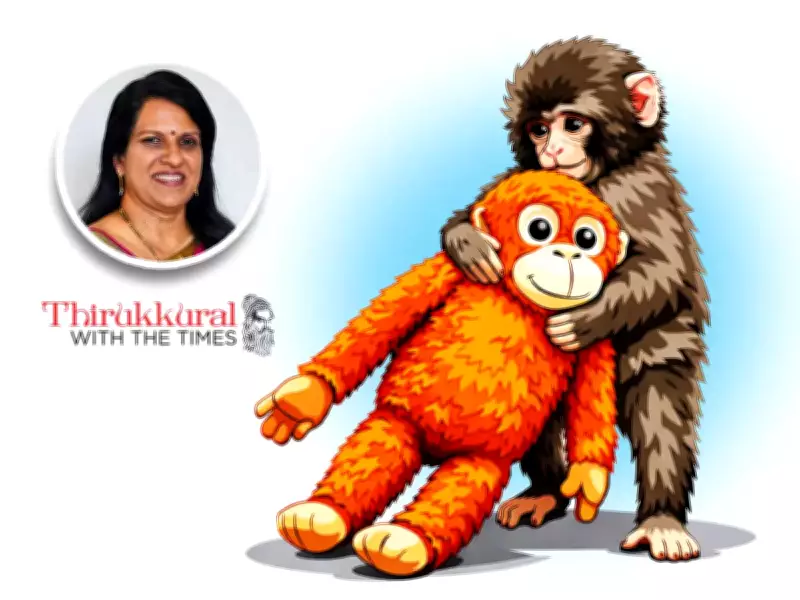
The Stuffed Orangutan and Our Shared Human Grief
In a poignant tale that has captured hearts worldwide, a seven-month-old baby macaque named Punch, residing at the Ichikawa city zoo in Japan, has become an unexpected symbol of universal loneliness and the search for comfort. Abandoned by his parents at birth and subsequently rejected by his clan, Punch was given a stuffed orangutan toy by compassionate zookeepers. The tiny primate instantly clutched the plush companion, carrying it everywhere and fleeing to its embrace whenever he felt threatened.
A Wave of Global Empathy for Solitary Creatures
This is not the first time the internet has collectively wept for a solitary animal. Not long ago, a similar wave of emotion spread across the globe for a wandering penguin. Now, it is Punch's turn. Visitors are flocking to the zoo to see him, and strangers from abroad are sending identical plush toys to ensure his comfort never wears out.
However, the tears shed for Punch extend far beyond a simple love for animals. People from all walks of life see reflections of their own histories in this tiny creature. They recall personal experiences of rejection, humiliation, and the subtle bullying often inflicted by dominant social groups. This includes exclusion based on differences in appearance, caste, creed, accent, or gender.

Personal Exile and the Search for Acceptance
The author shares a personal memory of such exile, recalling the dread-filled mornings after changing schools in Class IX, leaving behind familiar friends for a new class that felt closed and unwelcoming. Acceptance only came after an academic breakthrough—outperforming established toppers in the first examination. While friendships eventually formed and warmth returned, the chill of that initial rejection remains vivid decades later.
"Watching Punch flee to his toy, I recognise that desperate search for something—anything—that will not reject us when the social world turns cold," the author reflects.Ancient Wisdom and Modern Metaphors
This exploration of attachment and comfort is beautifully framed by insights from Thirukkural with the Times, a series that draws real-world lessons from the classic Tamil text. Written by the poet-philosopher Thiruvalluvar, the Kural consists of 1,330 concise couplets, divided into three books teaching virtue, wealth, and love. It is revered as one of humanity's greatest works on ethics and morality, influencing scholars and leaders across social, political, and philosophical spheres.
Motivational speaker, author, and diversity champion Bharathi Bhaskar delves into this masterpiece, connecting its timeless wisdom to Punch's story. The Vaishnavite tradition offers a powerful metaphor: markata nyayam and marjala nyayam. The baby monkey clings to its mother, while the mother cat carries her kitten. Similarly, a devotee may hold to the divine, or the divine may hold the devotee. Punch lost, or was denied, that primal, secure grip. His plush orangutan became the tangible body he could hold onto for safety.
The Natural Order and the Path to Growth
Zoo authorities explain the clan's rejection as normal behavior within primate hierarchies, where difference is rarely tolerated initially. They expect that, in time, Punch will learn to cope and find his place. Perhaps one day, he will no longer need the toy.
We have witnessed this transition in our own lives. Consider the doll once clutched during sleep, the childhood blanket dragged everywhere, then quietly abandoned. The toy moves to a cupboard, then a box, and is eventually given away during a house cleaning. Parents often pause, holding it, feeling the poignant ache of abandonment that accompanies growth.

Attachment as the Root of Survival
In that simple image lies a profound, universal truth: every life form needs something—or someone—to cling to. Attachment is not a weakness; it is the very root of survival. Whether it is a mother's body, a friend's steadfast presence, a deeply held belief, a cherished memory, or even a simple stuffed toy, love is the sustaining grip that prevents existence from falling into emptiness.
Thiruvalluvar perceived this with piercing clarity centuries ago. In Kural 78, he wrote:
Anbagathu Illaa Uyirvaazhkkai Vanpaarkkan Vatral Maramthalirth ThatruA life without love to hold it is like a withered tree struggling in a desolate wilderness, futilely attempting to sprout in arid ground.
Punch clings to an orange toy. We cling to less visible, yet equally vital, forms of love. The fundamental gesture is identical—and it is precisely this gesture that keeps us all alive, connected, and human.