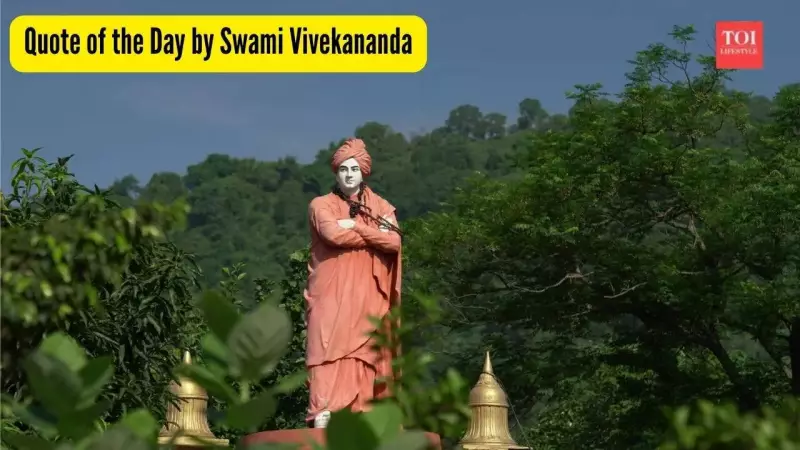
In the annals of modern Indian history, few figures shine as brightly as Swami Vivekananda. Born as Narendranath Datta in 1863 in Kolkata, his journey from a curious youth to a global spiritual ambassador fundamentally altered how the world viewed India and how Indians viewed themselves.
The Making of a Spiritual Icon
At a young age, Narendranath came under the profound influence of Swami Ramakrishna Paramahansa, a temple priest and devout Kali devotee. This meeting proved transformative. Becoming Ramakrishna's disciple set Vivekananda on a path that would lead him to become one of India's most respected spiritual masters. His life and teachings are cornerstone elements in the foundation of modern Indian thought.
The Historic Chicago Address of 1893
The defining moment of Swami Vivekananda's global influence arrived in 1893 at the World's Parliament of Religions in Chicago. Before this event, post-colonial India was often perceived through a narrow, exotic lens by the West—a land of snake charmers and mystics, lacking in confidence on the world stage.

This perception shattered the moment Vivekananda took the podium. Opening with the now-immortal words, "Sisters and Brothers of America!", he received a standing ovation that lasted for minutes. Speaking without notes, he masterfully explained the essence of Vedanta and Hindu philosophy, framing them as traditions of universal tolerance, rational thought, and spiritual inquiry. He presented India not as a superstitious land, but as a deep civilization worthy of global respect.
A Dual Message: To the World and To India
Vivekananda's mission had two powerful fronts. While he introduced India's spiritual heritage to the global audience, he simultaneously worked to rekindle the confidence of his fellow Indians. He urged them to rediscover faith in their own strength and cultural legacy.
His vision of "Practical Vedanta" called for applying spiritual principles to social responsibility and everyday life. This philosophy, emphasizing service and action, later became a significant influence on leaders within India's freedom movement.
Enduring Teachings on Focus and Success
Swami Vivekananda's words remain powerfully relevant because they address universal human aspirations. Among his most famous teachings is a clarion call for focused determination:
"Take up one idea. Make that one idea your life—think of it, dream of it, live on that idea. Let the brain, muscles, nerves, every part of your body be full of that idea, and just leave every other idea alone. This is the way to success."
This quote encapsulates his belief that unrealized potential often stems from scattered energy, not lack of ability. For Vivekananda, true success meant the realization of one's highest potential through disciplined, single-pointed effort—a principle applicable to personal growth, nation-building, and spiritual practice alike.
Swami Vivekananda passed away in 1902 at the age of 39, but his impact is eternal. His speeches are studied in universities worldwide, and his writings continue to inspire. By bridging cultures and challenging stereotypes with courage and conviction, Vivekananda left a legacy that reminds us of the transformative power of ideas lived with sincerity and purpose.