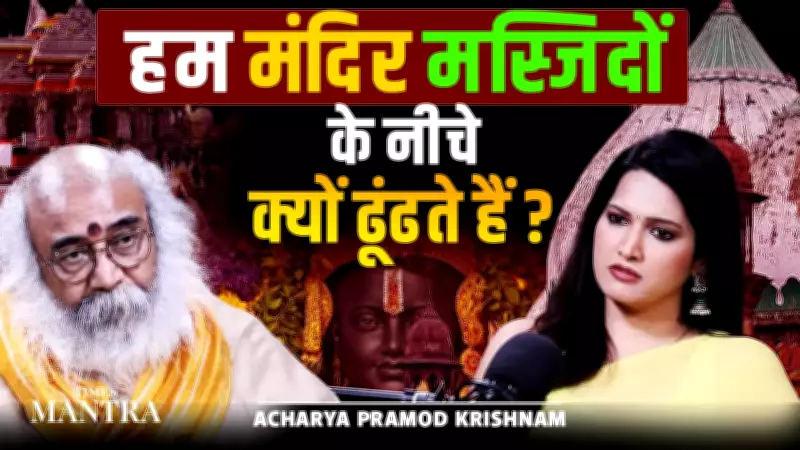
Temples Under Mosques: Acharya Pramod Krishnam Explores the Intersection of Faith and Politics in India
The recurring public discourse surrounding the discovery or speculation of temples beneath mosques in India raises profound questions about the motivations behind such inquiries. Spiritual leader Acharya Pramod Krishnam recently addressed this sensitive and often contentious issue, offering clarity and a nuanced perspective that transcends simplistic narratives.
Why Do These Questions Persist in Public Discourse?
According to Acharya Pramod Krishnam, the persistence of questions about temples under mosques is not merely a matter of archaeological curiosity or religious faith. He explains that historical narratives, deeply ingrained collective memory, and modern political discourse frequently intertwine, shaping public sentiment and fueling debates. This complex interplay means that what might appear as a purely spiritual or historical inquiry often carries significant political and social undertones.
The Role of History and Collective Memory
Krishnam emphasizes that understanding history requires a calm and rational approach rather than emotional reactions. He points out that India's rich and layered past involves numerous cultural and religious transformations, which can lead to overlapping sacred sites. However, the interpretation of this history is often influenced by contemporary agendas, where collective memory is selectively invoked to serve specific narratives, whether for unity or division.

Faith Versus Politics: Navigating the Debate
In addressing whether these discussions are driven by faith or politics, Acharya Pramod Krishnam suggests that both elements are inextricably linked. Faith provides the emotional and spiritual foundation, while politics can amplify or manipulate these sentiments for broader societal impact. He cautions against allowing such debates to become tools for polarization, instead advocating for a balanced view that respects diverse beliefs while fostering national dialogue.
Promoting Harmony and Responsible Discussion
A key insight from Krishnam is the importance of harmony, awareness, and responsible interpretation of the past. He encourages viewers to reflect beyond sensational headlines and consider the larger social implications of these debates. By promoting thoughtful understanding over division, his discussion aims to cultivate a culture of peaceful dialogue and interfaith respect, essential for India's unity in diversity.
Encouraging Calm Dialogue Over Emotional Reactions
Acharya Pramod Krishnam's message is clear: emotional reactions to historical and religious issues often lead to conflict and misunderstanding. Instead, he calls for civil conversations that prioritize empathy and factual accuracy. This approach not only helps in resolving tensions but also strengthens the fabric of Indian society by embracing its multifaceted heritage without succumbing to divisive rhetoric.
In summary, Acharya Pramod Krishnam's insights offer a valuable framework for navigating the complex terrain of temples under mosques in India. By highlighting the interplay of faith, politics, and history, he advocates for a path of reconciliation and mutual respect, urging all stakeholders to engage in responsible discussions that contribute to social harmony and cultural understanding.