Shashi Tharoor's 'Wonderland of Words' Enthralls Dubai at Emirates Literature Festival
Dubai's vibrant literary landscape recently witnessed a remarkable highlight as Shashi Tharoor, the acclaimed Indian politician, author, and former diplomat, delivered an unforgettable session at the prestigious Emirates Literature Festival. This premier Middle Eastern cultural event, dedicated to celebrating books, ideas, and global literary voices, provided the perfect stage for Tharoor's engaging discourse.
A Festival of Global Literary Excellence
Held annually under the distinguished patronage of Sheikh Mohammed bin Rashid Al Maktoum and meticulously organized by the Emirates Literature Foundation, the festival consistently attracts hundreds of distinguished speakers and thousands of enthusiastic readers from across the globe. The 2026 edition proved particularly spectacular, featuring more than 200 speakers representing over 40 different countries. This diverse gathering brought an extraordinary mix of fiction, non-fiction, Arabic literature, poetry, performance arts, and thought-provoking discussions to captivated Dubai audiences.
Tharoor's 'Wonderland of Words' Session Becomes Festival Highlight
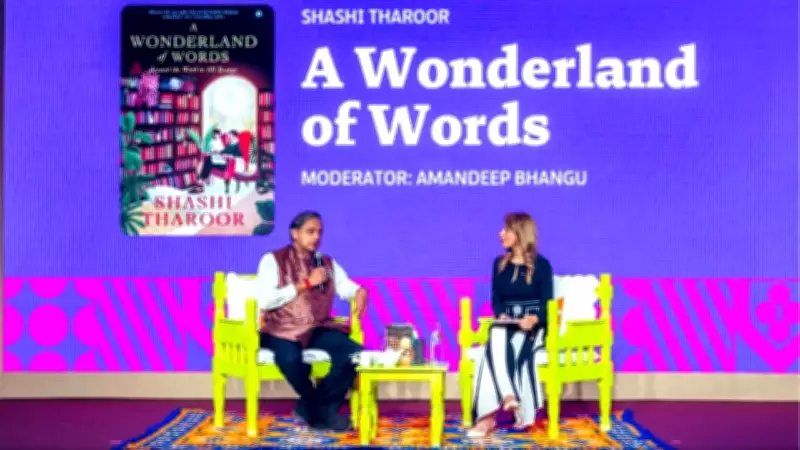
Tharoor's session, aptly titled A Wonderland of Words after his latest literary work, quickly emerged as one of the festival's standout moments. Departing from conventional lecture formats, his presentation masterfully blended humor, personal anecdotes, and profound linguistic insights, creating an atmosphere that felt more like an intimate conversation than a formal academic presentation.

Moderated by the accomplished British presenter Amandeep Bhangu, the session delved deeply into how language fundamentally shapes thought, culture, and human connection. The audience responded with equal measures of laughter and thoughtful reflection throughout the engaging dialogue.
Personal Roots of Linguistic Passion
Tharoor described his book as comprising short, reflective bursts rather than dense arguments—"bite-sized chapters, ideal for dipping in and out"—a format that subtly validates contemporary reading habits. However, the session's true charm emerged through Tharoor's seamless weaving of personal narrative with public discourse.
He traced his lifelong love of language back to his father, who taught himself English through remarkable persistence and curiosity rather than formal polish. Upon arriving in London and recognizing the limitations of his learning, Tharoor's father began meticulously filling notebooks with quotations from literary giants like Byron, Shakespeare, and Dickens—not for show, but from genuine delight in words themselves.
Tharoor revealed that language was treated as a playful game in his childhood home: Scrabble before it became fashionable, word-building challenges where he "usually won", and even a homemade, pre-digital precursor to Wordle that allowed twenty guesses without clues. Beneath this playfulness, however, lay emotional precision—his father wrote letters so profoundly moving that people remembered them long after his passing, whether addressing grief, joy, or personal setbacks.
From these experiences, Tharoor learned that words are not mere decorative flourishes but exact instruments—pleasurable in themselves and powerful because of the meanings they carry.
Language as Personal Journey and Cultural Bridge
Tharoor elaborated on his linguistic fascination, emphasizing how his father's passionate approach to English—through quotation-filled notebooks and impromptu wordplay games—shaped his formative years. "You don't really choose a language, a language chooses you through the circumstances of your life," he told the audience, capturing the personal, almost serendipitous nature of linguistic affinity.
He directly addressed the stereotype of his "difficult vocabulary," asserting that words should serve clarity and connection rather than confusion. "I unfortunately have an undeserved reputation for difficult words. I use the most appropriate words for what I'm trying to convey. If I can't convey my thoughts to the audience, I'm a poor communicator. I use language to get my message across, not to confuse or impress," he declared to appreciative applause.

Tharoor's playful side surfaced through anecdotes about English eccentricities, humorous linguistic terms, and the cultural quirks of cross-language word borrowing. Dubai—a global crossroads where multilingual communication permeates daily life—provided an ideal backdrop for his reflections on language and identity.
His observations about how English interacts with other languages and cultural contexts resonated deeply with an audience intimately familiar with linguistic blending across communities. Quoting Nelson Mandela's famous insight that "speaking in someone's language reaches the mind, while speaking in their own language reaches the heart," Tharoor highlighted the profound emotional power embedded within words and communication.
Thoughts on Reading, Parenting, and Artificial Intelligence
During the Q&A segment, Tharoor urged parents and readers to model lifelong reading habits for children, questioning whether adults read themselves before encouraging younger generations. He also issued thoughtful warnings about over-reliance on artificial intelligence in writing, stressing that outsourcing thought processes can dangerously dilute individual creativity and authentic voice.
The Broader Festival Ethos and Cultural Impact
Tharoor's session perfectly embodied the broader ethos of the Emirates Literature Festival—a steadfast belief in the transformative power of books and dialogue to spark curiosity, enhance understanding, and foster meaningful cross-cultural exchange. Each year, the festival brings together authors, thinkers, and artists in Dubai, offering diverse programming including panels, workshops, performances, and interactive discussions.
This inclusive approach has significantly contributed to positioning Dubai as a major cultural hub within the region. Tharoor's appearance transcended a mere book talk; it served as a powerful reminder of language's enduring influence in an era dominated by rapid communication, digital media, and global diversity.
By blending personal narrative, linguistic curiosity, and cultural observation, Tharoor provided audiences with both entertainment and substantive reflection. These qualities elevate literature festivals beyond simple gatherings, transforming them into vital platforms for collective imagination and meaningful dialogue that resonate long after the events conclude.