West Champaran's Tharu Festival Kicks Off with Cultural Splendor
The five-day annual Tharu Festival began on the eve of Mahashivratri in Harnatand, located under the Bagaha subdivision of West Champaran district, Bihar. This vibrant celebration, which started on Saturday, serves as a cornerstone for preserving and promoting the rich cultural heritage of the Tharu community.
A Legacy of Seven Decades and Cultural Transformation
Organized every year on the High School premises at Harnatand, the festival has been held for over seven decades. Originally known as the Bhujahawa Mela, it was renamed the Tharu Festival in 1996 by then Bagaha Sub-Divisional Officer Masood Hasan, a move that granted it wider recognition and a more distinct identity.
Sharda Prasad, coordinator of the Tharu Festival Mela Committee, highlighted the event's growing popularity. "The fair has attracted visitors from dozens of surrounding villages," he said. "People are arriving in tractor-trolleys, bullock carts, and various vehicles, while many from distant areas are staying with relatives to fully immerse themselves in the festivities."

Showcasing Tribal Identity and Handicrafts
Prasad, who has attended the festival since childhood, described it as a vital platform for showcasing the Tharu community's unique identity. Several stalls set up by tribal women are displaying handmade products, including traditional crafts and artifacts, which are drawing large crowds and generating significant interest.
Maheshwar Kazi of Naurangiya village shared historical insights into the festival's origins. "In earlier times, people would bring 'Anandi' bhuja and chokha from home," he recalled. "It was customary to eat bhuja-chokha after offering prayers to Lord Shiva, which is how the fair earned its earlier name, Bhujahawa. Families would share this meal with relatives, strengthening social bonds and community ties."
Traditional Rituals and Folk Performances
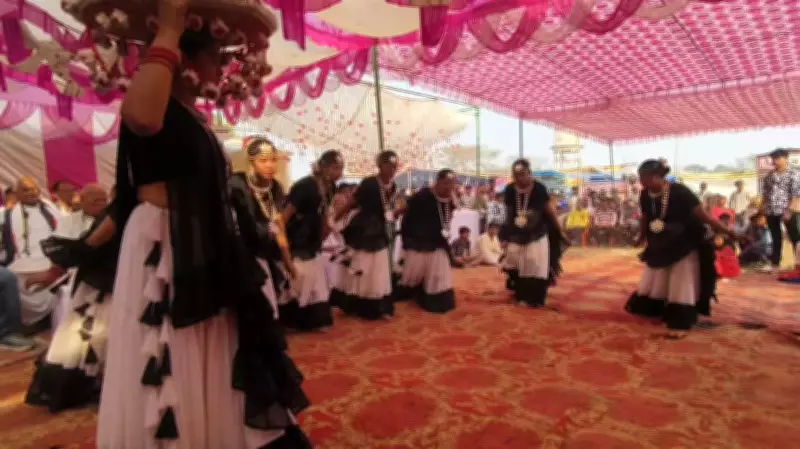
The festival opened with traditional rituals, setting a spiritual tone for the celebrations. This was followed by energetic performances of Tharu folk dances, such as Jhumta and Jhumar, which captivated audiences and highlighted the community's artistic traditions.
To ensure the smooth conduct of the five-day event, organizers have formed separate committees overseeing various aspects, including security, cleanliness, and cultural programs. This structured approach aims to provide a safe and enjoyable experience for all attendees.
The Tharu Festival not only celebrates cultural heritage but also fosters economic opportunities for local artisans and strengthens community cohesion. As it continues to evolve, it remains a testament to the enduring spirit and traditions of the Tharu people in Bihar.