

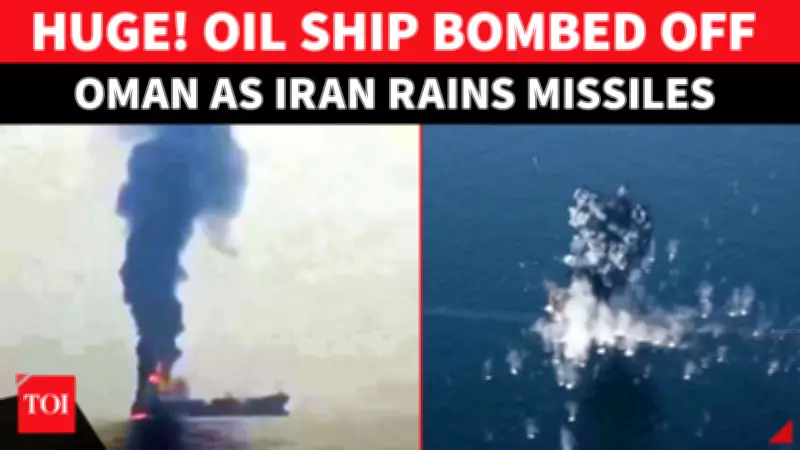
Major Mideast Crisis: Oil Tanker Bombed Off Oman After Iran Closes Hormuz Strait
In a dramatic escalation of Middle East tensions, a commercial oil tanker has been bombed off the coast of Oman. This attack follows Iran's retaliatory closure of the strategic Strait of Hormuz, a critical global energy chokepoint. The incident, captured on video, marks a severe intensification of regional conflict, directly threatening world oil supplies and maritime security.
Iran's Leadership Transition Amid Regional Turmoil
The maritime crisis unfolds alongside significant internal developments in Iran. Following the killing of Supreme Leader Ali Khamenei in US-Israeli strikes, Iran has named cleric Alireza Arafi to its temporary Leadership Council. Arafi joins President Masoud Pezeshkian and Chief Justice Gholamhossein Mohseni Ejei in overseeing the supreme leader's duties until a permanent successor is chosen by the Assembly of Experts.
Arafi, a former member of the Guardian Council and current deputy chairman of the Assembly of Experts, was widely considered a frontrunner to succeed Khamenei. His appointment to the interim council underscores the delicate power dynamics at play during this unprecedented transition period.

Strategic Strait Closure and Global Energy Implications
Iran's decision to block the Strait of Hormuz represents a calculated act of retaliation for the attacks that killed Khamenei. This narrow waterway, located between the Persian Gulf and the Gulf of Oman, is arguably the world's most important oil transit route. Approximately one-fifth of global oil consumption passes through this strait daily.
The closure, coupled with the bombing of an oil tanker near Oman, has sent shockwaves through international energy markets. Analysts warn of potential:
- Sharp increases in global oil prices
- Disruptions to energy supplies worldwide
- Heightened risks for commercial shipping in the region
- Possible military confrontations in vital sea lanes
Broader Regional Conflict and Leadership Questions
The transition in Iran's leadership occurs against a backdrop of intense regional escalation. The killing of Khamenei has triggered a series of retaliatory actions, raising profound questions about:
- Iran's internal stability during this leadership vacuum
- The evolving role of the powerful Islamic Revolutionary Guard Corps (IRGC)
- The future ideological and political direction of the Islamic Republic
- Potential shifts in Iran's foreign policy and regional alliances
Regional tensions have been further inflamed by unverified claims from former US President Donald Trump declaring Khamenei's death, while Israeli Prime Minister Benjamin Netanyahu has made similar assertions without providing conclusive evidence. These statements have added to the atmosphere of uncertainty and confrontation.
Immediate Security Concerns and International Response
The bombing of the oil tanker off Oman represents a direct threat to international maritime security and global energy infrastructure. Security experts express grave concerns about:
- The safety of commercial vessels in the Arabian Sea and Persian Gulf
- Potential cascading effects on other critical shipping routes
- The risk of broader military engagement involving multiple nations
- Impact on regional economies dependent on oil exports and maritime trade
As the situation continues to develop, international observers are closely monitoring Iran's interim leadership council and its handling of both domestic governance and external conflicts. The combination of leadership transition, strategic waterway closure, and attacks on commercial shipping creates a volatile mix with potentially far-reaching consequences for regional stability and global energy security.






