Tharu Villages in West Champaran Achieve Remarkable Zero Dowry Record Through Cultural Enforcement
While dowry cases persistently plague police stations and courts nationwide, a cluster of villages in West Champaran, Bihar, stands as a powerful exception. Under the jurisdiction of the Gobarhiya police station in the Bagaha police district, not one case of dowry demand or harassment has been officially recorded over the past several years.
This absence is far from a statistical fluke; it is the result of deliberate social engineering and unwavering community commitment.
Cultural Preservation as the Cornerstone of Anti-Dowry Stance
Mahendra Mahato, secretary of the Bharatiya Tharu Kalyan Mahasangh and 'gumasta' of Naurangiya Don, emphasizes that culture is central to their resolve. "The paramount principle for our community is safeguarding our cultural heritage. Accepting dowry in marriage is viewed as a grave sin. Should any family face allegations of dowry dealings, an immediate investigation is launched, culminating in a panchayat chaired by the gumasta. Proven guilt leads to penalties such as fines or even complete social ostracism," he explained.

Effectively, the Tharu community has outlawed dowry within its own ethical framework, where social sanctions like ostracism act more swiftly than any formal legal complaint.
Police Acknowledge Peaceful and Exemplary Community Practices
Bagaha Superintendent of Police Ramanand Kaushal noted that approximately 20 to 22 Tharu villages fall under the Gobarhiya police station. Remarkably, no incidents of dowry or women's harassment have been reported in the last decade. He described the community as inherently peaceful and socially responsible, highlighting their role as a model for broader society. Even domestic disagreements are typically settled amicably with the gumasta's mediation, he added.
Marriage as a Sacred Union, Not a Transactional Arrangement
For the Tharus, marriage is deeply rooted in ritual rather than financial exchange. Sharda Prasad, president of the Tharu Kalyan Bauddhik Vichar Manch, stated that marriage is considered a divine union, with both bride and groom revered during ceremonies.
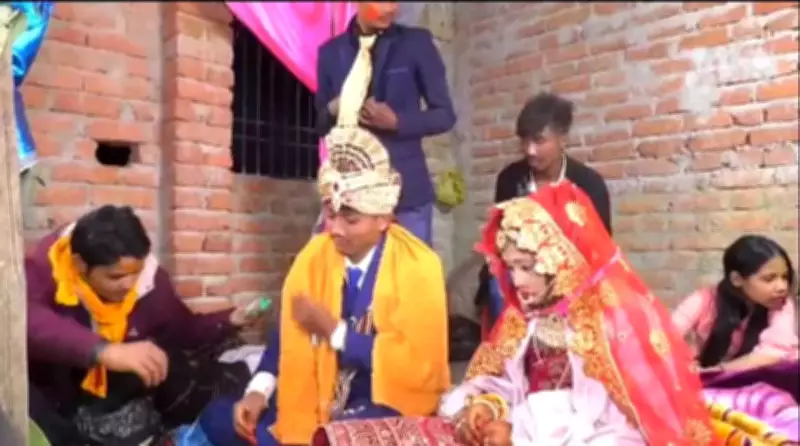
Traditionally, the groom's guardian initiates discussions by visiting the bride's home. Upon finalizing the alliance, a symbolic sum of Rs 5 or Rs 11 is placed in the hand of the boy or girl as an auspicious gesture, devoid of any dowry connotations.
Real-Life Examples and Community Demographics
Recent marriages illustrate this practice vividly. Achala Rai, daughter of Dr. Krishnamohan Rai from Harnatand, married sales tax officer Ashwini Kumar of Belhawa village without any dowry exchange. Similarly, Mahendra Chaudhary, an assistant professor from Mishrauli village, wed in Kathaiya village under the same principle.
The Tharu population in West Champaran is concentrated in six revenue villages—Rajpur, Chauparan, Chaigwan, Jamhauli, Don, and Ramgir Barah Gawa—with an estimated populace of around three lakh. Annually, over 500 marriages occur within the community, consistently adhering to the rule: no demands from the groom's side and no offers from the bride's.
Voluntary Gifts and Evolving Lifestyles Within Tradition
Kusumi Devi clarified that while dowry is strictly prohibited, families may give voluntary gifts according to their means, and relatives often share wedding expenses. "Post-marriage, we treat our daughter-in-law as our own daughter," she affirmed.
Maheshwar Kazi of Naurangiya village highlighted another aspect: many Tharu families along the India-Nepal border now include professionals like doctors, engineers, administrators, and bankers. "Despite advancements in education, lifestyle, and dietary habits, we have steadfastly preserved our traditions, remaining immune to the dowry system. As reform debates persist, the Tharu experience indicates that lasting change may stem not merely from legislation but from collective determination," he concluded.