The Modern Indian Woman: Between Aspiration and Exhaustion
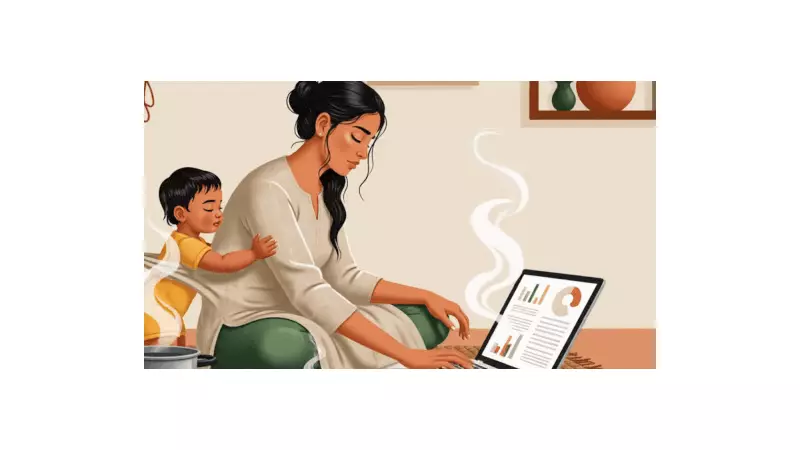
You see her everywhere in contemporary India. She appears in glossy brochures, participates in television panel discussions, and stars in advertising campaigns. Society praises her for "managing it all" and celebrates her for "having it all." But this familiar image often resembles a woman with multiple arms, each stretched thin performing countless tasks simultaneously.
This portrayal feels aspirational yet reveals something deeper: profound exhaustion disguised as empowerment. When comedian Sharon Verma introduced herself on stage as a "weak, independent woman," the audience laughed immediately. Her joke resonated deeply and stuck with countless women across the country.
Beneath the Laughter Lies Daily Negotiation
For many Indian women, independence does not represent a victory lap. It constitutes a daily negotiation. They carry this weight quietly, often without adequate language to describe it, sometimes without permission to set it down.

"I want my child to grow up knowing that his mother is a capable woman," says Neha Arora, a 37-year-old professional. "Women frequently see themselves through the eyes of their loved ones. When children enter the picture, it becomes crucial to appear strong, someone who commands respect beyond the home."
At this life stage, independence carries both aspiration and pressure. Being independent no longer means just personal fulfillment. It transforms into responsibility. Strength must remain visible, legible, even exemplary. Women no longer simply live independence; they perform it constantly, observed and silently evaluated by society.
When Independence Felt Simpler
Was independence always this complicated? Certainly not. Many women recall simpler times.
"When I finished school, I believed being independent was the bravest thing I had accomplished," Neha remembers. "Living alone in a new city for higher studies felt exhilarating."
That version of independence resonates with numerous women. The first rented room. The initial salary. The thrill of navigating unfamiliar streets solo. Independence then meant discovery, tinged with fear yet buoyed by possibility.
For Dr. Sangita Thakur, now 56, independence arrived earlier and more literally.
"I became independent at a very young age," she explains. "My parents, especially my mother, rejected protective upbringing. She wanted us to achieve emotional and financial independence, particularly since I had multiple disabilities."
As a child, she commuted to school alone, visited friends independently, and traveled without adult supervision. "My brother was nine and I was seven when we traveled alone by train from Gaya to Delhi," she recalls. Later, as a Delhi student, she moved through the city freely.
"Back then, independence meant freedom of movement," Dr. Thakur says. "Unescorted. Unquestioned."
But time inevitably reshapes definitions.
"Today, my definition of strength contains many more layers," Neha observes. "Like showing up for my child or managing home and work simultaneously."
What began as self-focused gradually becomes others-focused. Independence matures into endurance. Courage no longer means leaving home; it means holding everything together.
Learning Independence Early and Understanding Its Cost
At just 20, Jahnvi Dubey already stands at adulthood's edge, feeling its weight arrive unexpectedly fast.
"For me, being independent means becoming financially, physically, and emotionally capable of caring for myself and my parents," she states. "It means affording the life I see in movies without feeling burdensome, and giving my parents the life they deserve."
Her independence concept remains aspirational yet tethered to duty. Even before adulthood fully begins, freedom intertwines with responsibility.
"I appreciate that when I want something, I don't need to ask anyone," Jahnvi says. "I can simply purchase it. And if I see someone needing help, I can assist without seeking permission."
But that freedom carries urgency.

"My family constantly pushes me to mature and accept responsibility," she admits. "It feels rushed. Like one wrong decision could ruin everything."
Five years ahead, 25-year-old Vijayalaxmi Singh speaks from a slightly steadier position, yet one already shaped by obligation.
"For me, being an independent woman means earning substantial money, traveling worldwide, and respecting everyone," she says. "Independence should accompany responsibility."
Her understanding emerged not from slogans but observation.
"I learned independence's meaning by watching others," Vijayalaxmi explains. "By learning from their experiences."
Like Jahnvi, she senses adulthood arriving prematurely.
"Yes, family responsibilities," she responds when asked if she carries more than she feels ready for.
When both women observe those ahead, admiration blends with fear.
Jahnvi describes watching her mother surrender dreams quietly, without acknowledgment. "She is a fighter," she says. "But seeing her abandon dreams for family showed me true independence's meaning. It made me determined never to become that vulnerable."
Vijayalaxmi discusses women in their thirties and forties with respect and caution. "I admire their experience," she says. "But what frightens me is how much they struggled to reach this stage."
Together, their voices reveal a generational truth: independence no longer represents something women grow into gradually. Society expects it early, demands it quickly, and women learn it by watching others pay its price.
The Discomfort With Labels
For 32-year-old Arpita Ghosh, the phrase itself feels inadequate.
"I'm honestly uncomfortable with the term 'strong independent woman,'" she questions. "What does it actually mean?"
This label has become both compliment and containment. It compresses complexity into a catchphrase, often erasing the cost of maintaining that identity.
"To me, strength isn't a label," Arpita clarifies. "It's a moment of awareness. When you realize you're responsible for your own choices. That's when you begin carving your path, knowing you might falter, yet choosing to show up for yourself daily."
Dr. Sangita Thakur echoes this resistance to validation-driven strength.
"If I could speak to my younger self," she reflects, "I would tell her this: achieve emotional independence. You don't require social validation. Your life may not follow peers' trajectories, but that doesn't make you less. You are complete in yourself."
For her, independence represented both choice and necessity.
"In India, especially during our time, women typically married in their twenties and moved between protected environments," she explains. "My journey differed. Initially, independence resulted simply from my upbringing. Over time, it became both necessary and deliberate."
"I had to consider long-term reality of remaining single," Dr. Thakur continues. "I rejected arranged marriage, and given my progressive conditions, it wasn't practical either. Today, independence is no longer a decision. It's a habit—and an integral personality component."
Why Strength Must Be Performed
Psychologist Dr. Medha, assistant professor at Patna Women's College, explains why independence feels heavier for women, even when it appears similar superficially.
"Financial independence dramatically increases self-efficacy for women," she says, referencing Albert Bandura's theory. "In societies normalizing dependence, earning your own money reshapes how women perceive power, safety, and choice."
For men, financial independence is expected. For women, it proves transformative.
But transformation invites scrutiny.
"Women learn that strength must be displayed carefully," Dr. Medha explains. "Without making others uncomfortable. So strength becomes curated. Managed. Performed."
Dr. Sangita's experience offers contrast.
"In my family, strength is shared rather than performed," she says. "We are all strong individuals. We carry our load quietly, but we remain deeply attuned to each other's burdens."
The Guilt Following Work
That moral weight surfaces sharply when women step away from caregiving roles and rejoin the workforce.
"Rejoining the workforce has truly challenged me," Neha admits. "Guilt struck first. How would things manage when I'm absent?"
This question rarely confronts men.
"I was so accustomed to being needed," she confesses, "that it stings realizing they can be fine without me."
Independence here requires mourning—not failure, but a former self-worth version tied to indispensability.
'Too Ambitious,' 'Too Independent'
Independence, when expressed clearly, often attracts criticism.
"Yes," Arpita confirms. "Across nearly every space I've occupied."
These labels function as warnings. They suggest excess.
"What's called 'too ambitious' usually means a woman being clear about her goals and boundaries," she observes. "Clarity threatens."
Dr. Sangita has heard another version of the same accusation.
"Yes, I've frequently been called selfish," she reveals. "Even my husband and daughter consider me self-centered."
But for her, choosing herself remains non-negotiable.
"I am not physically fit," she explains. "My life must function like clockwork. What appears selfish to others is simply self-preservation."
The Body Keeps Score
The independence burden isn't merely emotional. It's physical.
"There are days I genuinely feel like giving up," Arpita shares. "Hormonal changes, especially during periods, intensify exhaustion."
The workplace rarely adjusts. And the workday rarely concludes at work.
"This double shift is so normalized that burnout feels like personal failure rather than systemic neglect."
Dr. Medha points out that society often frames this exhaustion strategically.
"Calling women tired is a way of calling them unsuited for power," she states. "It allows old hierarchies to survive while pretending concern."
Why Quitting Isn't Simple
Despite fatigue, walking away rarely feels feasible.
"Inflation and rising expenses make financial stability non-negotiable," Arpita says. "But work also gives me purpose."
Independence drains. It also anchors.
Carrying the Burden Forward
The great burden of independent women isn't ambition. It's accumulation. Expectations layer upon responsibilities. Pride braids with guilt. Strength is demanded without adequate support.
Yet within this weight lies something quietly radical: a refusal to shrink.
"I want my child to grow up knowing his mother is a capable woman," Neha repeats, not as a slogan but as a legacy.
Dr. Sangita offers her own message to the next generation.
"Independence is a mindset, not a trade-off," she advises. "Protect your boundaries. Respect your partner's boundaries. That's what makes relationships last."
Independence, for women, isn't a milestone crossed once. It's a continuous act of balancing, resisting, recalibrating.
It isn't light.
But it is chosen.
And perhaps the most radical act now is no longer carrying it silently, but finally declaring aloud: this strength has weight, and it deserves acknowledgment.