Triveni Terrace Cafe Revives Heritage Menu, Celebrating 75 Years as Delhi's Cultural Epicenter
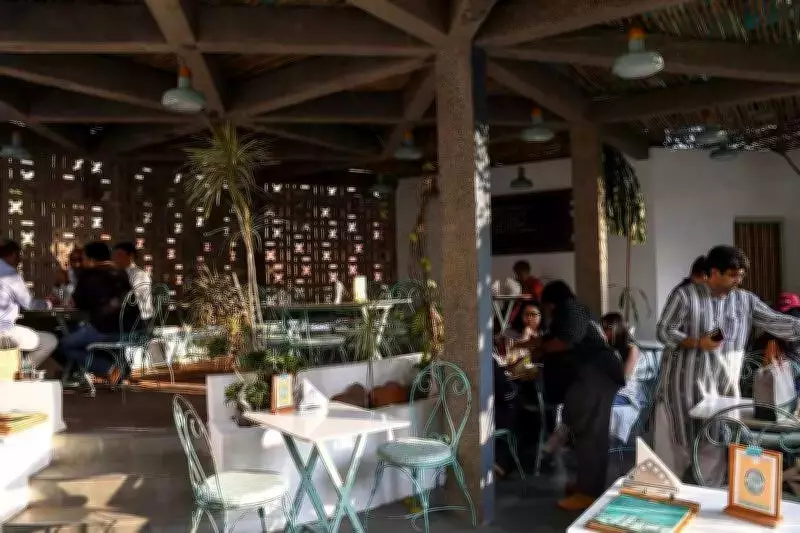
The courtyard of Triveni Kala Sangam in Mandi House resonates with the familiar symphony of clinking teacups, clattering cutlery, and the sizzle of kebabs crisping on griddles. This auditory tapestry blends seamlessly with drifting melodies from rehearsals and the rhythmic footwork of kathak dancers echoing down staircases. For over seven and a half decades, Triveni Terrace Cafe has transcended its role as a mere canteen to become the quintessential hub of adda—lively, unhurried conversation. Now, it triumphantly returns with a meticulously curated heritage menu, guiding patrons through the evolution of this iconic cultural complex and its cherished culinary traditions.
A Vision of Accessible Arts and Humble Beginnings
Founded in 1950 and formally established at its current Tansen Marg address in 1963, Triveni Kala Sangam was the visionary creation of Sundari Shridharani. An artist profoundly influenced by her time in Almora with legendary dancer-choreographer Uday Shankar and his brother, sitar maestro Ravi Shankar, Shridharani championed a radical idea: the arts must be accessible to all, not just the privileged elite. Consequently, Triveni's classes were affordably priced, scholarships were generously offered, and performances were rarely ticketed, operating on a simple first-come, first-served basis.
This philosophy naturally extended to the canteen, as recalled by Kavita Shridharani Mohindroo, current president of Triveni Kala Sangam and daughter of its founder. In the late 1960s, the canteen was a modest setup with little more than a stove and a table, serving tea, biscuits, and a few simple snacks. Artists would gather here after rehearsals, lingering for hours over steaming cups. The transformation began with Mrs. Puran Acharya, the first professional manager, who expanded the menu modestly by introducing nimbu pani, coffee, and a selection of hot snacks. Gradually, she added the kebabs and parathas that would become legendary across Delhi.

A Gathering Place for Legends and Luminaries
"Soon, everyone was here," Kavita reminisces. "M.F. Husain, after alighting barefoot from his car adorned with galloping horses, would hold court in a corner. Fellow painters Krishen Khanna and Vasudeo S. Gaitonde were regular visitors. Photographer Raghu Rai held one of his early exhibitions here. Theatre actors, poets, writers, and musicians made the courtyard their evening address. It was commonplace for three or four cups of chai to accompany meandering conversations about art, politics, and life."
The food, she emphasizes, was always simple, affordable, and honest—"ghar ka khana" (home-style food). "No one had money those days. But everyone had ideas," she notes. Over the years, the canteen passed through different custodians, including Kamala Ranjit Rai and her family, who expanded offerings while preserving its unpretentious soul. Cold coffee appeared, albeit simpler than today's frothy versions, and more dishes were added, yet the core ethos remained: affordable, welcoming, and leisurely. Unobtrusively, the canteen evolved into a fledgling cafe.
Revival and the Heritage Menu Launch
After a brief closure due to a partnership dissolution, a meticulous search for new custodians ensued. Triveni sought not just restaurateurs but like-minded collaborators who understood its artistic ecology. The eventual choice was the team behind the iconic Cafe Lota at the National Crafts Museum. "This team believed in good ingredients, no aerated sodas, and a certain integrity," Kavita explains. "And it clicked."

Today, while the menu has expanded, a conscious effort ensures a section—primarily dal, rajma, and roti—remains affordable for students. At lunch, lawyers from the nearby Delhi High Court often occupy the courtyard; evenings buzz with dancers, designers, journalists, tech professionals, and tourists. The cafe's uniqueness stems as much from its architecture as its food. Designed by American architect Joseph Allen Stein, the building unfolds around a central courtyard like a village square, ensuring one cannot reach the cafe, galleries, or restrooms without passing a rehearsal, performance, or exhibition. Music seeps into every meal, whether from a Manipuri performance on stage or the strains of a flute rehearsal.
"You nourish yourself with the food," Kavita smiles, "and at the same time you nourish your mind."
Rediscovering Timeless Flavors and Memories
The newly launched heritage menu revives everything that once endeared the cafe, with managers striving to keep original tastes intact. Mrs. Acharya's famed vegetable cutlets, keema paratha with boondi raita, kebab-paratha, and ‘tasty toasts' are back. There's even ‘Husain's samosa', a nod to the painter's preferred snack, and the classic chicken curry prepared exactly as it was over half a century ago. These recipes were revived in consultation with those who remember them best.
"Since launching the heritage menu a few days ago, the response has been incredible," says Rajesh Ojha, who now runs the cafe. "Guests are rediscovering the beauty of simple flavors. Seeing these timeless dishes resonate so deeply is a delight. It's a wonderful reminder that true excellence often lies in simplicity."
Long-time visitors cherish the revival. Writer and performance storyteller Paro Anand shares, "Shammi kebabs were affordable even for penniless students like me. You could lounge around sipping chai from kulhars with no one hurrying you. The other day, I had a plate of kebabs for old times' sake. The taste took me back to my childhood."
Kavita reflects on the cafe's enduring legacy: "Couples had their first dates here; some got engaged at these very tables. Young photographers, inspired by a gallery upstairs, found their calling. Students who once scraped together coins for tea and later visited as Fulbright Scholars now inquire from faraway Berkeley whether we still serve the kebabs and parathas." Triveni Terrace Cafe stands not just as a culinary destination but as a living testament to Delhi's vibrant cultural heartbeat, where food, art, and conversation intertwine seamlessly.