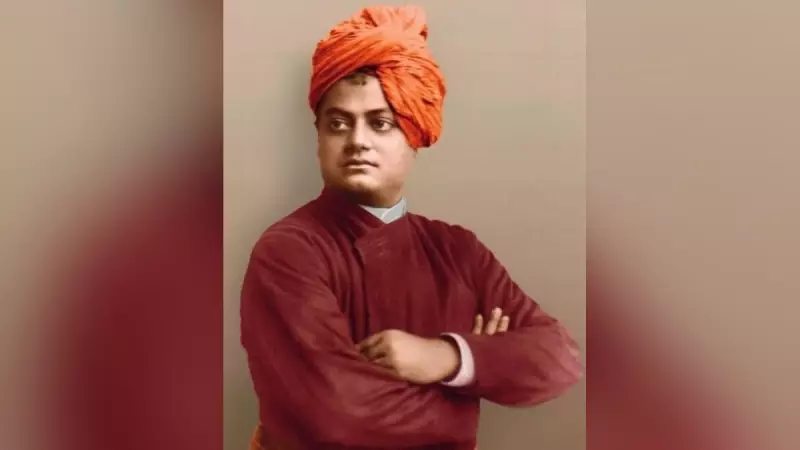
The 1893 World's Parliament of Religions in Chicago is almost synonymous with the iconic address of Swami Vivekananda. His opening words, "Sisters and Brothers of America," are etched in history. However, recent research and historical records confirm that Vivekananda was not the sole Indian voice at that groundbreaking forum. Two other Indian delegates, Virchand Raghavji Gandhi and B.B. Nagarkar (representing Shri Narasimhacharya), also delivered speeches, contributing to the global introduction of Indian religious thought.
The Jain Ambassador: Virchand Raghavji Gandhi
Virchand Raghavji Gandhi, a scholar of Jain philosophy and law, was a formidable presence at the Parliament. Just 29 years old at the time, he represented the Jain community with eloquence and depth. His speeches covered a wide range of topics, from the core principles of Jainism like ahimsa (non-violence) and anekantavada (multiplicity of viewpoints) to insightful commentaries on socio-economic conditions in India under British rule.
Historical accounts suggest Gandhi delivered multiple lectures, sometimes even more than Vivekananda during the initial days. He impressed the audience with his command of English and his persuasive oratory. He famously defended India against criticisms of its poverty and social conditions, arguing that the nation's spiritual wealth was immense. His participation was crucial in presenting Jainism on a world stage for the first time.

The Scholar of Shri Vaishnavism: B.B. Nagarkar and Narasimhacharya
The second Indian speaker was B.B. Nagarkar, a representative of the Brahmo Samaj. However, his significant contribution was presenting a paper authored by Shri Narasimhacharya of the Sri Vaishnava tradition. This paper, titled "The Doctrines of Sri Vaishnavism," provided a detailed theological exposition of the Vishishtadvaita (qualified non-dualism) philosophy.
Through this presentation, the Parliament heard about the devotional path of bhakti centered on Lord Vishnu and his incarnations. This ensured that a major Hindu theological tradition, distinct from the Advaita Vedanta represented by Vivekananda, was also part of the historic dialogue. The inclusion highlighted the diversity within Hindu thought itself.
Legacy and Historical Significance
The presence of these three thinkers together created a more complete and nuanced representation of India's spiritual landscape. While Vivekananda's charismatic speech captured the public imagination, Virchand Gandhi's advocacy for Jain ethics and Narasimhacharya's scholarly paper on Vaishnavism provided critical depth. They collectively challenged Western stereotypes and showcased India as a land of profound and varied philosophical traditions.
This historical correction is vital for a complete understanding of the event. The 1893 Parliament was not just about one stellar speech but a confluence of Indian intellectual traditions making their debut in the modern global arena. The contributions of Virchand Gandhi and the work of Narasimhacharya, presented by Nagarkar, are essential chapters in this story of cultural and religious exchange.
Their efforts, alongside Vivekananda's, paved the way for future interfaith dialogue and fostered a greater Western interest in Eastern philosophies. Remembering all three voices gives us a fuller picture of a pivotal moment that reshaped the world's religious discourse.