Vairamuthu Honored with Prestigious Jnanpith Award
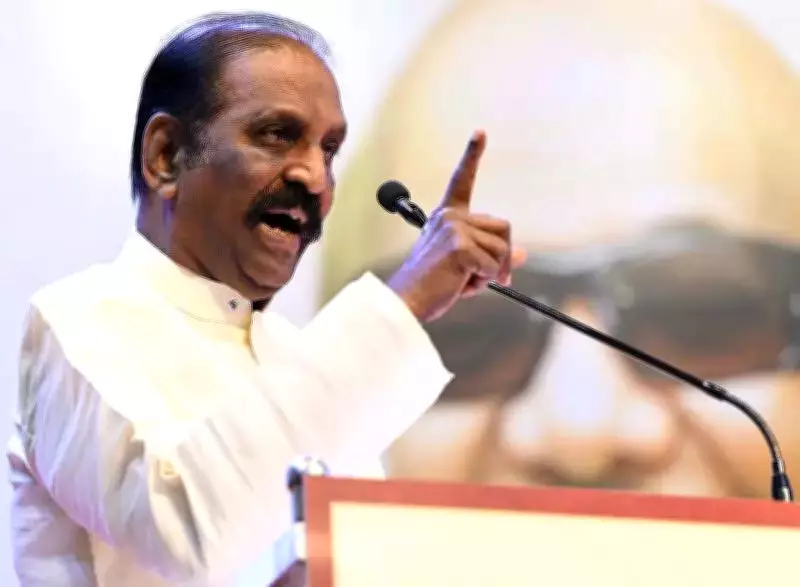
In a landmark moment for Tamil literature, renowned poet and lyricist Vairamuthu has been selected for the Jnanpith Award, India's premier literary honor. The announcement was made by Bharatiya Jnanpith, sparking celebrations across literary circles.
A Poetic Journey from Mettur to National Acclaim
Born on July 13, 1953, in Mettur, Theni district, to Ramasamy and Angammal, Vairamuthu's early life was rooted in Tamil Nadu's cultural heartland. He completed his schooling in Vadugapatti and later earned a master's degree in Tamil from Pachaiyappa's College in Chennai, graduating with a gold medal. His literary journey began at the age of 18 with the publication of his first poetry collection, Vaigarai Megangal, which was so impactful that it was prescribed as a textbook in a women's college while he was still a student.
After his education, Vairamuthu started his career in the Official Language Commission of the Tamil Nadu government. In 1980, he entered the Tamil film industry as a lyricist for the film Nizhalgal, directed by his long-time friend Bharathiraja. The song Idhu oru ponmaalai pozhuthu, with music composed by Ilayaraaja, was praised for its innovative imagery, marking the beginning of a prolific career.

Blending Tradition with Innovation in Literature
Vairamuthu's unique style, which blends traditional Tamil poetry (marabu kavithai) with new verse (puthu kavithai), earned him the title Kaviperarasu (Emperor of Poets). He explained, "I trained in writing traditional poems. Later, I started to write new verse. When I entered the film industry, I innovated a new form of writing songs by blending new verse with values taken from traditional poems. That became my style."
Since the 1980s, Vairamuthu has penned over 8,000 songs, winning seven national awards and six state awards for his lyrics. He holds the rare distinction of writing songs for three generations of actors, from Sivaji Ganesan to Kamal Haasan and Rajinikanth, and later for Dhanush and Vijay Sethupathi. "I wrote songs for Sivaji Ganesan, his son Prabhu, and his grandson Vikram Prabhu. I keep myself abreast of new developments in science and technology. Everyday I learn new things and update myself. That's why I am able to work with different generations," he said.
Literary Contributions and Recognition
Beyond film lyrics, Vairamuthu has made significant contributions to modern Tamil literature, with nearly 40 books to his credit. His works include:
- 12 poetry collections
- 10 novels
- 1 short story collection
- 8 essay collections
- 1 biography
- 2 question and answer collections
- 2 travelogues
His autobiography, Idhu varai naan (1983), and recent commentary on Thirukkural titled Valluvar Marai Vairamuthu Urai showcase his deep engagement with Tamil classics. His novel Kallikkaattu Ithihasam (2001), which chronicles the struggles of people displaced by the Vaigai dam construction, won the Sahitya Akademi award in 2003 and has been translated into all 23 other official Indian languages.
Reflections on the Jnanpith Award and Tamil Legacy
Upon receiving the Jnanpith Award, Vairamuthu expressed pride in bringing the honor to Tamil, while also reflecting on historical delays. "The Jnanpith should have first gone to the great poet Bharathidasan. Unfortunately, he passed away before the award was instituted. So, Malayalam poet G Shankara Kurup got the first award in 1965. Sixty years later, as a poet, I'm proud to bring this award to Tamil," he stated.
He noted the rotational basis of the award, highlighting disparities: "I can understand this delay in recognizing Tamil writers, because this award is being given on a rotational basis. However, the Hindi literary world has got this award 12 times, Kannada eight times, and Malayalam six times. Tamil being a classical language should have been given more attention. That is my only regret. Hope, in future more Tamil writers will receive this award."

Married to Dr. Ponmani Vairamuthu, the poet has two sons, Madan Karky and Kabilan Vairamuthu, who are also lyricists and poets. In his acceptance, Vairamuthu emphasized the transformative power of literature: "To me, literature should elevate humankind. I travel among their dreams and emotions. I had two wings. With this award, I feel I have two more wings. I dedicate this award with gratitude to Tamil society and its people. I continue my work with renewed vigour."
Chief Minister M.K. Stalin and other political leaders extended their congratulations to Vairamuthu, celebrating this milestone for Tamil culture and literature.