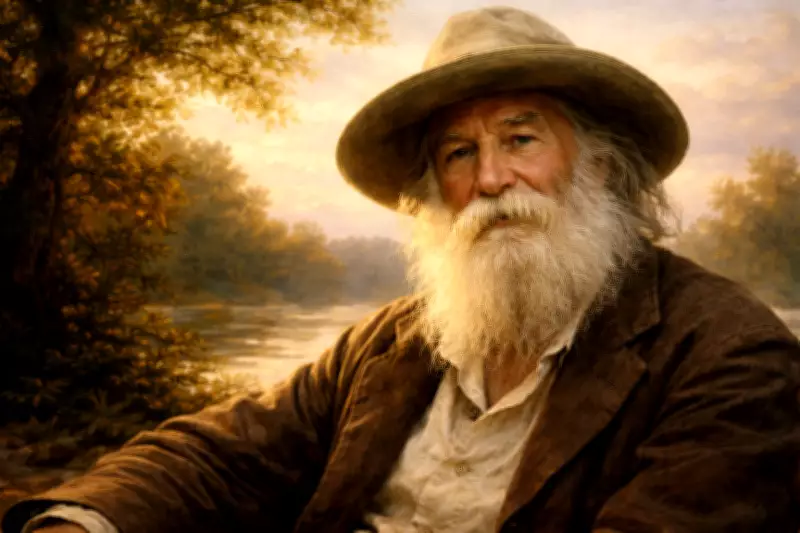
Walt Whitman: The Revolutionary Poet Who Defined American Literature
Walt Whitman stands as one of the most significant and influential American writers in history. Born in 1819, his poetry uniquely captured the spirit of a young nation, celebrating democracy, the human body, nature, and ordinary people with unprecedented passion. His iconic poems shattered traditional rules and paved the way for modern poetry, transforming American literature from a stuffy, European-influenced tradition into something bold, free, and distinctly American.
A Life of Struggles and Service
Whitman's life mirrored the turbulent growth of the country he adored. He was born on May 31, 1819, in West Hills, New York, into a family of modest means. His father worked as a carpenter and farmer, dreaming big but facing financial hardships. Young Walt left formal education at age 11 to become an office boy, embarking on a diverse career path that included roles as a printer's apprentice, teacher, newspaper editor, and even a carpenter like his father. These varied experiences deeply shaped his worldview and artistic voice.
In the 1840s, Whitman edited newspapers and wrote fiction, but his true calling emerged in poetry. The Civil War marked a profound turning point in his life. Moved by compassion for his fellow Americans, he relocated to Washington, D.C., in 1862 to care for wounded soldiers. He dedicated himself to selfless service, visiting hospitals regularly to provide comfort, write letters, and deliver small gifts to the injured. This emotionally scarring work exposed him to the harsh realities of war—amputations, deaths, and broken spirits—yet it also fueled his most powerful writing.

Innovative Style and Literary Masterpiece
What set Whitman apart was his revolutionary approach to poetry. Before his time, poetry was formal, systematic, and focused on lofty themes. Whitman completely rejected these conventions, inventing "free verse"—a style without rhymes or strict rhythms. His lines flowed like natural speech or thought, long and breathless, mimicking the pulse of life itself. He employed techniques such as repetition, catalogs (extensive lists of objects or ideas), and direct address to engage readers intimately.
Whitman's most famous work is Leaves of Grass, first published in 1855. He self-published an initial edition of 12 poems without a title page, featuring only his name. Over his lifetime, the collection expanded through nine editions, growing to include hundreds of poems. The 1855 version opens with "Song of Myself," a 52-section epic where Whitman speaks as "I," representing everyman. In this joyful, erotic, and spiritual piece, he wanders through America, cataloging leaves, animals, and workers with lines like "I loafe and invite my soul." Other key poems include "I Sing the Body Electric," which defends the holiness of the human body, and "Out of the Cradle Endlessly Rocking," exploring themes of love and death.
Civil War Influence and Enduring Legacy
The Civil War inspired Drum-Taps (1865), a collection of raw, emotional poems that includes "O Captain! My Captain!," a traditional, rhymed piece mourning President Abraham Lincoln's assassination. Later works like Democratic Vistas (1871) argued for literature as a tool to build and sustain democracy. Whitman's influence bridged Romanticism and modernism, impacting a wide array of American writers such as Ezra Pound and Allen Ginsberg, and establishing poetry as a means to forge national identity.
During Whitman's era, America was undergoing explosive changes—industrialization, immigration, debates over slavery, and westward expansion. He gave voice to all these dynamics, unlike British poets who often wrote for aristocratic audiences. Whitman sang for slaves, prostitutes, mothers, and pioneers, though he grappled with issues of race. His legacy endures through school curricula, postage stamps bearing his image, and his proof that poetry could be as vast and inclusive as the American landscape itself.

Quote of the Day: Embracing the Present
One of Whitman's most memorable lines comes from his poem "Momentary Happiness" in Leaves of Grass: "Happiness, not in another place but this place...not for another hour, but this hour." These words encapsulate his core philosophy in simple, powerful terms. Happiness exists right here and now—not in distant locations or future moments. Whitman urges us to stop chasing dreams elsewhere or later and to fully embrace the present.
Consider how often we believe joy awaits in a better job, a vacation spot, or an ideal partner, or we postpone happiness until "tomorrow" when problems might vanish. Whitman counters this by asserting that true happiness blooms in the present, however messy it may be. Having experienced life's grit through nursing soldiers and wandering cities, he found bliss in ordinary moments: a blade of grass, a stranger's face, or sunlight on skin. This approach reflects mindfulness long before the term became popular.
His free verse style makes this message conversational, like a friend offering earnest advice. "Not for another hour, but this hour" rejects rigid schedules and the passage of time, encouraging us not to waste moments longing for what might be. Instead, we should live now—feeling our breath, hearing birds, touching the earth. In today's fast-paced world, where social media fosters envy of others' lives and deadlines consume our hours, Whitman's reminder is profoundly relevant: happiness is not a destination but a choice, accessible through small acts like savoring coffee steam, sharing a hug, or enjoying laughter.
Whitman ties this idea to democracy, suggesting that present-moment bliss is available to everyone, regardless of wealth—a farmer or poet can experience it equally. During challenging times like the Civil War, this philosophy sustained him, and it can sustain us today as well.