The Spiritual Meaning of Lord Krishna's Flute: Emptiness, Surrender, and Divine Love
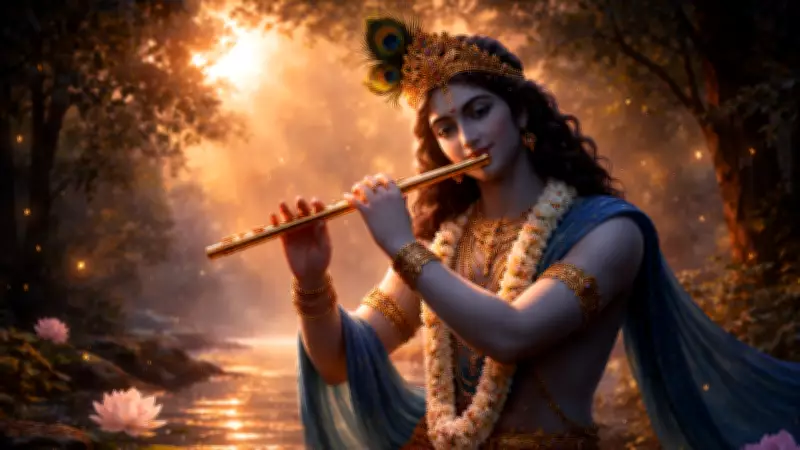
In the rich tapestry of India's spiritual imagination, few images resonate as deeply as that of Lord Krishna standing beneath a Kadamba tree in Vrindavan, with a bamboo flute gently pressed to his lips. This seemingly simple scene—a cowherd boy, a hollow instrument, the tranquil dusk over pastoral fields—holds layers of profound meaning within Hindu philosophy. Krishna, revered as a divine strategist and teacher, is often depicted not with weapons or royal insignias in these moments, but with a flute. For centuries, saints and philosophers have interpreted this choice as far from incidental, viewing the flute as a powerful metaphor for spiritual awakening and divine connection.
The Flute as the Empty Self: A Vessel for Divine Grace
The first striking feature of a flute is its hollowness. In spiritual symbolism, this emptiness symbolizes the state a human being must achieve to receive divine grace. Ego, pride, jealousy, and attachment are likened to dust that clogs the inner channels of the heart, much like a blocked flute ceases to produce music. Krishna's flute serves as a gentle reminder that the divine flows most freely through those who have emptied themselves of ego. Importantly, the bamboo flute possesses no voice of its own; it does not attempt to create its own melody but simply allows the musician's breath to pass through. This mirrors teachings in bhakti traditions, where the highest spiritual state is not about control but surrender—becoming an instrument through which the divine expresses itself. Here, the devotee embodies the flute, and Krishna becomes the musician, illustrating a profound relationship of dependence and harmony.
The Divine Call: Awakening the Soul's Longing
Devotional narratives vividly describe how, when Krishna begins to play his flute, the natural world responds: cows halt their grazing, rivers seem to pause, birds fall silent in attentive listening, and the gopis—the cowherd women of Vrindavan—abandon their daily tasks to follow the sound into the forest. While this may appear as romantic folklore on the surface, spiritual interpretation reveals a deeper truth. The flute is often seen as the divine calling softly to the human soul. Amidst the cacophony of daily life—work, ambitions, and anxieties—there persists a quiet yearning to reconnect with something eternal. Krishna's flute symbolizes the awakening of this longing. The gopis running toward the sound are not mere characters in a pastoral tale; they represent the human soul recognizing the voice of the divine and moving toward it with an irresistible, heartfelt desire.

Love Over Authority: The Gentle Pull of Divine Charm
Another remarkable aspect of Krishna's flute is how it redefines divine power within Hindu thought. Unlike deities in many traditions who assert authority through thunder, commandments, or displays of might, Krishna attracts rather than commands. He plays music, a subtle yet profound symbol. This suggests that the divine does not always manifest through fear or discipline but can arrive through beauty and allure. In the bhakti tradition, devotion is not forced obedience but a heartfelt response to divine charm. The flute's melody embodies this charm—a gentle, non-coercive pull of divine love that draws the heart willingly. It is not an order but an invitation, highlighting a relationship based on affection and mutual attraction rather than subjugation.
Breath as the Universal Life Force
Delving deeper, the way a flute produces sound—through breath moving through hollow bamboo—adds another layer of symbolism. In Indian spiritual philosophy, breath is closely linked to prana, the vital life force that sustains all existence. Without breath, the body becomes still; without prana, the universe itself would cease to function. Thus, Krishna's flute not only represents spiritual emptiness but also the flow of life energy that animates creation, connecting the microcosm of the individual to the macrocosm of the cosmos.

The Humility of Bamboo: Simplicity and Flexibility
Even the material of Krishna's flute carries significant meaning. Bamboo grows quietly and unassumingly, without demanding attention. It is simple, flexible, and naturally hollow. Saints often emphasize that the flute had to be made of bamboo because it symbolizes humility. It does not resist being carved or hollowed out; instead, it allows itself to be shaped for a higher purpose. This quality mirrors the ideal spiritual attitude of surrendering one's ego and desires to serve a divine will, embracing transformation with grace and acceptance.
An Enduring Melody: A Timeless Spiritual Symbol
Perhaps the most beautiful aspect of Krishna's flute is its enduring presence as a spiritual symbol in Indian culture. Temples, paintings, poems, and devotional songs continually return to the image of the flute player of Vrindavan. This persistence captures something deeply human: the belief that the universe is not merely mechanical or silent but imbued with meaning, music, and relational depth. Krishna's flute transcends its mythological origins to become a spiritual reminder: become empty like the flute, let go of the noise of ego, and when the divine breath finally moves through the heart, life itself begins to resonate with harmonious music.