As the new year unfolds, many seek inspiration from successful entrepreneurs, fitness gurus, or spiritual leaders. But one journalist has found an unlikely yet perfect role model in a beloved, honey-loving bear from the Hundred Acre Wood: Winnie the Pooh. This choice coincides with a significant milestone—2026 marks the 100th anniversary of the first book of his adventures, published in 1926.
Three Pooh-ish Principles for a Simpler Life
The decision to follow Pooh's paw-steps is rooted in three core philosophies that starkly contrast today's pressure-cooker existence. Firstly, Pooh embodies a life free from the relentless pursuit of success and external validation. He feels no need to dazzle on social media, famously posting no #OOTD as he goes about pantless. His desires are simple: a pot of "hunny" or condensed milk. His luck lies in his unwavering circle of friends. As his loyal friend Piglet notes, "Pooh hasn't much Brain, but he never comes to any harm. He does silly things and they turn out right."
Secondly, Pooh practices radical humility. He frequently and disarmingly admits, "I am a Bear of Very Little Brain." This readiness to own his shortcomings is perhaps why Christopher Robin, the little boy he belongs to, considers him "the best bear in all the world." There is no ego, only honest self-awareness.

Thirdly, the cult of hustle finds no home in Pooh's world. His morning begins with a fundamental question: "What's for breakfast?" This, as he explains to Piglet, is not so different from his friend's morning thought: "I wonder what's going to happen exciting today?" It's a mindset focused on simple pleasures and daily wonder, not grinding productivity.
A Century-Old Tale: The Real Story Behind the Bear
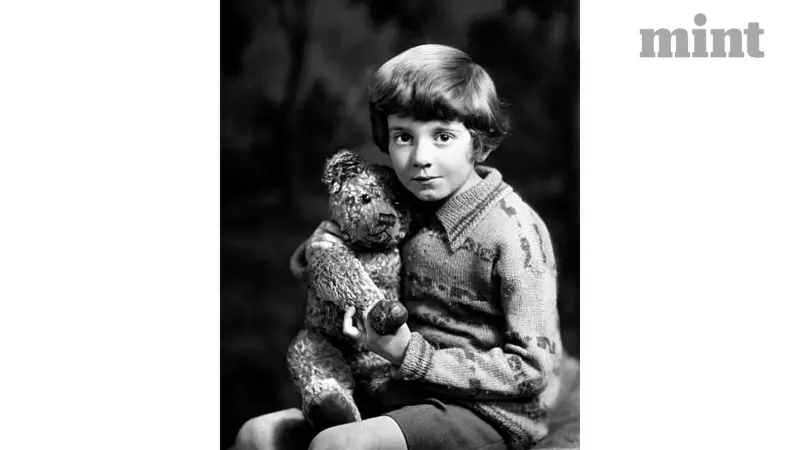
The origin of Winnie the Pooh is a charming blend of fact and fiction. Christopher Robin Milne, born in 1920, received a teddy bear for his first birthday named Edward. The bear was later rechristened Pooh, inspired by a swan owned by a friend. "Winnie" was borrowed from a Canadian black bear named Winnipeg, a resident of the London Zoo. When illustrator Ernest H. Shepard was commissioned, he modeled the final look of Pooh on his own son's teddy bear.
However, the magical world of Pooh, Piglet, Eeyore, Tigger, and others was ultimately the creation of A.A. Milne's pen. A mathematics student and keen cricketer, Milne was a veteran of World War I, having fought in the Battle of the Somme. He likely suffered from what we now call PTSD. In the war's aftermath, he found his greatest success in children's stories filled with warmth and light, a stark contrast to his experiences.
The Bittersweet Legacy of the Hundred Acre Wood
Despite bringing joy to millions, the Pooh stories created a complex and painful legacy for the real Christopher Robin. Raised largely by his nanny, Olive 'Nou' Brockwell, he later became estranged from his parents. He resented his childhood being thrust into the public eye, claiming he was bullied because of the books' fame. Christopher Robin felt his father had exploited his early years and refused any royalties from the phenomenal success.
In a profound irony, the stories that caused the boy so much unhappiness became a global beacon of empathy, fellowship, and simple adventure. They taught generations that it's okay to play silly pranks, get into a little trouble, and that every day offers a fresh start. The bear's appeal is so universal that author Benjamin Hoff used Pooh to explain Taoism in "The Tao of Pooh" (1982). Conversely, Pooh has faced political controversy, being banned in China for a perceived resemblance to President Xi Jinping, and has been massively commercialized by Disney.
Yet, a century after his literary birth, Winnie the Pooh endures. He is no longer just a stuffed toy or a children's book character. For adults navigating a complex world, he stands as a symbol of groundedness, compassionate friendship, and the quiet joy found in life's simple moments. As we step into the future, perhaps the best intention we can set is to embrace a little of Pooh's unassuming wisdom.