World Theatre Day Celebrated with Exploration of Ancient Theatre Designs in Ahmedabad
On World Theatre Day, a thought-provoking festival in Ahmedabad is challenging conventional notions of performance spaces. While modern audiences typically envision a proscenium stage with a curtain separating actors from viewers, historical evidence reveals a far more diverse architectural heritage.
Recreating Ancient Performance Spaces
Theatre actor-director and architect Manvita Baradi, daughter of acclaimed theatre scholar Hasmukh Baradi, is leading the 'All About Natak' festival at Theatre and Media Centre (TMC). Running from March 21 to March 29, this exhibition examines how performances have taken different shapes across various eras and geographical regions.
"The idea of the exhibition is to talk about performances taking different shapes over different times and geographies," explains Baradi. "If we look at Natyashastra to understand how our ancestors saw theatre as performance space, it was very different."

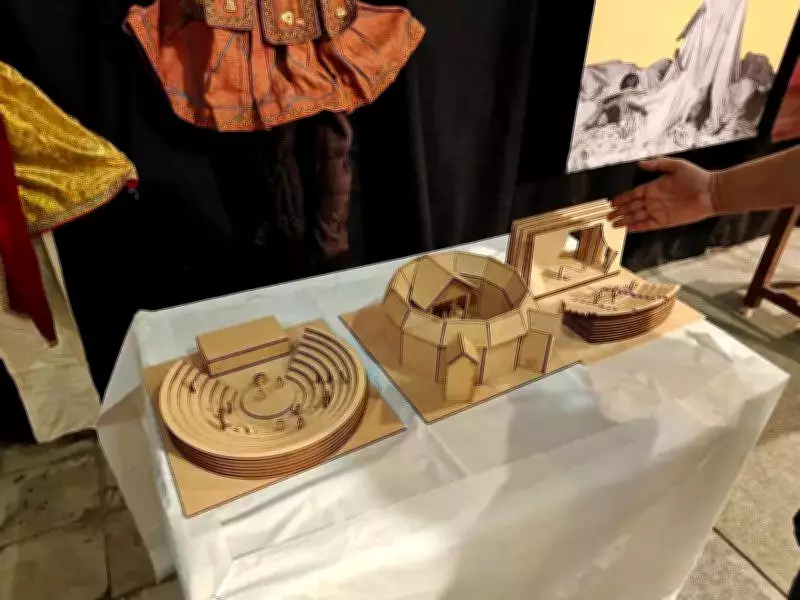
According to Baradi, the team has attempted to recreate the ancient performance space described in scriptures as measuring 16 x 32 hastas through detailed models displayed at the festival.
Festival Curated by Celebrated Theatre Personality
Celebrated actor and director M K Raina serves as curator for the festival, emphasizing the evolving nature of storytelling. "People are finding different ways to tell their tales," Raina observes. His collaboration with the late Hasmukh Baradi has culminated in various workshops, with Raina directing Baradi's play 'Ekalu Akash' specifically for this festival.
Raina expresses hope that theatrical experimentation should remain accessible rather than elitist. "Several experiments are done in the form, and my only wish is that it should not be an elitist pursuit, and should reach the districts and talukas," he states. The festival is dedicated to the memory of Rajoo Barot, Raina's junior at National School of Drama and a close friend.
Circular Performance Designs and Living Traditions
One particularly fascinating design highlighted at the festival is the 'Rachh' attributed to Raja Mansingh Tomar (1486-1516). This circular arrangement features audience members seated around the periphery while performances, traditionally believed to be raas dances, occur in the center.
Baradi points to continuing traditions that defy conventional theatre architecture. "Practices such as Ram Leela of Ramnagar in Varanasi are still prevalent, where an entire district is converted into a performance space for different scenes of Ramayana," she notes, illustrating how performance spaces can expand beyond traditional boundaries.
The festival represents a significant contribution to World Theatre Day celebrations, reminding participants and visitors that theatrical spaces have always been more varied and innovative than the standard proscenium model suggests. Through models, discussions, and performances, 'All About Natak' offers a comprehensive look at India's rich theatrical heritage while encouraging contemporary practitioners to think beyond conventional stage designs.