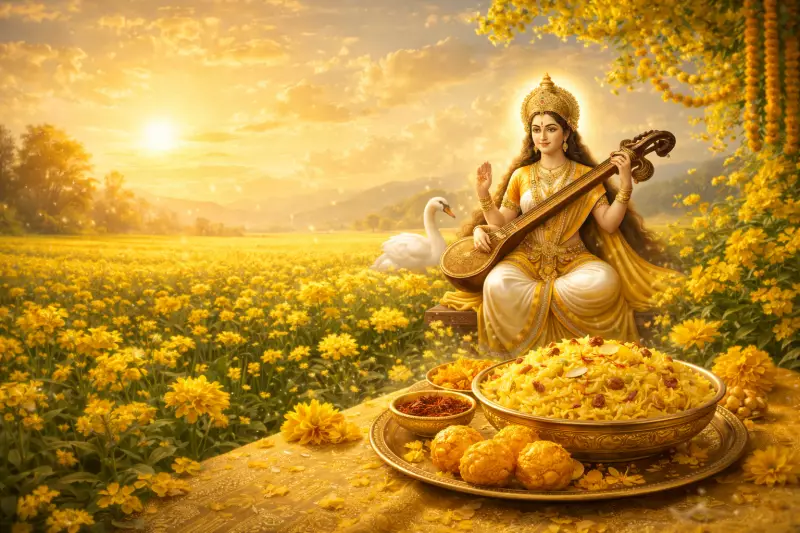
Every spring, as winter's chill gradually recedes, India awakens to a vibrant festival bathed in hues of yellow. Garments transform into golden shades, homes radiate with marigold decorations, sweets glisten with saffron, and nature itself appears to participate, with mustard fields blooming expansively under the sun's warm embrace.
The Significance of Yellow on Basant Panchami
Basant Panchami transcends mere celebration in yellow; it is an experience deeply intertwined with this colour. This choice is neither decorative nor arbitrary. Instead, it embodies profound meanings shaped by seasonal transitions, spiritual beliefs, psychological impacts, and enduring cultural traditions.
Yellow and the Arrival of Spring
Basant Panchami heralds the onset of Basant, or spring, following the cold winter months. In North India particularly, this seasonal transformation is vividly evident in the landscape. Mustard crops mature around this period, blanketing fields with brilliant yellow blossoms. For agricultural communities, this spectacle has historically symbolised renewal, fertility, and the assurance of abundance.

Yellow mirrors the earth's shifting mood. While winter often feels subdued and restrained, spring emerges as expansive and vibrant. The colour embodies warmth, sunlight, and growth, aligning seamlessly with nature's rhythm during this phase. Donning yellow on Basant Panchami becomes a means of harmonising human existence with the natural cycle.
The Colour of Saraswati and Knowledge
Basant Panchami is also dedicated to Goddess Saraswati, the deity of knowledge, learning, music, and wisdom. Yellow holds a distinctive spiritual connection with her. Unlike intense hues that denote power or passion, yellow signifies clarity, tranquillity, and mental illumination.
In Indian philosophy, knowledge is frequently likened to light that dispels darkness. Yellow, being the colour most akin to sunlight, naturally encapsulates this concept. It symbolises mental alertness, awareness, and the gentle awakening of intellect. Consequently, students place books before Saraswati, schools conduct prayers, and individuals seek blessings for learning and creativity on this day, surrounded by yellow flowers, attire, and offerings.
Symbol of Optimism and Positivity
Psychologically, yellow is renowned for evoking sensations of joy, optimism, and energy. After months characterised by shorter days and cooler temperatures, Basant Panchami arrives as a collective sigh of relief. Yellow elevates moods and fosters hope.
In traditional Indian thought, colours are not merely visual elements; they influence emotions and consciousness. Yellow is believed to stimulate happiness without causing agitation. It is cheerful yet not overwhelming, bright yet not aggressive. This equilibrium renders it ideal for a festival that celebrates intellectual and spiritual awakening rather than boisterous revelry.
Sacred Offerings and Ritual Meanings
Culinary preparations during Basant Panchami often reflect the colour theme. Kesari halwa, saffron rice, yellow ladoos, and dishes incorporating turmeric or saffron are commonly presented. These ingredients are selected not solely for their colour but also for their purity and auspiciousness in Hindu rituals.
Turmeric, for instance, has long been regarded as sacred, associated with health, protection, and prosperity. Saffron, rare and precious, signifies purity and refinement. Together, they reinforce yellow's symbolism as a colour of sanctity and well-being.
A Colour Bridging Material and Spiritual Realms
Yellow occupies a unique position in Indian symbolism by connecting worldly life with spiritual pursuits. It represents both artha (prosperity) and vidya (knowledge) simultaneously. Basant Panchami resides at this intersection, celebrating learning, art, music, agriculture, and seasonal abundance, reminding individuals that knowledge does not exist in isolation but flourishes alongside life.
This may explain why yellow feels instinctively appropriate for the festival. It does not necessitate withdrawal or austerity; instead, it encourages engagement with literature, music, nature, and hope.

Beyond Colour: A State of Mind
Over time, yellow has evolved into the visual language of Basant Panchami. Yet beyond tradition, it represents a mindset. Wearing yellow signifies welcoming light after darkness, clarity after confusion, and growth after stillness. It is a quiet affirmation that life progresses anew.
In this sense, yellow on Basant Panchami is not merely about visual perception; it is about emotional resonance. It serves as a reminder that renewal commences gently, akin to spring itself, and that wisdom, like sunlight, intensifies when shared.