YMCA Dance Transforms into Iranian Diaspora Liberation Symbol
The YMCA dance, historically celebrated as a gay anthem before being embraced by MAGA supporters, has unexpectedly found resonance with Iranian communities across America and globally. This cultural phenomenon emerged during the tense March 2026 US-Iran crisis, when military actions and leadership changes created seismic shifts in the region.
Viral Moment Sparks Intense Cultural Debate
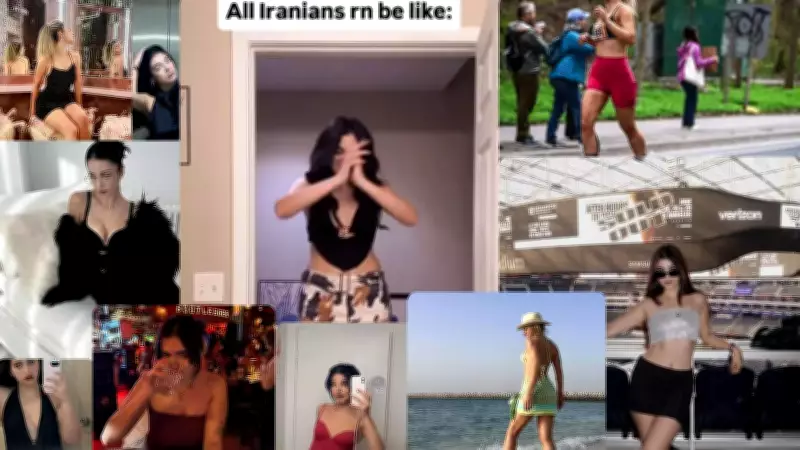
A recent social media observation noted: "Iranian Americans across the country are hitting the Trump dance." This statement ignited a firestorm of responses, with commentator Melissa Wong questioning the authenticity of celebratory videos featuring Iranian women. Wong remarked: "Has anyone else noticed that the 'Iranian women celebrating' videos are all women that are dressed like h*****kers."
Her tweet generated approximately 8,500 quote-tweets and over 13,000 replies, transforming what began as meme culture into a profound discussion about cultural authenticity, interventionism, and bodily autonomy. The dance itself represents more than choreography—it has become a referendum on identity and freedom.

Historical Context: A Nation at Crossroads
To comprehend why this cultural moment exploded, one must examine the political landscape from which it emerged. The viral clips surfaced during heightened tensions between the United States and Iran, when President Trump's military strikes reportedly eliminated senior Iranian officials, prompting retaliatory actions.
This escalation coincided with the death of Ayatollah Ali Khamenei, who served as Supreme Leader for more than three decades and embodied the Islamic Republic's strict ideological positions. His passing marked the conclusion of an era characterized by uncompromising stances on compulsory hijab and state-enforced morality codes.
For many in the Iranian diaspora who have long opposed the Islamic Republic's policies, these events represented potential transformation. Their celebrations weren't mere entertainment but expressions of historical release layered with complex emotions—uncertainty, grief, anger, and cautious optimism about possible regime change.
The Dance as Political Statement
One particularly circulated video featured a young Iranian American woman dancing energetically to what online communities dubbed the "Trump dance"—a meme adaptation of YMCA choreography popularized at political rallies. Her attire consisted of a crop top and shorts, and she moved with visible freedom and confidence.
For critics like Wong, who maintains libertarian anti-interventionist views skeptical of US military involvement abroad, such imagery appeared curated and unrepresentative of typical Iranian society. Her skepticism centered on questions of authenticity: Were these women genuine representatives of Iranian culture, or were they creating algorithm-friendly content for Western audiences?
However, this debate about authenticity quickly evolved into a broader discussion about modesty standards and who gets to define them.
Iranian Women Respond with Defiance
The responses from Iranian women were neither conciliatory nor apologetic. Social media user @Hellokittyi_ declared: "Both pics are me. You see, Melissa, unlike you, we had to fight for our basic rights, so we value our freedom." Another user, @lili__far, responded bluntly: "Shut the f** up b****! Regards, A proud Persian girl."
Additional responses included @shirin_yfr stating: "Women dressed however tf they want because they can :)" and @moonalinn concluding: "We call it 'freedom of choice'. Now cry about it hun." While the language was sharp, the underlying message demonstrated remarkable composure. These women weren't debating fashion—they were rejecting the premise that credibility must be determined by clothing choices.
Decades of State Control Over Women's Bodies
For over four decades, the Islamic Republic institutionalized compulsory hijab through legal frameworks. Since the early 1980s, public dress codes have been enforced by morality police units that patrol streets, reprimand women for insufficient coverage, issue fines, and sometimes detain violators. The state's position was explicit: women's bodies reflected the moral order of the nation.

Ayatollah Khamenei consistently framed hijab as a non-negotiable pillar of the republic's identity throughout his leadership. Even after the 2022 death of Mahsa Jina Amini sparked the "Woman, Life, Freedom" protests and forced some visible recalibration in enforcement tactics, the legal architecture remained fundamentally intact. While patrols sometimes became less visible, surveillance increased, and the statutory requirements endured.
This historical context casts a long shadow over the diaspora celebration videos. Inside Iran, women have faced reprimands for what authorities deemed insufficient coverage. Outside Iran, they now face criticism for what some perceive as insufficient modesty according to external cultural templates. The geography changes, but the impulse to regulate women's appearance persists.
The Power of Unapologetic Celebration
What distinguishes this cultural moment isn't the criticism but the nature of the response. The women in these viral videos aren't seeking validation from Western liberal perspectives or approval from conservative sensibilities. They're inhabiting spaces that remain inaccessible to many women still living in Iran.
Their celebration is multilayered—it's political, generational, and represents memory expressed through movement. With Khamenei's passing, Iran stands at a symbolic inflection point. While institutions don't disappear with a single leader's departure and laws don't dissolve with isolated military actions, symbols carry profound significance.
The sight of diaspora women dancing openly, responding to moral policing with derision rather than deference, signals a recalibration of confidence and autonomy. These viral clips ultimately reveal not decadence, propaganda, or performances of Westernized liberation, but rather collective memory.
Memory as Resistance
These celebrations recall memories of morality police vans idling at street corners, of being stopped and corrected in public spaces, of hair treated as contraband and fabric treated as ideology. For decades, women's bodies in Iran weren't merely personal spaces but sites of public doctrine where the state inscribed its authority onto sleeves and scarves.
When diaspora women dance in crop tops and shorts to this kitschy anthem, they're not staging rebellion for social media algorithms. They're inhabiting freedoms that their mothers negotiated cautiously and that their peers in Iran still navigate carefully. They're moving without the constant calculation that once accompanied every public step.
The online impulse to police their appearance echoes the older instinct of morality patrols, now digitized. Different uniforms, same fundamental impulse: measure, judge, regulate. What unsettles critics isn't the choreography itself but the absence of fear in these performances.
Lasting Cultural Shifts
The YMCA beat will eventually fade from popularity, the meme will age, and geopolitical crises will generate new headlines. However, the deeper transformation lies elsewhere. A generation that grew up under the constant gaze of morality police has learned to return that gaze without flinching.
Their bodies are no longer sites for state instruction or social suspicion. They're no longer canvases for others' virtue projections. They've become expressions of personal choice. Once choice is lived experience rather than requested permission, it becomes remarkably difficult to police effectively again.
This cultural moment represents more than viral entertainment—it embodies the complex intersection of political change, diaspora identity, bodily autonomy, and the enduring human desire for self-expression beyond imposed boundaries.