

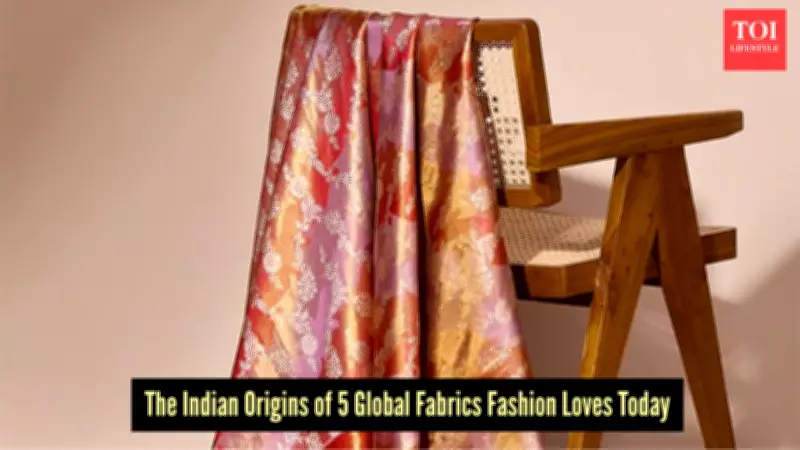
Global Fashion’s Hidden Indian Origins
We’ve all experienced it. You admire a beautifully structured scarf in a boutique window and attribute it to Scandinavian minimalism. You see a crinkled, preppy shirt and immediately think of The Hamptons. It’s a natural assumption—we are often conditioned to view high-fashion staples as Western innovations. However, here’s the surprising truth: the DNA of many beloved international trends isn’t merely similar to Indian textiles; it is fundamentally Indian. Long before fast fashion emerged and centuries before "luxury" became synonymous with logos, Indian artisans were meticulously perfecting weaves that would eventually captivate the globe.
This isn’t just about the traditional sarees stored in your grandmother’s trunk. We’re discussing fabrics that journeyed along ancient trade routes, were renamed, rebranded, and frequently sold back to us as foreign treasures. Here are five iconic textiles that the world celebrates, often overlooking their original Indian heritage.
The "European" Luxury: Cashmere
Step into any high-end boutique in Milan or Paris, and "Cashmere" is uttered with reverence, as if it were a sacred term. It represents the pinnacle of winter wear luxury. Yet, despite its sophisticated European image, the fabric’s true origin is embedded in its name: Kashmir. The West did not invent this exceptional softness; they imported it. The wool is sourced from the Changthangi goat, an animal that flourishes in the freezing high altitudes of the Himalayas. Locals referred to the ultra-soft undercoat as pashm, and Kashmiri artisans were hand-spinning it into exquisite shawls centuries before it became a status symbol in French aristocratic circles. So, the next time you encounter a "luxury cashmere" label, remember—it’s essentially the story of a Himalayan goat that achieved stardom in Europe.

The Fabric That Was Too Good To Be Legal: Chintz
If you adore vintage floral patterns or that distinct "English cottage" aesthetic, you’re actually admiring Chintz. But before it adorned Victorian armchairs, this fabric was being hand-painted and block-printed in the dyeing pits of Andhra Pradesh and Gujarat. During the 17th century, Chintz was the rockstar of the textile world—vibrant, colorfast, and utterly unprecedented in Europe. In fact, its popularity became a threat. French and English textile mills struggled to compete, leading their governments to impose bans on the import of Indian Chintz to protect domestic industries. It was the original rebel fabric—literally outlawed because it was too beautiful and superior.
The Original Air Conditioning: Seersucker
Recognize that puckered, striped fabric that epitomizes "summer garden party" style? That’s Seersucker. Contrary to popular belief, it’s not an American invention. The name derives from the Persian phrase shir-o-shakar, meaning "milk and sugar," which aptly describes its texture—one smooth stripe, one crinkled. Indian weavers didn’t create that crinkle for mere aesthetics; they engineered it for survival. The "slack-tension" weave pulls the fabric away from the skin, forming air pockets that function like personal air conditioning in humid climates. The British adopted this technology for their colonial attire, Americans embraced it for summer suits, and the rest is fashion history.
The Cowboy’s Favorite: Bandana
From Wild Western films to 1990s hip-hop videos, the bandana symbolizes rugged American individualism. However, the word itself is a clear indicator of its roots. It originates from the Sanskrit term bandhna, meaning "to tie." The iconic pattern? That’s directly inspired by the Bandhani tie-dye traditions of Rajasthan and Gujarat. These spotted, vibrant handkerchiefs were exported in massive quantities during the 18th century. Over time, the intricate tie-dye evolved into the printed paisley squares we recognize today, but the accessory’s spirit remains distinctly Indian at its core.

The Bleeding Check: Madras Cloth
The world knows it as "Madras," a nod to the city now called Chennai. This lightweight, plaid cotton is a summer essential from the Caribbean to the U.S. East Coast. Yet, the true charm of original Madras cloth lay in its imperfection. Crafted from short-staple cotton and vegetable dyes, the colors were known to run or "bleed" when washed, producing a soft, muted, and uniquely individualized appearance for each wearer. This wasn’t a defect; it was a deliberate feature. It stands as the ultimate easy-breezy fabric, a gift from India’s Coromandel Coast that taught the world how to master summer style with effortless grace.





