

Bailou's Mumbai Arrival: A Cultural Dialogue in Fabric
As Bailou opens its doors in Mumbai's vibrant Colaba district, this is far more than just another fashion label entering the city's competitive retail landscape. The establishment represents a profound cultural exchange where Mumbai's restless, contemporary energy converges with Kolkata's deeply rooted handloom legacy. The space itself seems to carry narratives within its very fabric, evident in the texture of the saris, how the weaves capture light, and in the subtle rebellion against predictable fashion conventions.
The Visionary Behind the Craft
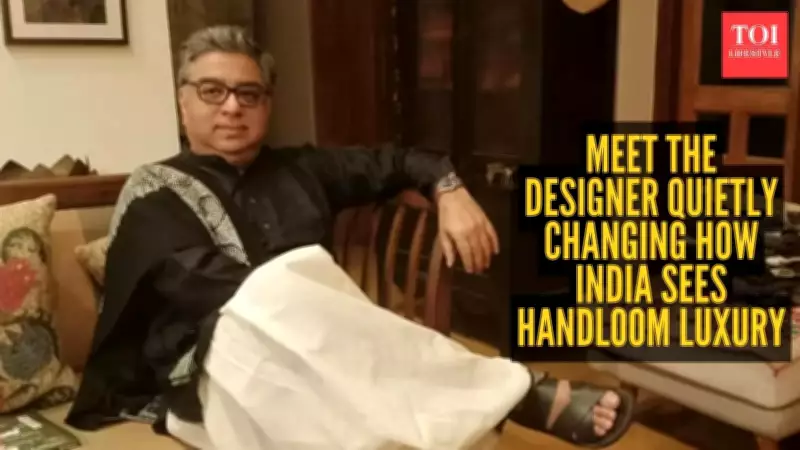
At the heart of this creative dialogue stands Bappaditya Biswas – textile artist, social entrepreneur, co-founder of both Bailou and Byloom, and a longstanding craft activist. His work consistently occupies that intriguing in-between space: firmly rooted in tradition yet restless in spirit. For Biswas, fabric transcends mere material; it embodies memory, labor, skill, and generations of quiet knowledge passed meticulously from hand to hand.
When questioned about the inspiration behind Bailou's latest collection, Biswas bypasses discussions of trends or external references entirely, going straight to the source. "My inspiration comes from techniques, skill and crafts that I work with," he states simply. This single sentence encapsulates his entire design philosophy. There's no seasonal chasing here, no Pinterest boards or social media moodboards. Instead, ideas emerge directly from the loom itself – from observing artisans at work, understanding yarn behavior, and from years of tactile engagement with fabric through touching, twisting, and reimagining.

Two Decades of Textural Innovation
For over twenty-three years, Biswas's entire practice has centered on pushing the boundaries of texture and weave. "My entire work for the last 23 years has been about experimentation of textures and weaves," he explains. "My forte has been creating new textures. So the entire collection reflects that."
This commitment manifests clearly throughout the collection, which avoids the typical heritage marketing tropes often associated with handloom. Instead of obvious traditional cues, you encounter:
- Transparency playing against opacity
- Surfaces that shimmer subtly rather than loudly
- Fabrics that feel light in some areas yet dense in others
This is tactile fashion – the kind that invites you to run your fingers over it before even considering trying it on.
Revolutionary Sequin Integration
One particularly standout element involves sequin work executed in an entirely unconventional manner. Here, sequins aren't embroidered onto fabric as decorative additions but are woven directly into the cloth itself. "The sequin here is woven into the fabric and not embroidered," Biswas emphasizes. "That's where the uniqueness comes from."
For fashion enthusiasts who appreciate construction details, this approach represents a revelatory moment. Woven sequins fundamentally alter how fabric falls, moves, and reflects light. The sparkle becomes integral rather than superficial – part of the weave, part of the structure, part of the narrative. This technique subtly redefines "handloom luxury" away from heavy embellishment toward something more fluid, modern, and genuinely wearable.
Evolving Design Language Through Craft
What proves particularly fascinating is how Bailou's design language continues evolving without ever severing connections to craft. The brand doesn't impose alien methods or "teach" artisans new skills. "We never teach new skills," Biswas clarifies. "We play with different yarns to create new textures or change the motif and the design language."
This approach demonstrates profound respect for both loom intelligence and artisan expertise. Innovation emerges not from replacing existing knowledge but from stretching it through:
- Different yarn combinations
- Novel material pairings
- Subtle pattern shifts
The craft remains intact while learning to communicate through a fresh visual vocabulary.

Contemporary Roots in Traditional Techniques
Upon closer examination, the collection feels remarkably contemporary without straining to appear "modern." There's no nostalgic posturing or forced historical references. "If you see, nothing is traditional in the collection," Biswas acknowledges. "The interplay of transparency and opacity, the lay of the sequin, the design language - everything is contemporary. But it's using the same traditional looms and the artisans' skill and knowledge of weaving."
This balance constitutes Bailou's quiet magic. Fabric soul originates from age-old techniques, yet the final emotional resonance feels completely current. These pieces integrate seamlessly into wardrobes of individuals who desire handloom but reject museum-piece aesthetics. They speak to craft lovers who simultaneously inhabit cities, frequent galleries, attend dinner parties, and require clothing that moves with their dynamic lives.
The Intimacy of Creation
When asked which single piece captures the collection's essence, Biswas declines to choose favorites. "The entire collection represents that," he asserts. "Every sari, every piece is designed by me and then woven."
This intimate connection between designer and creation likely represents what fashion enthusiasts will appreciate most – the assurance that this isn't mass-produced design masquerading as craft. Each piece carries the palpable intimacy of design meeting loom, thought meeting hand, city meeting heritage.
A Timely Arrival in Mumbai
Bailou's Colaba debut feels particularly timely. In a metropolis thriving on speed, noise, and visual saturation, this collection offers something quieter – garments you don't wear merely for attention but for how they make you feel: grounded, considered, and beautifully divergent from fast fashion rhythms. This isn't about luxury proclamation but about allowing texture, weave, and craft to communicate their own eloquent stories.





