

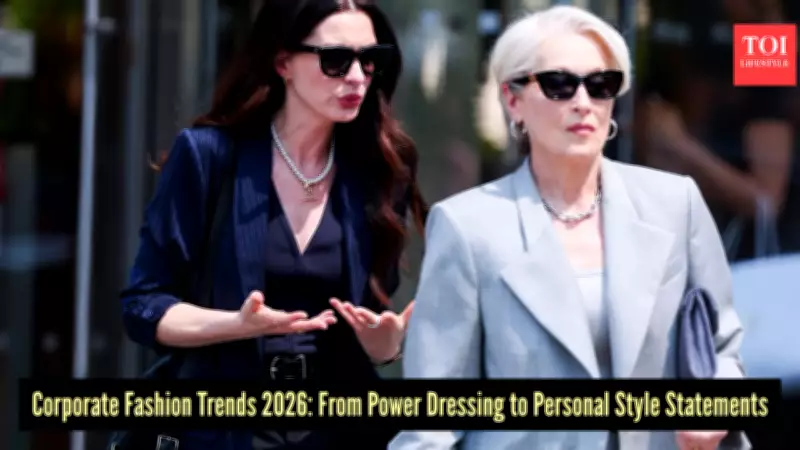
The Devil Wears Prada: A Fashion Revolution in Corporate Culture
In the iconic 2006 film The Devil Wears Prada, Miranda Priestly's wardrobe was meticulously crafted to reflect her position as Editor-in-Chief of Runway magazine. Her sharp, tailored outerwear—including capes, trenches, and coats in neutral shades like camel, grey, and ivory, occasionally accented with burgundy or emerald—communicated editorial authority and decision-making power even in silence. This visual representation established that clothing serves as a powerful non-verbal message in professional environments, particularly within corporate culture where attire signals hierarchy, identity, and influence.
Redefining Corporate Dressing for Indian Women
The film resonated deeply with Indian audiences, reinforcing the idea that corporate dressing is a strategic form of communication essential for building executive presence. It demonstrated how attire shapes perception, fosters trust, and conveys intent, offering a new direction for women to navigate power dynamics in the workplace through structured tailoring and thoughtful styling.
During the early 2000s in India, corporate dressing was not a well-defined concept or a significant industry segment. It often involved a negotiation between traditional sarees and Western suits. Westernwear for women was limited to tailored pieces or ready-to-wear options from retailers like Shoppers Stop and Pantaloons. However, brands such as AND and Fabindia gradually introduced the notion that workwear could be intentionally designed, standardized, and worn with confidence by women in professional settings.

The Rise of Power Dressing and Personal Branding
While brands like AND laid the groundwork for Western workwear in India during the late 1990s, the post-2010 era saw labels like Van Heusen Woman formalize the concept of "power dressing" for Indian corporate women. The Devil Wears Prada initially emphasized dressing to convey authority and hierarchical power, but the following decade shifted toward expressing authority through individuality and personal branding.
Corporate coaching and training cultures began to emphasize aligning appearance with one's role, audience, and environment. This evolution highlighted how power could be communicated through clarity in personal style, moving beyond rigid dress codes to more nuanced expressions of professionalism.
The Future of Corporate Dressing: Sustainability and Soft Power
With The Devil Wears Prada 2 scheduled for release on May 1, 2026, the sequel is poised to continue this fashion and culture dialogue, reflecting the transformed landscapes of media, fashion, and power since 2006. Miranda Priestly's character originally embodied "power without apology"—a precise, controlled authority visually articulated through fashion. Based on the trailer, her character remains largely unchanged, potentially influencing power dressing toward a less label-driven, more sophisticated approach that emphasizes gravitas, ethical judgment, and sustainable clothing choices.
International trend forecasters like WGSN predict the rise of "city dressing," bridging office wear with low-key luxury, while agencies such as Future Snoops highlight the emergence of fluid, adaptable wardrobes. This signals a shift away from rigid dress codes toward systems that seamlessly transition between professional and personal contexts. The future may embrace soft power dressing, replacing rigidity with intention and individuality, and favoring subtle luxury and thoughtful styling to convey confidence without overt dominance.
The Enduring Role of the Saree in Indian Corporate Wardrobes
In the Indian context, the saree is expected to remain a staple in corporate wardrobes, evolving in fabric, styling, and drape while retaining its cultural relevance and sustainable appeal. It continues to serve as a powerful expression of authority, adapting to modern trends without losing its traditional significance. The visual language of clothing will always be integral to the narrative of corporate dressing, offering new cues for power dressing in 2026 and beyond.

